
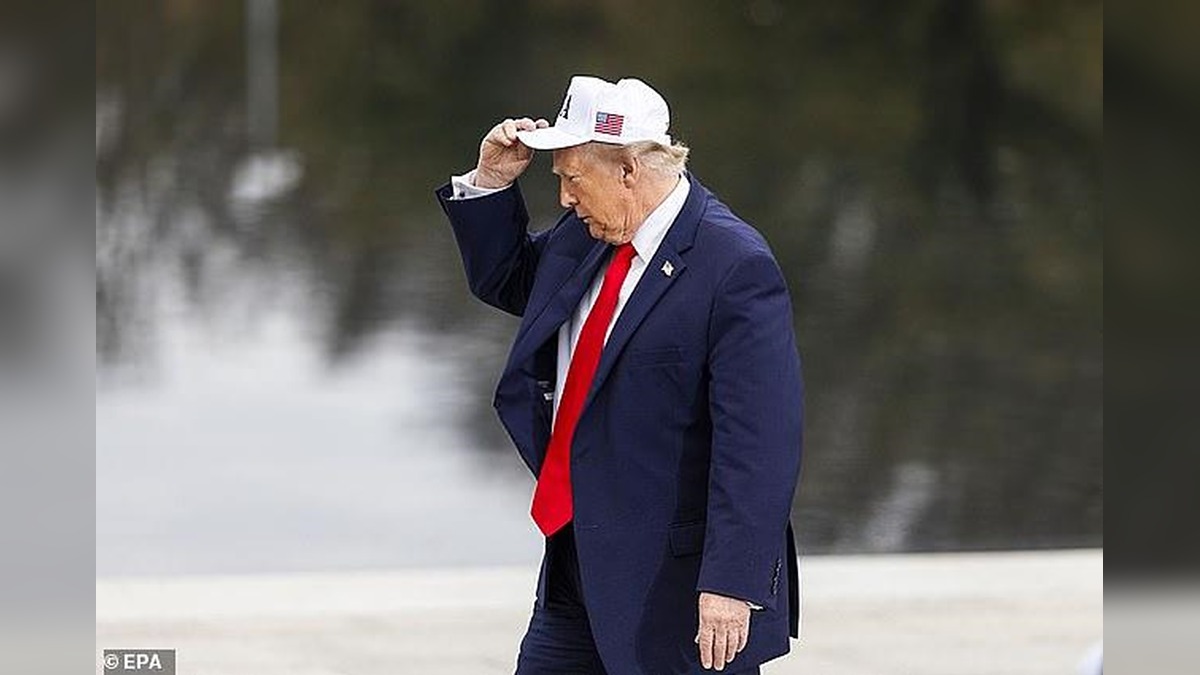
President Donald Trump has suffered a major political defeat after Democrats captured control of both the House of Representatives and the Senate in a sweeping midterm election victory that reshaped the balance of power in Washington.
The November 3 elections delivered unexpected Democratic victories across several traditionally Republican states, with results marking one of the most significant electoral setbacks for the Republican Party in recent years.
Democrats celebrated what they described as a ‘blue tsunami’ or ‘Bluenami’ after flipping Senate seats in states that had overwhelmingly supported Trump in the 2024 presidential election.
Among the most striking results were Democratic victories in Texas, South Carolina and Kansas, alongside further Senate gains in Iowa and Ohio.
The results could significantly weaken Trump’s influence during the remaining two years of his presidency, leaving his administration facing a Democrat-controlled Congress.
Democratic Victories Transform Traditionally Republican States
Texas delivered one of the biggest surprises of election night, with Democrat James Talarico defeating Trump-backed Republican Ken Paxton in the Senate race.
Talarico, a 37-year-old former schoolteacher, placed his Christian faith at the centre of his campaign and secured a victory in a state that had not elected a Democratic senator since 1988.
The state also elected Democrat Gina Hinojosa as governor, marking the first Democratic gubernatorial victory in Texas since 1995.
In South Carolina, pediatrician Annie Andrews narrowly defeated Republican Darline Graham, who had been personally selected by Trump to fill the Senate seat associated with her late brother, Lindsey Graham.
The victory was particularly notable because Trump carried South Carolina by 17 percentage points in 2024.
The President had also held two campaign rallies with Graham in the state within eight days in late October.
During those appearances, Trump referred to Andrews as ‘Tranny Annie’.
Kansas also delivered a historic result, with Democrat Adam Hamilton defeating incumbent Republican Senator Roger Marshall.
The state had not elected a Democrat to the Senate since 1932, during the Great Depression.
Marshall, a Trump loyalist and physician, had faced criticism over allegations involving a lawsuit against his own patients and his ownership of a property in Florida.
Trump held two rallies in Kansas towards the end of the campaign in an unsuccessful attempt to secure his re-election.
Georgia and North Carolina Deliver Early Senate Setbacks for Trump
Democrats secured important victories in Georgia and North Carolina early in the election night, dealing two significant blows to the Republican Party.
In Georgia, Democratic Senator Jon Ossoff defeated Republican Mike Collins, Trump’s preferred challenger, in a decisive victory.
North Carolina also changed hands, with Democrat Roy Cooper defeating Republican Michael Whatley, another candidate backed by Trump.
The result represented the first Republican-held Senate seat lost during the election.
The victories contributed to Democratic gains across the country, including states that had supported Trump by substantial margins in the previous presidential election.
Iowa and Ohio Add to Democratic Senate Gains
Democrats continued their advance in Iowa, where Josh Turek, a Paralympic basketball player, defeated Republican Ashley Hinson.
Hinson, a former broadcast journalist, had been seeking to retain the seat for the Republican Party.
The campaign took place amid concerns over rising fuel costs, including increased diesel prices linked to the Iran war.
Ohio also recorded a Democratic Senate victory, adding to the party’s gains in states Trump had won by more than 10 percentage points in 2024.
In Florida, however, Republican Senator Ashley Moody managed to retain her seat against Democratic socialist Angie Nixon.
Byron Donalds, Trump’s candidate for Florida governor, also secured a narrow victory.
Trump Faces Investigations Under Democrat-Controlled Congress
Democrats’ victories in both chambers of Congress will give the party control over congressional committees and the ability to launch investigations into the Trump administration.
Democratic Congressman Robert Garcia is expected to lead investigations as chairman of the House Oversight Committee.
Following the results, Garcia issued a two-word warning directed at Trump’s closest allies: ‘Lawyer up.’
The investigations are expected to examine Trump, members of his family and his political associates.
The President could also face another impeachment effort, which would mark the third time he has been impeached.
With Republicans losing their congressional majorities, Trump will have considerably less room to advance his legislative agenda.
Democrats will be positioned to block legislation proposed by the administration and pursue their own priorities through Congress.



Trump is expected to rely more heavily on executive orders in areas where presidential authority remains available, including tariffs, immigration, foreign policy and military operations.
He will also retain his veto power to prevent legislation passed by the Democratic-controlled Congress from becoming law.
Trump Rejects Responsibility for Republican Losses
Trump responded defiantly after Democrats secured control of the House, insisting that his absence from the ballot explained why Republicans had suffered such heavy losses.
Writing on Truth Social, he declared: ‘I wasn’t on the Ballot and if I was, we would have won IN A LANDSLIDE!’
Earlier in the evening, the President had expressed frustration with Fox News over its election exit polls.
He criticised the questions used in the network’s polling, describing them as ‘BULLS***’.
The Fox News poll indicated that 87 per cent of voters were concerned about gas prices, while 62 per cent blamed Trump for the situation.
Trump subsequently contacted Fox News presenter Greg Gutfeld during a live broadcast, arguing that he had inherited the country’s economic problems from former President Joe Biden.
‘I inherited the worst prices and inflation in history from Sleepy Joe. Prices are heading down FAST!’ he wrote.
Cost of Living Emerges as Central Election Issue
Economic concerns featured prominently in voters’ decisions, with affordability, particularly food and fuel prices, emerging as a major issue throughout the campaign.
The Daily Mail spoke with voters across the United States who identified the rising cost of living as their primary concern.
High petrol and diesel prices, including increases associated with the Iran war, featured prominently in discussions about household expenses.
A CNN exit poll found that 65 per cent of voters believed Trump had made economic conditions worse.
The poll also examined the role the President played in voters’ decisions.
Sixteen per cent said they voted to support Trump, 43 per cent said they voted against him, while 41 per cent said he was not a factor in their decision.
An expansive AP Voter Poll found that 75 per cent of respondents were either angry or dissatisfied with the direction of the country.
Approximately six in 10 voters attributed high prices to Trump’s policies, while 71 per cent wanted Congress to exercise greater oversight and provide more checks and balances on presidential power.
Around four in 10 respondents identified the economy as the country’s most important issue, while three in 10 selected democracy.
Both concerns ranked above crime, healthcare and immigration.
Polls Show Widespread Dissatisfaction With Trump
Trump’s approval rating stood at 32 per cent in a Reuters/Ipsos poll conducted on the eve of the election, while 64 per cent disapproved of his performance.
The cost of living was another decisive factor, with 78 per cent of voters identifying it as either the most important or a very important consideration in their voting decisions.
Democratic enthusiasm also exceeded Republican enthusiasm ahead of polling day.
Approximately 49 per cent of Democrats described themselves as very enthusiastic about voting, compared with 33 per cent of Republicans.
The results also suggested that some Latino voters who supported Trump in 2024 had returned to the Democratic Party amid dissatisfaction with economic conditions and immigration enforcement operations conducted by Immigration and Customs Enforcement.
Hakeem Jeffries Set to Become First Black Speaker of the House
Democratic House leader Hakeem Jeffries is expected to replace Republican Mike Johnson as Speaker of the House following the party’s victory.
Jeffries, 56, a former corporate lawyer representing New York, would become the first Black politician to hold the position.
The Speaker of the House is second in the presidential line of succession, immediately behind the Vice President.
Jeffries is expected to lead the Democratic legislative agenda, which includes reversing Medicaid cuts, restoring subsidies under the Affordable Care Act, and addressing the cost of groceries, housing and energy.
His expected appointment will also place him at the centre of congressional efforts to investigate the Trump administration.
Democrats Take Control After Republicans Lose Narrow Majorities
Before the election, Republicans held a narrow 218-214 majority in the 435-member House of Representatives.
One independent member caucused with Republicans, while two seats were vacant.
In the Senate, Republicans held a 53-47 majority in the 100-seat chamber.
The November 3 elections placed all 435 House seats and 35 Senate seats before voters.
Of the Senate seats contested, 22 were previously held by Republicans and 13 by Democrats.
Governorships were also contested across 36 states as part of the nationwide elections.
The transfer of control in both congressional chambers means Republican leaders will have to surrender their positions of authority, including Johnson’s speakership.
Record Campaign Spending Precedes Historic Election
More than 100 million Americans are believed to have participated in the midterm elections following weeks of early voting.
The estimated turnout represented approximately two-thirds of the number of people who typically vote in a presidential election.
Campaign spending also reached unprecedented levels, with advertising intelligence agency AdImpact estimating that approximately $12 billion was spent on political advertisements.
Around $4 billion was spent in October alone, as television audiences were exposed to a sustained wave of campaign advertising, including negative advertisements targeting political opponents.
Republicans slightly outspent Democrats during the final month of campaigning, with billionaire Elon Musk contributing more than $300 million.
Texas, Ohio and Michigan were among the states that attracted the highest levels of advertising expenditure.
Midterm Elections Deliver Major Setback to Trump’s Party
Midterm elections take place halfway through a president’s four-year term and do not include a presidential contest.
They traditionally provide voters with an opportunity to assess the administration’s performance and influence the direction of Congress.
The results frequently produce losses for the party occupying the White House.
In 2006, Democrats made substantial gains during Republican President George W. Bush’s administration amid opposition to the war on terror.
In 2010, Republicans gained 63 additional House seats during Barack Obama’s presidency, prompting the Democratic president to describe the outcome as a ‘shellacking’.
During Trump’s first presidency, Democrats gained 40 House seats in the 2018 midterm elections.
The latest results, however, have delivered Democrats control of both chambers of Congress, leaving Trump facing a substantially different political landscape for the remainder of his presidency.
The outcome could also complicate Vice President JD Vance’s potential ambitions to seek the Republican presidential nomination in 2028.
