
Wednesday, 4 November, has been declared a public holiday in South Africa to allow eligible voters to participate in the 2026 local government elections.
Although many employees will have the day off, some people will still be required to work, while others may need to travel considerable distances to reach their registered voting stations.
The Electoral Commission of South Africa (IEC) has outlined the arrangements for Election Day, including voting hours, accepted identity documents, registration checks and the number of ballot papers voters will receive.
Voting Stations to Open at 07:00 and Close at 21:00
Polling stations will open at 07:00 on Wednesday and are scheduled to close at 21:00.
The IEC has encouraged voters to arrive early to avoid potentially long queues, particularly later in the day.
Voters must also remember that they are required to cast their ballots at the voting station where they are registered.
However, the official closing time does not mean that everyone still waiting in line at 21:00 will be turned away.
Voters Already in Queues Before Closing Must Be Allowed to Vote
Eligible voters who arrive at their registered voting stations before 21:00 must be given an opportunity to cast their ballots, even if they remain in the queue after the official closing time.
The Local Government: Municipal Electoral Act provides that voting must continue until every eligible voter who reported to the station before closing has voted.
The relevant provision states:
“Voting at a voting station must continue until every voter has voted who—
(a) is entitled to vote at that voting station; and
(b) has reported for voting at that voting station before the closing time.”
The IEC’s 2021 Municipal Elections Observer Handbook also instructs presiding officers to bring voters waiting in line within the boundaries of the voting station before it closes.
This means that eligible voters who are already in the queue before 21:00 should not lose their opportunity to vote simply because the process continues beyond the scheduled closing time.
How to Confirm Your Voting Station Before Election Day
Voters can check their registration details and confirm their designated voting stations before travelling to the polls.




The IEC provides three ways to access this information:
- Online: Visit www.elections.org.za and check your registration status.
- SMS: Send your 13-digit identity number to 32810.
- WhatsApp: Send the message “Hi” to the IEC on 060 088 0000.
Checking these details beforehand can help voters confirm where they are required to cast their ballots.
Identity Documents Accepted at Voting Stations
Voters must present an approved identity document when reporting to their registered voting station.
The IEC accepts the following documents:
- Smart ID card.
- Green barcoded identity document book.
- Valid temporary identity certificate.
Driver’s licences, passports, student cards and photocopies of identity documents are not accepted as voting identification.
What Happens After You Arrive at the Polling Station?
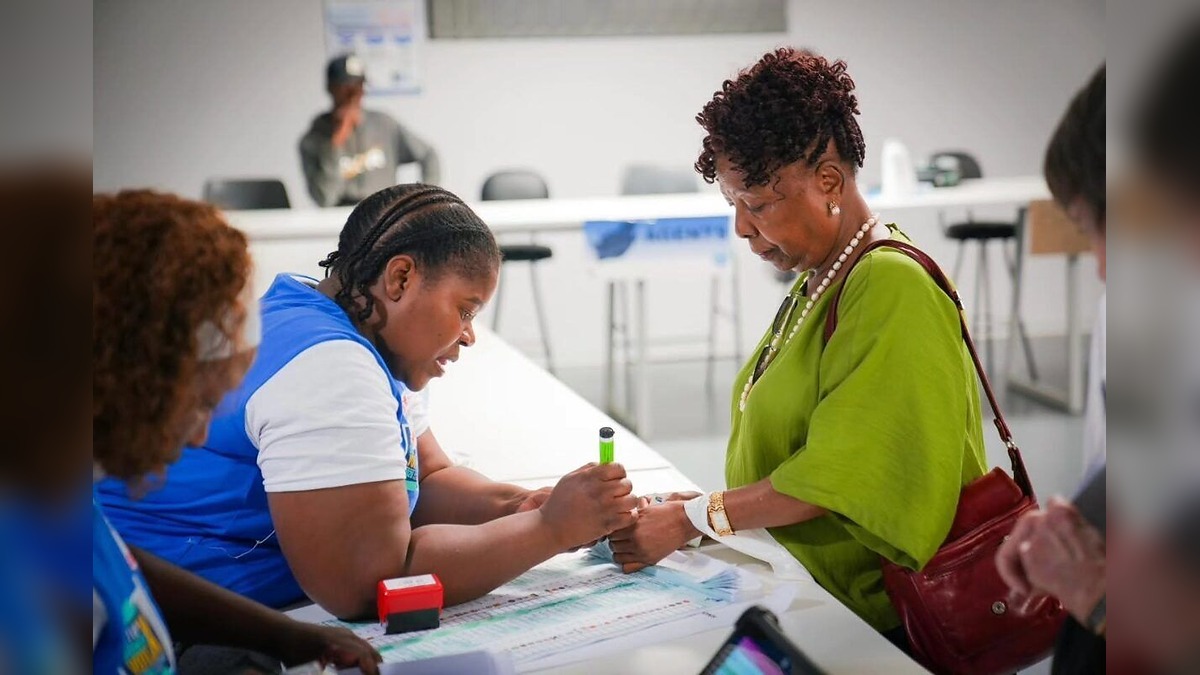
Election officials will first verify a voter’s identity and registration details against the voters’ roll.
Once the information has been confirmed, the voter’s thumbnail will be marked with indelible ink to prevent the same person from voting more than once.
Officials will then issue the ballot papers required for that voter’s municipality.
The number of ballots depends on whether the voter is registered in a metropolitan municipality or a local municipality.
Metropolitan Municipality Voters Receive Two Ballot Papers
People registered in metropolitan municipalities will receive two ballot papers.
Metropolitan municipalities are large urban areas administered by a single metropolitan council. These include Cape Town, Johannesburg, Tshwane, eThekwini and Nelson Mandela Bay.
The two ballots serve different purposes:
- Ward ballot: Used to elect a councillor to represent the voter’s ward.
- Proportional representation ballot: Used to select a political party for representation in the metropolitan council.
Local Municipality Voters Receive Three Ballot Papers
Voters registered in local municipalities will receive three ballot papers instead of two.
Local municipalities generally cover smaller towns and surrounding rural areas and form part of district municipalities.
The three ballots are allocated as follows:
- Ward ballot: Used to elect a ward councillor.
- Local council proportional representation ballot: Used to select a political party for representation on the local municipal council.
- District proportional representation ballot: Used to select a political party for representation on the district municipal council.
How to Mark Your Ballot Papers Correctly
Voters must complete their ballot papers privately inside the designated voting booth.
The IEC’s voting instructions require voters to make one clear X in the box next to their preferred candidate or political party on each ballot paper.
Voters should avoid writing their names, signing the papers or adding unnecessary marks, as these could result in their ballots being declared invalid.
Anyone who makes a mistake should not place the affected ballot paper in the ballot box. Instead, the voter should return it to the presiding officer and request assistance.
After completing the ballots, voters must fold them to keep their choices private and place them in the appropriate ballot boxes as directed by election officials.
Final Election Day Reminders
Voters heading to the polls on Wednesday, 4 November, should confirm their registration details, carry an accepted identity document and report to their designated voting station before 21:00.
Those who are already waiting in the queue before the official closing time must still be allowed to vote, provided they are eligible to cast their ballots at that station.

