
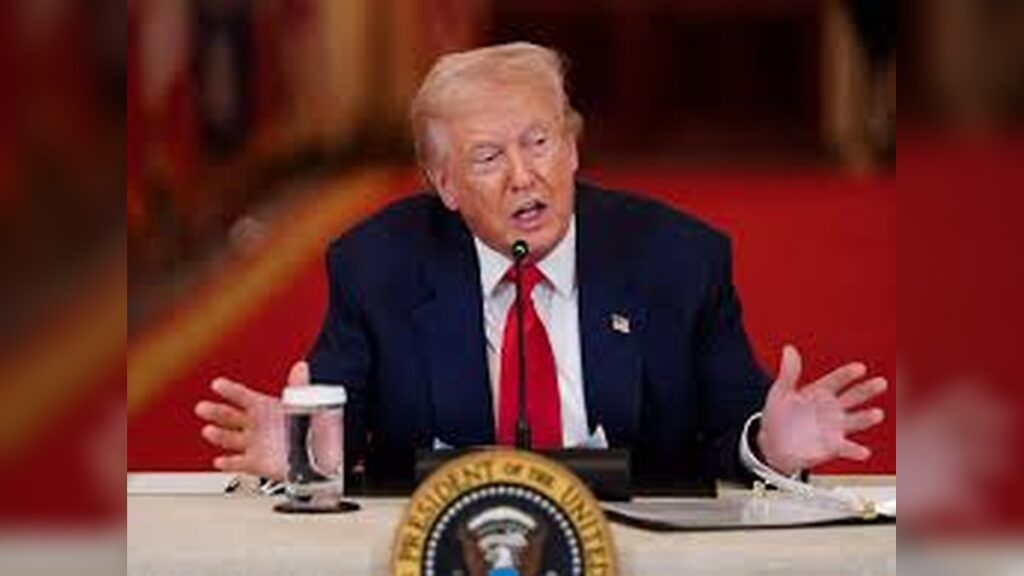
U.S. President Donald Trump has suggested that any potential agreement under discussion would involve the reopening of the Strait of Hormuz, though he did not go into detail about what such a deal would look like or which parties would be involved.
The remark, made on Saturday, adds a new layer of attention to one of the world’s most strategically sensitive maritime corridors.
The comment immediately drew interest because of what the strait represents in global energy and security dynamics.
Even without specifics, the mention of the passage signals that maritime access and oil flow security may be central to ongoing diplomatic maneuvering.
Why the Strait of Hormuz Matters So Much
The Strait of Hormuz is one of the most important shipping lanes in the world, acting as a narrow gateway between the Persian Gulf and the Gulf of Oman.
A significant share of global oil shipments passes through this corridor, making it a critical pressure point in international relations.
Any disruption in the strait has historically raised concerns about global energy prices and supply stability.
Because of this, discussions involving its status often carry weight far beyond the immediate region.
A Carefully Worded but Unclear Proposal
Donald Trump did not provide details about how the reopening would be achieved or what conditions might be attached.
That lack of clarity leaves room for interpretation, whether it refers to easing tensions, reducing maritime restrictions, or broader geopolitical negotiations.




The statement also did not clarify which actors would be part of the agreement, or whether it is tied to ongoing regional security talks.
As a result, analysts are left piecing together the possible implications based on past tensions in the region.
Broader Context Around Maritime Tensions
The Strait of Hormuz has long been a focal point of friction between regional powers, particularly due to its proximity to key oil-producing states.
Past disputes have included naval confrontations, sanctions-related tensions, and periodic threats to shipping security.
Because of its strategic importance, even brief political comments about the strait tend to ripple through energy markets and diplomatic circles.
Traders and policymakers often treat any reference to its “closure” or “reopening” as a potential signal of broader geopolitical shifts.
Impact and Consequences
If the idea of reopening the strait reflects a real policy direction, it could ease concerns about global oil supply disruptions.
Markets typically respond quickly to any perceived stabilization in the region, especially when shipping lanes are involved.
On the diplomatic side, such a move could indicate efforts to reduce tensions in the Gulf region.
However, without clarity on enforcement or agreement terms, uncertainty remains high, and that uncertainty itself can keep energy markets volatile.
What’s Next?
For now, the key question is whether Trump’s remarks translate into formal negotiations or remain a broad political statement.
Watchpoints will include any follow-up comments from U.S. officials, regional governments, or international maritime bodies.
If discussions do advance, attention will likely focus on security guarantees, naval arrangements, and the role of regional powers in ensuring safe passage through the strait.
Summary
Trump has suggested that a potential agreement could involve reopening the Strait of Hormuz, but offered no details.
The comment is significant because the strait is one of the most critical energy shipping routes in the world, and even minor changes in its status can have global consequences.
Bulleted Takeaways
- Donald Trump mentioned a possible agreement tied to reopening a key shipping route
- The Strait of Hormuz is one of the world’s most important oil transit chokepoints
- No details were provided about terms, participants, or enforcement mechanisms
- The statement adds uncertainty to already sensitive regional maritime dynamics
- Energy markets and geopolitical analysts closely watch any developments involving the strait
- The real impact depends on whether the comment leads to formal diplomatic negotiations or not

