
For a long time, artificial intelligence was discussed like a purely digital breakthrough.
Better models, smarter algorithms, faster chips—that was the story. But that framing is starting to feel incomplete.
What’s becoming clear is that AI isn’t just a software revolution anymore.
It’s turning into an infrastructure race.
And the real bottleneck isn’t only computing power—it’s electricity, land, and the physical systems needed to keep massive AI workloads running around the clock.
The companies building AI aren’t just competing on intelligence anymore.
They’re competing on who can physically sustain it.
Data Centers Are Becoming the New Industrial Giants
Across the US, Europe, and parts of Asia, the scale of investment in data centers has exploded.
Hyperscale cloud providers and AI companies are pouring hundreds of billions into facilities designed to handle enormous computing demand.
But there’s a catch: these facilities consume staggering amounts of energy.
In some regions, power grids are already struggling to keep up.
That’s forcing a shift in how governments and tech firms think.
It’s no longer just “where do we build the next data center?” It’s “where do we get enough reliable electricity to run it 24/7 without interruption?”
Electricity is quietly becoming the limiting factor of the AI economy.
Energy Is Becoming More Valuable Than Capital
Over the past few years, a new idea has taken hold among infrastructure investors: access to power may matter more than access to money.
That’s a major reversal from how tech growth used to work. Capital was once the main constraint.
Now, even with funding available, projects can stall if the grid can’t support them.
This is why energy infrastructure, transmission networks, and land near power sources are suddenly strategic assets.
The AI boom is pushing these traditionally “unsexy” sectors into the center of global competition.




Israel and the Infrastructure Convergence Experiment
In Israel, this shift is already being tested in real time.
The country is positioning itself as a digital and energy intersection point between Europe, Asia, and Africa, supported by strong telecom connectivity and submarine cable networks.
At the same time, local infrastructure players are trying to merge energy production with computing infrastructure.
One example is Keystone Infra, a publicly traded infrastructure company that operates across transportation, energy, renewable power, and communications.
Its strategy is increasingly focused on connecting electricity generation directly with digital infrastructure needs.
The idea is simple: instead of transporting electricity to data centers, bring the data centers to the electricity.
When Power Plants and Data Centers Become One System
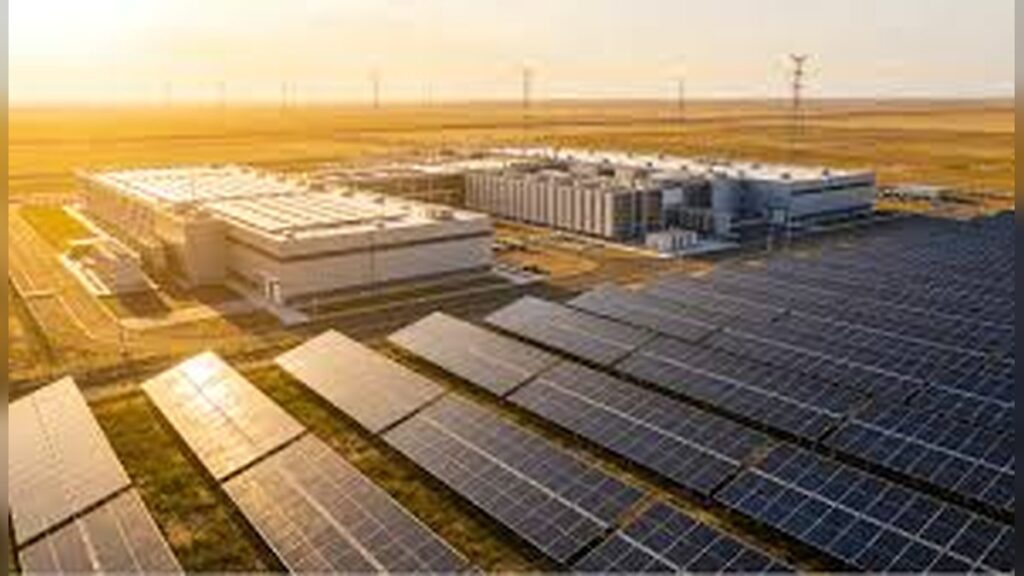
A major example of this convergence is taking shape at the IPM power facility in Israel, where a new 40-megawatt data center is being developed directly inside a power plant complex.
That setup removes one of the biggest constraints in AI infrastructure—grid dependency.
By colocating computing power with energy production, operators can improve reliability, reduce delays, and scale more efficiently.
IPM’s structure also allows it to supply electricity directly to private customers, which adds another layer of flexibility in a world where energy demand is becoming unpredictable and increasingly competitive.
Building for a World Where Downtime Is Not an Option
Modern AI systems don’t tolerate interruptions well.
Training large models or running real-time services requires constant uptime and massive, stable power supply.
That’s why resilience is now a core design principle for infrastructure.
It’s not just about cost anymore—it’s about continuity.
Recent global disruptions and regional conflicts have also reinforced the importance of securing critical infrastructure.
In this environment, energy security and digital security are becoming closely linked.
Impact and Consequences
The shift toward energy-driven AI infrastructure has wide-reaching implications:
- Electricity demand is rising faster than most national grids can expand.
- Data center locations are increasingly dictated by power availability, not just connectivity or talent.
- Energy producers and infrastructure firms are gaining strategic importance in the tech economy.
- Competition for land near power generation sites is intensifying.
- Governments are being forced to rethink energy policy in response to AI-driven demand spikes.
- The cost structure of AI development may increasingly depend on energy pricing and stability.
What’s Next?
Over the next decade, expect AI development to become tightly tied to energy strategy.
Countries with stable, scalable power grids will have a major advantage in attracting AI investment.
We’re also likely to see more hybrid infrastructure models—where data centers are built directly next to or inside power generation facilities to reduce bottlenecks.
Another emerging trend is the rise of private power agreements between tech companies and energy providers, bypassing traditional grid limitations altogether.
Finally, competition will intensify around renewable energy integration, as companies look for cheaper and more sustainable ways to fuel massive computing loads.
Summary
AI is evolving beyond software innovation into a full-scale infrastructure transformation.
The limiting factor is no longer just computing capability, but the physical foundation that supports it—electricity, land, and resilient systems.
As demand for AI grows, energy infrastructure is becoming a strategic asset.
Countries, companies, and investors that secure reliable power sources will hold a major advantage in the next phase of digital growth.
The future of AI won’t just be built in data centers.
It will be built around power plants, transmission lines, and the global race for electricity.
Bulleted Takeaways
- AI is shifting from a software-driven industry to an infrastructure-driven one
- Electricity is becoming the key constraint on AI and data center expansion
- Hyperscale computing is driving massive global energy demand increases
- Power availability is now more important than capital in some infrastructure decisions
- Data centers are increasingly being built near or inside power generation sites
- Israel is emerging as a test case for energy–digital infrastructure convergence
- Projects like IPM show how electricity and computing can be integrated
- Governments may need to redesign energy systems for AI-scale demand
- The next decade of AI growth will depend heavily on infrastructure access rather than algorithms alone

