
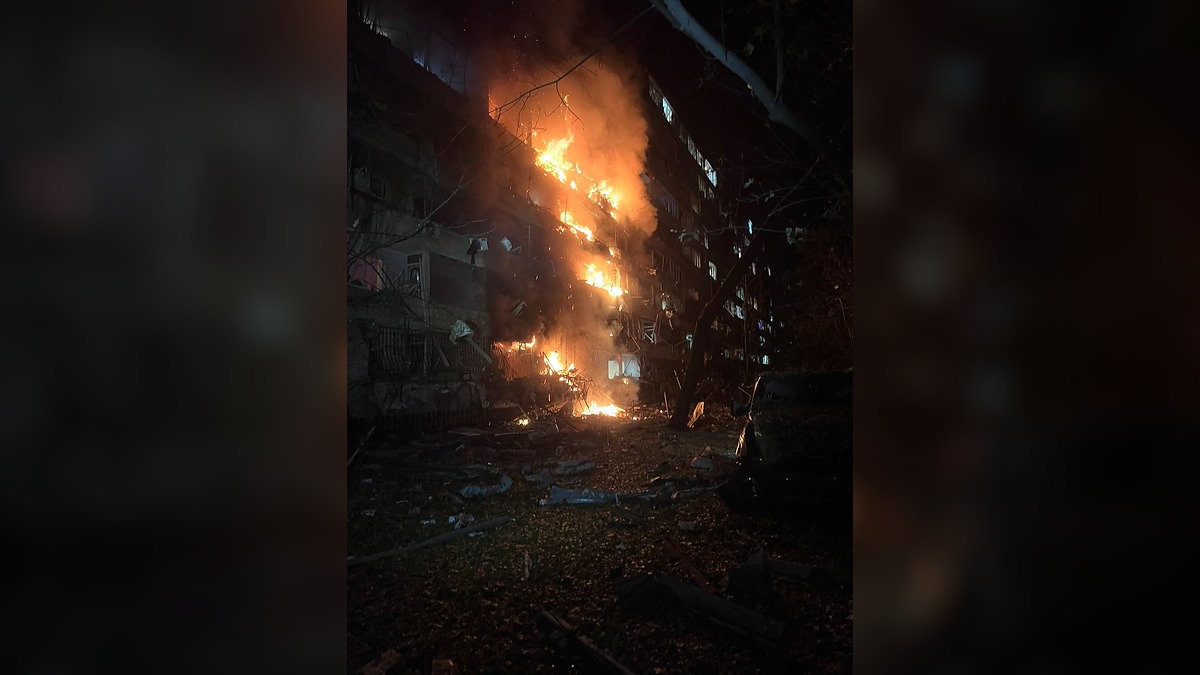
Russian ballistic missiles have struck a major electricity and heating facility in Ukraine’s capital, Kyiv, damaging critical energy infrastructure and a nearby residential building amid renewed concerns over the effectiveness of international efforts to halt attacks on the country’s power network.
The attack targeted Kyiv’s Combined Heat and Power Plant No. 4, commonly known as CHPP-4, one of the capital’s important energy facilities.
Ukrainian authorities confirmed that the installation was hit, while emergency responders were deployed to extinguish a fire at a residential building damaged during the bombardment.
The incident has also raised concerns about Ukraine’s ability to receive timely warnings of incoming ballistic missiles, with officials reporting that the weapons were detected only when they were already approaching the capital.
Kyiv’s CHPP-4 Energy Facility Hit in Russian Ballistic Missile Attack
The latest missile assault focused primarily on energy infrastructure, with CHPP-4 identified as the main target.
The facility plays an important role in Kyiv’s energy system, making damage to its infrastructure a potential concern for electricity and heating services.
Ukrainian officials confirmed that the power plant sustained a direct hit but did not immediately disclose the extent of the damage or whether its operations had been completely interrupted.
The attack comes amid continuing Russian strikes against Ukrainian energy installations, despite diplomatic discussions surrounding a proposed ceasefire covering energy infrastructure.
Authorities were expected to assess the damage and determine what repairs might be required to restore affected systems.
Residential Building Damaged as Emergency Crews Battle Fire
Beyond the attack on the power plant, a residential building in Kyiv was also damaged during the missile bombardment.
Emergency personnel were dispatched to the affected location, where firefighters were working to extinguish a blaze.
The Ukrainian government did not immediately provide information about casualties or the number of residents affected by the fire.
It also remained unclear whether the residential building was struck directly by a missile or damaged by debris or other effects of the attack.
The incident has renewed concerns about the risks faced by civilians living near important infrastructure facilities during missile strikes.
Ukraine Reports Ballistic Missiles Were Detected Too Late for Advance Warning
One of the most significant concerns raised following the attack was the reported absence of advance warnings from Ukraine’s international partners.
According to the Ukrainian presidency, the country’s detection systems identified the incoming ballistic missiles only when they were already close to Kyiv.
This left authorities with limited time to respond to the approaching threat.
Ukraine has relied on cooperation with international partners for intelligence sharing and missile-launch warnings, particularly when dealing with ballistic weapons capable of reaching their targets within minutes.
The government said it had once again received no early warning from its partners before the attack.




However, the statement did not identify which countries or intelligence systems were expected to provide the information, nor did it explain why advance notification was unavailable.
Ukrainian Intelligence Warns Russia May Launch Additional Ballistic Missiles
The latest bombardment may not be the end of the immediate threat, according to Ukrainian intelligence assessments.
Officials reported receiving information suggesting that Russian forces were preparing further ballistic missile launches.
The warning prompted renewed appeals for residents to remain alert and follow safety instructions during the night and the following day.
No specific launch locations, intended targets or expected times for the potential additional strikes were disclosed.
Ukrainian authorities nevertheless emphasized that the intelligence warranted heightened vigilance, particularly in areas vulnerable to missile attacks.
Russian Strike Raises Questions Over Trump’s Proposed Energy Ceasefire
The attack has also intensified disagreement over the status of an energy ceasefire previously announced by United States President Donald Trump.
Ukraine said it had supported the proposed arrangement, which was intended to reduce attacks on energy infrastructure.
However, the latest strike on CHPP-4 has been cited by Kyiv as evidence that Moscow is not observing the commitments described by Washington.
Ukrainian President Volodymyr Zelenskyy accused Russia of disregarding the American announcement and continuing to target critical energy facilities.
The Ukrainian government has called on the United States to examine the latest developments and assess whether Russia is complying with the proposed arrangement.
The precise terms of the reported ceasefire, including its implementation date and the commitments accepted by Moscow, were not detailed in the statement.
Kyiv Calls for Stronger International Response to Attacks on Energy Infrastructure
Ukraine has urged international partners to respond more actively to the continued bombardment of its electricity and heating facilities.
The government argues that attacks on energy infrastructure undermine efforts to reduce hostilities and create additional hardship for civilian populations.
Kyiv has also expressed frustration that its energy facilities remain vulnerable while advance warnings of ballistic missile launches are reportedly insufficient.
Ukrainian officials want the international community, particularly Washington, to recognize the continuing attacks and maintain pressure on Moscow.
The latest statement emphasized that diplomatic efforts must be accompanied by practical measures capable of protecting Ukrainian infrastructure and discouraging further strikes.
Ukraine Seeks More Anti-Ballistic Missiles to Strengthen Air Defenses
Alongside its diplomatic appeals, Ukraine is working to replenish its air-defense systems with additional anti-ballistic missiles.
The government identified the need to strengthen defensive capabilities as a priority following the latest attack.
Ballistic missiles present particular interception challenges because of their high speeds and relatively short flight times, requiring specialized detection and interception systems.
Ukraine’s efforts to secure additional interceptor missiles are intended to improve its ability to defend major cities and strategically important infrastructure.
The Ukrainian presidency did not specify how many additional missiles were being sought or when new supplies might become available.
Further Missile Threats Keep Kyiv on Alert Following Power Plant Strike
The reported damage to CHPP-4 comes as Ukraine continues to face the combined challenges of protecting its energy network, maintaining air-defense supplies and pursuing diplomatic efforts to reduce the intensity of the war.
With intelligence indicating that further Russian ballistic missile launches may be under preparation, authorities have urged residents to exercise caution.
Emergency operations at the damaged residential building were continuing at the time of the initial announcement, while the operational condition of the power plant remained unclear.
The attack also leaves unresolved questions about the effectiveness of the proposed energy ceasefire and the availability of timely international intelligence warnings.
For Kyiv, the immediate priorities remain assessing the damage, protecting civilians and strengthening defenses against additional missile attacks.
The details of the strike, the absence of advance warning and the assessment of possible further launches are based on statements from Ukrainian officials and have not been independently verified.
