
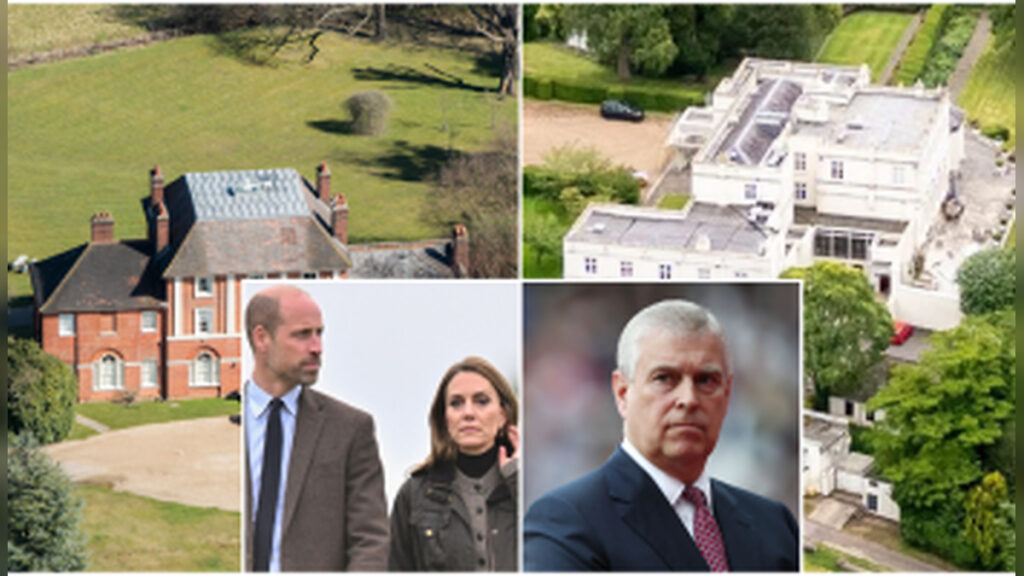
The British monarchy is once again under the microscope, but this time the focus is not ceremonies, scandals, or public appearances.
Instead, attention has shifted toward the luxury homes occupied by members of the Royal Family and the rental arrangements attached to them.
A parliamentary review expected later this year could expose details about how some royals have been living in prestigious Crown Estate properties while paying little — or in some cases almost nothing — in rent.
The discussion has reignited long-standing debates in Britain over taxpayer value, royal privilege, and whether non-working royals should continue benefiting from state-linked properties.
Parliament to Investigate Crown Estate Agreements
The issue centers around properties managed by the Crown Estate, a vast portfolio that includes some of Britain’s most valuable land and buildings.
Members of Parliament on the Public Accounts Committee are preparing to examine how rental agreements were negotiated for royal residences located in places such as St James’s Palace, Kensington Palace, and Windsor Great Park.
Critics argue that some of these arrangements were made quietly and without enough public transparency.
Reports suggest that several royals enjoy “peppercorn rents,” a term used in Britain for symbolic or extremely low rental payments designed mainly to satisfy legal contract requirements.
Because profits generated by the Crown Estate are ultimately handed to the UK Treasury, opponents say reduced rent means less money flowing back to taxpayers.
Prince Andrew and Prince Edward Become Central Figures
One of the loudest criticisms has been directed at Andrew Mountbatten-Windsor, formerly known publicly as Prince Andrew, alongside his younger brother Prince Edward.
Royal author and former politician Norman Baker has accused the system of allowing wealthy royals to live in expensive properties at public expense.
He specifically pointed to Bagshot Park, Prince Edward’s enormous Windsor estate residence, describing it as excessive for a single family.
Bagshot Park reportedly contains around 120 rooms spread across a massive estate.
Edward secured a long lease agreement on the property years ago after paying a large upfront premium, which effectively allows him and Sophie, Duchess of Edinburgh, to live there without ongoing market-rate rent.
The controversy intensified after reports emerged that office space converted from the estate’s stables had allegedly been marketed for more than £130,000 per year.
Questions Raised Over Non-Working Royals
The debate has also widened to include non-working members of the monarchy such as Princesses Beatrice and Eugenie, daughters of Andrew and Sarah Ferguson.
Although neither princess performs official royal duties, both reportedly maintain access to royal residences in London.
Princess Beatrice is believed to use an apartment in St James’s Palace occasionally, while Princess Eugenie retains Ivy Cottage within Kensington Palace grounds despite spending much of her time living in Portugal with husband Jack Brooksbank.
Critics argue these homes often sit empty for large parts of the year while ordinary British citizens struggle with soaring housing costs and inflation.
Supporters of the royals, however, say security concerns, historical tradition, and the monarchy’s public role make such arrangements more complicated than a standard landlord-tenant situation.



William and Kate Try to Avoid Public Backlash
Unlike some other royals, the Prince and Princess of Wales appear keenly aware of public perception around royal housing.
Reports indicate that Prince William and Catherine, Princess of Wales intend to pay market rent for their Windsor residence, Forest Lodge.
Royal observers believe the couple understands the political sensitivity surrounding royal privileges during a period of economic hardship in Britain.
Still, questions remain over several other properties connected to the future king, including Apartment 1A at Kensington Palace and countryside homes linked to royal estates.
Their Kensington residence alone reportedly spans four floors with around 20 rooms, though the family now spends most of its time in Windsor for privacy and security reasons.
The Crown Estate’s Role Explained
The Crown Estate is not the personal property of the monarch, despite frequent public confusion.
It operates as a commercial business managing land, buildings, and investments across the UK.
Revenue generated by the estate goes to the British government, while the Royal Family receives funding through the Sovereign Grant.
This distinction matters because critics argue discounted royal rents effectively reduce the money available to the Treasury.
Defenders of the monarchy counter that many royal properties require enormous maintenance costs and historical preservation work, which can complicate comparisons with ordinary housing.
Public Opinion Around the Monarchy Continues to Shift
Housing controversies arrive at a delicate moment for the Royal Family.
Since the death of Queen Elizabeth II, public attention has increasingly focused on how modern the monarchy should become under King Charles III.
Younger Britons in particular have shown growing skepticism toward inherited privilege and taxpayer-funded benefits.
Debates about royal spending, security, and property use have become more common across political circles and social media.
At the same time, supporters argue the monarchy remains one of Britain’s strongest global symbols and continues to generate tourism, diplomatic influence, and international attention.
Impact and Consequences
The parliamentary investigation could create significant reputational pressure for several royals, especially non-working members of the family.
If details of heavily discounted rents become public, there may be calls for reforms to royal housing policies.
The controversy may also increase pressure on King Charles III’s vision of a “slimmed-down monarchy,” where only senior working royals receive official privileges funded through public-linked institutions.
For taxpayers already dealing with economic pressures, revelations about luxury royal residences could deepen frustration and fuel anti-monarchy sentiment.
There is also the possibility of tighter oversight on Crown Estate agreements moving forward, particularly concerning properties used only occasionally or by royals without formal public duties.
What’s Next?
The Public Accounts Committee is expected to begin reviewing Crown Estate rental arrangements later this year.
Investigators will likely examine how agreements were negotiated, whether market value was properly considered, and how much transparency existed in the process.
Depending on findings, the government could recommend stricter reporting standards or push for updated rules regarding grace-and-favour properties.
Royal insiders will also be watching closely to see whether some family members quietly give up palace residences before the investigation gains momentum.
Meanwhile, the monarchy faces the ongoing challenge of balancing centuries-old tradition with growing demands for accountability in modern Britain.
Summary
A fresh controversy surrounding royal housing arrangements has placed several members of Britain’s Royal Family under renewed scrutiny.
Parliament is preparing to investigate rental agreements tied to prestigious Crown Estate properties occupied by royals including Prince Edward, Princess Beatrice, and Princess Eugenie.
Critics claim some royals have benefited from extremely low rents while taxpayers lose out on potential revenue.
The debate comes during a wider national conversation about transparency, privilege, and the future shape of the monarchy under King Charles III.
While defenders argue royal housing arrangements are complex and historically rooted, pressure is mounting for greater openness and reform.
Bulleted Takeaways
- Britain’s Parliament plans to investigate royal rental agreements linked to Crown Estate properties.
- Critics claim some royals enjoy luxury homes at extremely low or symbolic rents.
- Prince Edward’s 120-room Bagshot Park estate has become a major talking point.
- Princesses Beatrice and Eugenie are also facing questions over rarely used royal residences.
- Prince William and Kate reportedly intend to pay market rent for their Windsor home.
- The controversy could increase pressure for a smaller and more transparent monarchy.
- Public frustration may grow as Britain continues facing economic challenges and housing pressures.
- The investigation could lead to stricter oversight of royal property arrangements in the future.
- NCAA places eleven Nigerian airlines on no-pay-no-service list in Nigeria as debt crackdown intensifies across aviation sector
- Turkish Police Storm CHP Offices in Istanbul and Escalate Political Clash as Tear Gas and Rubber Bullets Shake Opposition Stronghold
- Teen survivor challenges child protection system as 16 year old girl questions BBC interview process in United Kingdom raising concerns over safeguarding failures
- Itamar Ben-Gvir sparks international outrage after confronting Gaza flotilla activists at Ashdod Port in Israel and triggers diplomatic backlash across Europe
- Volodymyr Zelenskyy Celebrates Ukrainian Strike on Russian Chemical Plant in Perm Krai as Kyiv Claims Attack Crippled Military Production 1,700 Kilometers From Border
- Sergey Lavrov Reaffirms Russia’s Two-State Solution Stance and Urges Immediate Gaza Ceasefire During High-Stakes Phone Call With Hussein Al Sheikh in Moscow-Palestinian Diplomatic Exchange
- Canada injects federal funding into Quebec aluminum sector in Montréal to fight US tariff pressure and strengthen industrial competitiveness
- Federal government and Yukon leadership launches $350 million housing and infrastructure project transforming living conditions in Yukon Territory Canada
- Russian Mountaineer Rustam Nabiev Defies Odds and Conquers Mount Everest in Nepal Using Only His Hands
- Defence Minister Christopher Musa Strengthens NLNG Security Operations Across Abuja as Nigeria Pushes Massive Gas Expansion Project
- Montana man receives prison sentence as federal court convicts Kadin Lewis over Molotov cocktails case in Billings courtroom
- Pretoria High Court dismisses Thandeka Mxenge multimillion-rand lawsuit against government departments after ruling claim expired under strict prescription laws

