
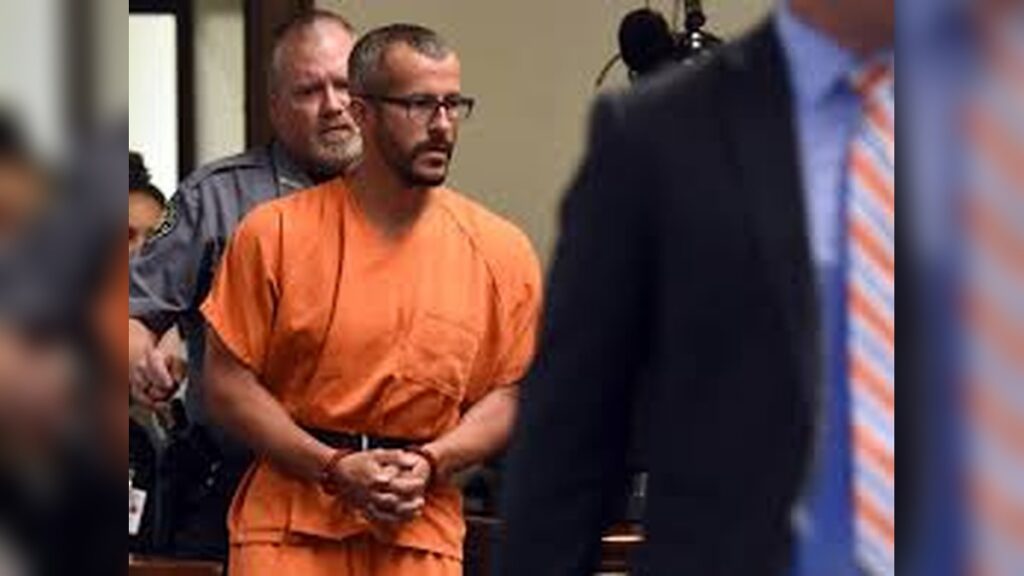
Inside a high-security prison in Wisconsin, convicted family killer Chris Watts is once again talking about his past — but not in the way most people might expect.
Instead of focusing on the 2018 murders of his pregnant wife and two daughters, he is reportedly fixated on something else entirely: his request that his wife consider an abortion during her pregnancy.
Watts, who is serving five life sentences plus additional years without parole, continues to attract attention for his jailhouse statements, letters, and conversations with other inmates and pen pals.
According to people who have recently spoken to him, his version of “regret” does not center on the killings that shocked the world.
A Chilling Case That Began in a Colorado Suburb
The Watts case unfolded in Frederick, Colorado, where he lived with his wife Shanann Watts and their two young daughters, Bella and Celeste.
At the time, Shanann was pregnant with their third child.
In August 2018, after what investigators later described as a collapsing marriage and an affair, Watts killed his family in a sequence of events that stunned even experienced detectives.
He later pleaded guilty and received life imprisonment without parole.
What made the case especially haunting was not only the violence itself, but the calm deception that followed.
Watts appeared on television asking for help finding his missing family while investigators were already closing in on inconsistencies in his story.
Prison Conversations Reveal a Narrow Focus on “Regret”
Recent accounts from prison sources suggest Watts frequently returns to the topic of pressuring Shanann about the pregnancy.
One inmate who attended a Bible study group with him said Watts often expressed guilt about asking her not to continue with the pregnancy.
However, those same sources say he does not meaningfully discuss the murders themselves as something he regrets in the same way.
Instead, he frames his remorse around earlier relationship tensions, particularly around the unborn child.
This selective reflection has raised questions among observers about whether his prison remorse is genuine accountability or a reshaped narrative that avoids the full weight of his crimes.
Letters, Religion, and a Rewritten Identity Behind Bars
Over the years, Watts has also written letters to women outside prison, where he has tried to explain his mindset before the murders.




In some of these writings, he admits selfishness and emotional detachment, but still tends to focus on the pregnancy issue rather than the killings.
Following his sentencing in 2018, Watts underwent what many described as a dramatic religious transformation.
He began attending Bible study groups and adopting a strong evangelical tone in correspondence.
Some inmates and observers have said this shift appears deeply tied to identity reconstruction, a common phenomenon among high-profile prisoners seeking meaning or redemption narratives after conviction.
The Night That Changed Everything in Frederick
According to his later confession, the chain of events began after Shanann returned from a work trip.
A confrontation about the marriage and his affair escalated inside the home.
Watts admitted to strangling her, then transporting her body and later killing his daughters at an oil work site where he was employed at the time.
He disposed of their bodies separately, a detail that added to the horror of the case.
He initially lied publicly, portraying himself as a devastated father, but investigators quickly dismantled his account.
Wider Known Context of the Case
The Watts murders remain one of the most discussed family annihilation cases in recent American criminal history.
True crime analysts often point to the combination of infidelity, emotional withdrawal, and sudden violence as key warning patterns in similar cases.
Experts have also noted how offenders sometimes reconstruct their narratives over time in prison, focusing on “socially acceptable” regrets while avoiding direct confrontation with the full brutality of their actions.
Impact and Consequences
The ongoing prison statements from Watts continue to reopen public attention on a case that deeply unsettled communities in Colorado and beyond.
Each new comment tends to reignite debate about remorse, rehabilitation, and whether some crimes allow for meaningful redemption narratives at all.
For victims’ families and the wider public, the discomfort often lies in the contrast between the gravity of the crime and the perceived narrowness of Watts’ expressed regret.
It also fuels broader discussions about how convicted killers communicate from prison and how those narratives are received.
Psychologically, experts often view this type of selective remorse as a coping mechanism — one that reframes responsibility in a way that is easier for the offender to process internally.
What’s Next?
Watts will remain in prison for life with no possibility of parole, but his story is unlikely to fade from public discussion.
True crime media, documentaries, and ongoing interviews with individuals connected to the case ensure continued attention.
Future commentary from him will likely be scrutinized heavily, especially if it continues to focus on limited aspects of the crime rather than full accountability.
At the same time, ongoing academic and psychological analysis of the case will likely continue to use it as an example of extreme domestic violence dynamics and post-conviction identity reshaping.
Summary
Convicted murderer Chris Watts is reportedly expressing regret in prison, but his focus appears to be on pressuring his wife Shanann Watts about an abortion rather than acknowledging the full extent of the 2018 murders of his wife and daughters.
The case, which took place in Colorado, remains one of the most disturbing family annihilation crimes in recent U.S. history.
Despite serving life imprisonment without parole, Watts continues to generate controversy through letters, religious commentary, and conversations with other inmates.
Bulleted Takeaways
- Chris Watts is serving life imprisonment without parole for murdering his family
- He reportedly focuses his “regret” on asking his wife about terminating a pregnancy
- His wife Shanann Watts was pregnant with their third child at the time of her death
- The murders occurred in Frederick, Colorado in 2018 after a domestic breakdown and affair
- Watts initially lied publicly before confessing and pleading guilty
- He has adopted strong religious language and Bible study participation in prison
- Observers question whether his remorse reflects accountability or narrative control
- The case remains one of the most infamous modern family annihilation crimes in the United States

