
What was meant to be a TV spectacle quickly turned into a talking point for all the wrong reasons.
NBC shifted the post time of the Kentucky Oaks from its long-standing early evening slot to a late 8:40pm start, aiming to capture a bigger primetime audience.
On paper, it made sense—more viewers, more advertising dollars, more buzz.
But on the ground at Churchill Downs, the atmosphere told a different story.
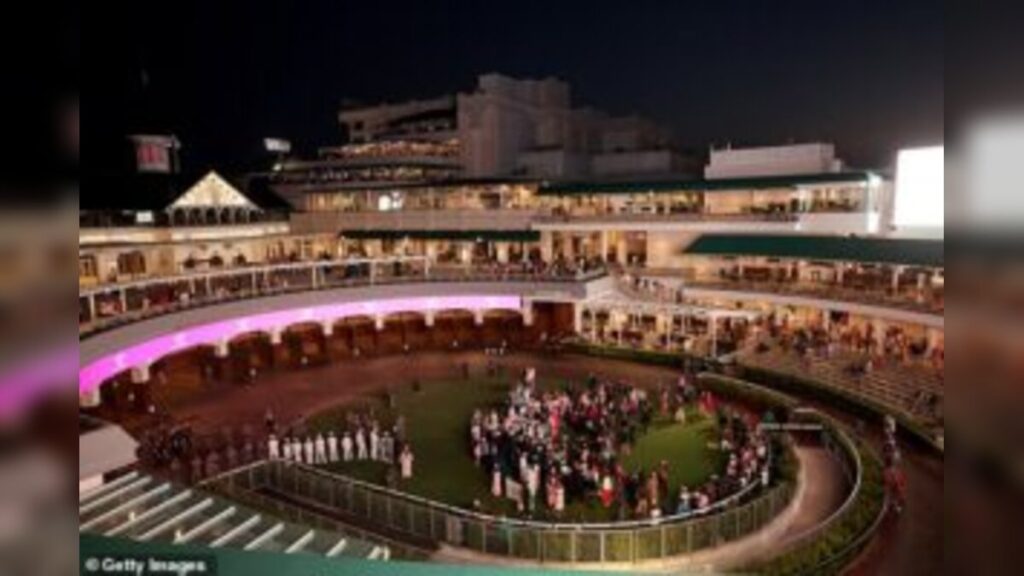
By the time the headline race finally began, large sections of the grandstand had emptied out.
Fans who had arrived in the morning and spent hours soaking in the races simply didn’t stick around that long.
Empty Seats Where There Should’ve Been Roars
Traditionally, Oaks Day is a marathon of excitement—fashion, mint juleps, and racing building toward a packed, high-energy finale.
This year, however, the extended gap between early races and the main event drained that energy.
Instead of a roaring crowd, the later start time meant a quieter, thinner audience.
For many attendees, the long wait just wasn’t practical.
Fatigue, travel concerns, and scheduling clashes all played a part in thinning the once-packed venue before the main race even began.
A Winner’s Joy, Slightly Diminished
For trainer Chad Brown, the victory should have been pure celebration.
His horse delivered a standout performance, proving both strength and resilience against top competition.
Yet even in triumph, there was a sense that something was missing.
One long-held tradition—the trophy presentation in the infield—was scrapped due to the late hour and moved elsewhere.
Brown didn’t hide his disappointment.




While he praised the race itself and the experience under the lights, he admitted the altered ceremony took away from the moment.
Local Businesses Feel the Pinch
Beyond the track, the ripple effects were immediate.
In Louisville, business owners voiced frustration over the change.
Restaurants and bars that usually thrive on post-race crowds suddenly faced uncertainty.
One long-established steakhouse owner even chose to shut down operations during the weekend in protest, calling the schedule shift a move driven more by profit than community.
The concern was simple: if races end late, fewer patrons will venture out afterward—cutting into a crucial revenue window for local businesses.
Critics Call It a Corporate Play
The backlash didn’t stop with business owners.
Some residents argued that the event, deeply rooted in Louisville’s culture, was being reshaped to suit television priorities.
The sentiment was clear—what once felt like a community-centered tradition now seemed increasingly dictated by broadcast interests.
With reports indicating that primetime scheduling could continue for several years, critics fear this might not be a one-off experiment but a lasting shift.
A Gritty Performance on the Track
Amid the controversy, the race itself delivered drama.
Brown’s filly, ridden by Jose Ortiz, showed determination down the stretch.
After making a decisive move around the final turn, she battled past rivals to secure victory in the 1 1/8-mile race.
Crossing the finish line in 1:48.62, she held off strong competition, including challengers from top trainers.
It was a performance that showcased both endurance and timing—qualities that define champions.
Impact and Consequences
The scheduling decision has sparked a wider debate about the balance between commercial interests and tradition.
On one hand, primetime exposure can boost national visibility and revenue.
On the other, it risks alienating the very fans and local communities that sustain the event’s legacy.
For businesses, the financial impact could be significant if late finishes continue to disrupt customer flow.
For fans, the experience may feel less immersive if the energy dips before the main event.
What’s Next?
With the primetime slot reportedly locked in for years to come, adjustments may be inevitable.
Organizers could explore ways to keep fans engaged later into the evening—perhaps through entertainment, improved scheduling, or incentives to stay.
At the same time, pressure from local stakeholders might push for compromises that better support the surrounding economy and preserve long-standing traditions.
Summary
The move to a later broadcast slot for the Kentucky Oaks was intended to elevate the event’s national profile, but it came with unintended consequences.
While the race itself remained thrilling, the atmosphere, traditions, and local economy all felt the strain of the shift.
Bulleted Takeaways
- NBC moved the Kentucky Oaks to a late primetime slot, changing its traditional schedule
- Many fans left early, leading to noticeable empty seats during the main race
- Trainer Chad Brown celebrated victory but criticized changes to post-race traditions
- Local Louisville businesses reported potential losses due to reduced post-event traffic
- Critics argue the decision prioritizes television profits over community interests
- The winning horse delivered a strong, resilient performance despite the controversy
- Primetime scheduling is expected to continue, raising questions about the event’s future balance

