
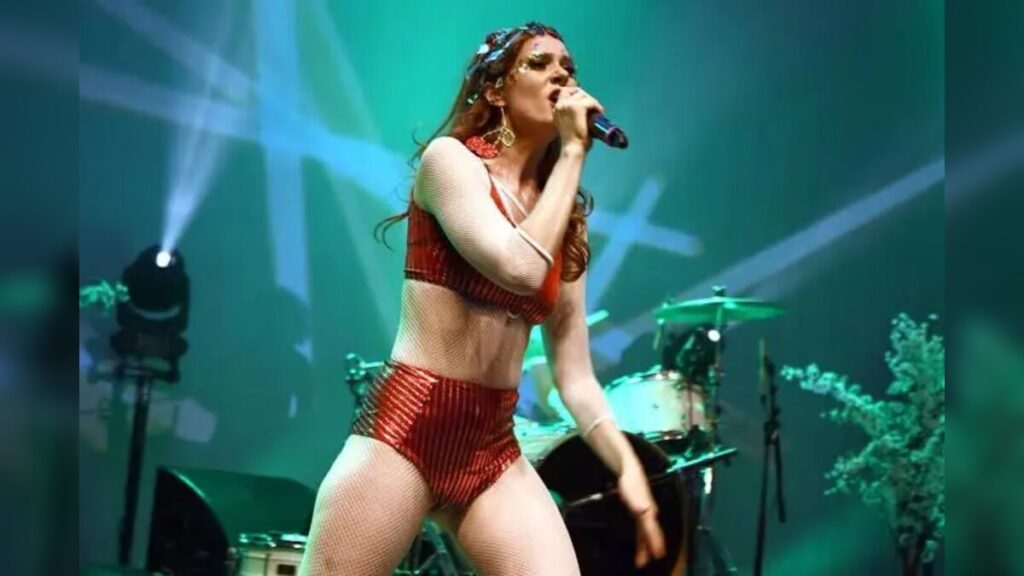
Singer-songwriter Kate Nash has spoken candidly about why she turned to OnlyFans, revealing that financial strain from touring pushed her to find alternative ways to support her music career.
Nash launched an account on the subscription platform in 2024 after facing mounting costs linked to live performances, explaining that even a successful streaming career did not translate into sustainable income.
Her decision quickly sparked conversation across the music industry, especially given her status as a well-known British pop artist.
“Butts for Tour Buses” Campaign and Industry Reality Check
Speaking on Davina McCall’s podcast Begin Again, Nash explained that her OnlyFans venture was part financial necessity and part publicity campaign.
She described launching a tongue-in-cheek initiative called “Butts for Tour Buses,” aimed at raising funds to cover touring expenses while drawing attention to the struggles musicians face behind the scenes.
Nash said that despite millions of streams, artists often earn only fractions of a penny per play, making it difficult to translate popularity into real income.
Rising Costs of Touring and Music Production
The singer highlighted the growing financial burden of live music, pointing to increased costs for venues, travel, staffing, and production.
Expenses such as rehearsal space, transport, accommodation, and technical crew wages have risen significantly, while artist fees have largely remained stagnant.
She explained that even moderately scaled shows require substantial upfront investment, making touring a financial risk rather than a guaranteed source of income.
OnlyFans Used to Fund Live Shows and Crew
Nash clarified that her subscription page is not focused on explicit content but instead serves as a funding mechanism for her music career.




She said the revenue helps pay for essential tour components, including musicians, lighting technicians, and sound engineers.
According to Nash, the goal is to maintain the quality of her live performances while ensuring that everyone involved is paid fairly.
Call for Industry Reform and Political Action
Beyond her personal strategy, Nash used the discussion to call for broader changes in the music industry.
She encouraged fans to contact political representatives about venue closures and the financial instability facing live music spaces.
Her message emphasized concerns that smaller venues are disappearing, limiting opportunities for emerging artists and reducing cultural access in local communities.
Impact and Consequences
Nash’s comments have reignited debate over how streaming platforms compensate artists and whether current revenue models are sustainable.
Her approach highlights how even established musicians are increasingly forced to diversify income streams in order to continue touring.
The situation also underscores wider concerns about inequality in the creative industries, where visibility does not always equate to financial security.
What’s next?
Nash is expected to continue touring while using alternative income sources to support production costs.
Her public comments may also add pressure to ongoing discussions about streaming royalties and live music funding models.
Industry observers will be watching whether her approach influences other artists facing similar financial challenges.
Summary
Kate Nash has revealed she joined OnlyFans after experiencing financial losses from touring, using the platform to help fund her live shows and pay her band and crew.
Speaking on a podcast, she criticized the low income generated from streaming and rising touring costs, while calling for broader reform in the music industry.
Her comments highlight ongoing struggles for artists trying to sustain careers in a changing music economy.
Bulleted Takeaways
- Kate Nash joined OnlyFans in 2024 after touring financial losses
- Launched “Butts for Tour Buses” campaign to fund live performances
- Says streaming revenue pays only fractions of a penny per play
- Highlights rising costs for touring, staffing, and production
- OnlyFans income used to pay band members and technical crew
- Calls for political action to protect music venues
- Warns that smaller venues are closing across the UK
- Music industry described as increasingly difficult for artists to sustain careers
- Her comments reignite debate over fair pay in streaming economy
