
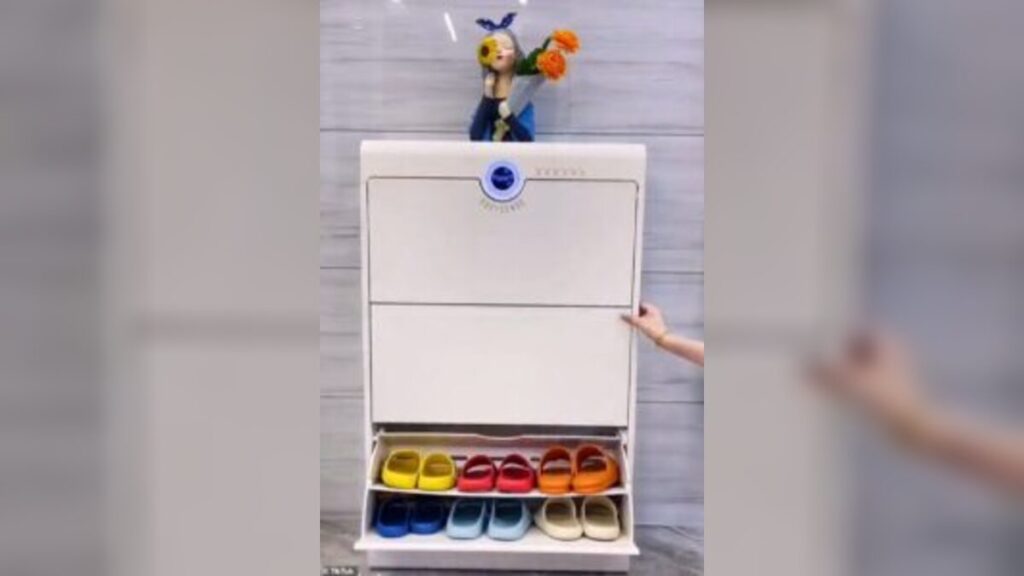
Step into a modern home in South Korea and you might feel like you’ve walked into a tech showroom.
Cleanliness isn’t just a habit there — it’s practically engineered into daily life.
From bins that seal their own trash to sterilising devices designed for everyday kitchen tools, the level of innovation is hard to ignore.
It’s no coincidence. South Korea is often ranked among the cleanest countries globally, with strict public rules that shape private habits.
Eating on certain public transport is discouraged, and littering can come with hefty penalties.
Over time, that discipline has trickled into how people design and maintain their homes.
The Rise of “Smart Cleaning” Culture
Scroll through social media and you’ll quickly stumble on the trend often labelled “Korean cleaning.”
It’s filled with clips of gadgets that look like they belong in the future — think UV sterilisers for knives and chopping boards, compact washing machines built for tight apartments, and high-end shoe cabinets that remove odours and bacteria.
Some devices are surprisingly affordable, while others lean toward luxury.
But the appeal is the same: convenience mixed with hygiene.
One standout is the smart wardrobe that can steam clothes, removing wrinkles and freshening garments without needing a traditional iron.
And yes, people are obsessed. Comment sections are packed with viewers asking where to buy these gadgets, with many wishing they were more widely available outside Asia.
Not Always This Clean: A Look Back
Interestingly, South Korea wasn’t always this pristine.
Back in the 1950s, pollution and poor sanitation were widespread.
Over time, the government introduced strict waste management rules, including fines for improper disposal and mandatory recycling systems.
Education also played a huge role. Schools didn’t just teach academics — they taught cleanliness.
Students were expected to clean classrooms and shared spaces, helping to build habits that carried into adulthood.




That cultural shift laid the groundwork for today’s ultra-clean environment, both in public spaces and private homes.
Japan’s Similar Obsession With Clean Living
South Korea isn’t alone in this. Over in Japan, cleanliness is just as deeply embedded in daily life.
A viral TikTok video recently highlighted a Japanese homeowner’s routine, showing off space-saving washing machines, miniature laundry units for delicate items, and even dedicated shoe-washing compartments.
Shoes, for example, aren’t tossed into a pile — they’re cleaned, dried, and stored in heated compartments designed to keep them fresh.
Experts say this mindset starts young. According to Scott North, cleaning is tied to pride and identity in Japanese culture.
Children regularly clean their own classrooms, reinforcing responsibility and respect for shared spaces.
Celebrity Influence and the Global Shift
The global fascination with smart cleaning isn’t just coming from Asia.
Celebrities like Stacey Solomon and Hannah Ferrier have openly embraced gadgets like robot vacuum cleaners, helping push the trend into mainstream homes.
As smart homes become more common, cleaning technology is evolving from a luxury into something closer to a necessity — especially for busy households looking to save time.
Social Media Reactions Say It All
If there’s one place you can measure the hype, it’s the comment section.
Viewers watching these gadgets in action are consistently amazed:
- People want entire setups replicated in their own homes
- Many are shocked at how compact and efficient the devices are
- Others joke about relying too much on electricity — especially during power outages
There’s also a recurring theme: “Why isn’t this available everywhere?”
Impact and Consequences
This growing obsession with high-tech cleanliness has both upsides and downsides.
On the positive side, these gadgets improve hygiene, reduce manual labour, and can even enhance health by eliminating bacteria and allergens.
They also encourage better organisation and smarter use of space, especially in smaller urban homes.
However, there are trade-offs. Heavy reliance on electricity means vulnerability during outages.
There’s also the cost barrier — not everyone can afford premium devices.
And as automation increases, there’s a concern that people may become overly dependent on technology for basic tasks.
What’s Next?
The future of home cleaning is clearly heading toward full automation.
We’re already seeing AI-powered devices that learn habits and optimise cleaning schedules.
The next wave could include fully integrated smart homes where appliances communicate with each other seamlessly.
And yes — that long-joked-about “robot maid” might not be far off.
As global demand grows, more of these innovations are likely to hit international markets, making them accessible beyond South Korea and Japan.
Summary
South Korea’s reputation for cleanliness isn’t just cultural — it’s technological.
Years of strict policies, education, and innovation have transformed everyday living into something remarkably efficient and hygienic.
Now, with social media spotlighting these advancements, the rest of the world is starting to take notes.
Bulleted Takeaways
- South Korea is known for strict cleanliness laws and high hygiene standards
- Smart cleaning gadgets are widely used in homes, from UV sterilisers to automated bins
- Cultural habits around cleanliness are reinforced through education and social norms
- Japan shares a similar approach, with cleaning deeply embedded in daily life
- Social media has fueled global interest in these innovations
- Benefits include improved hygiene and convenience, but costs and reliance on tech are concerns
- The future points toward even more advanced, AI-driven home cleaning solutions

