
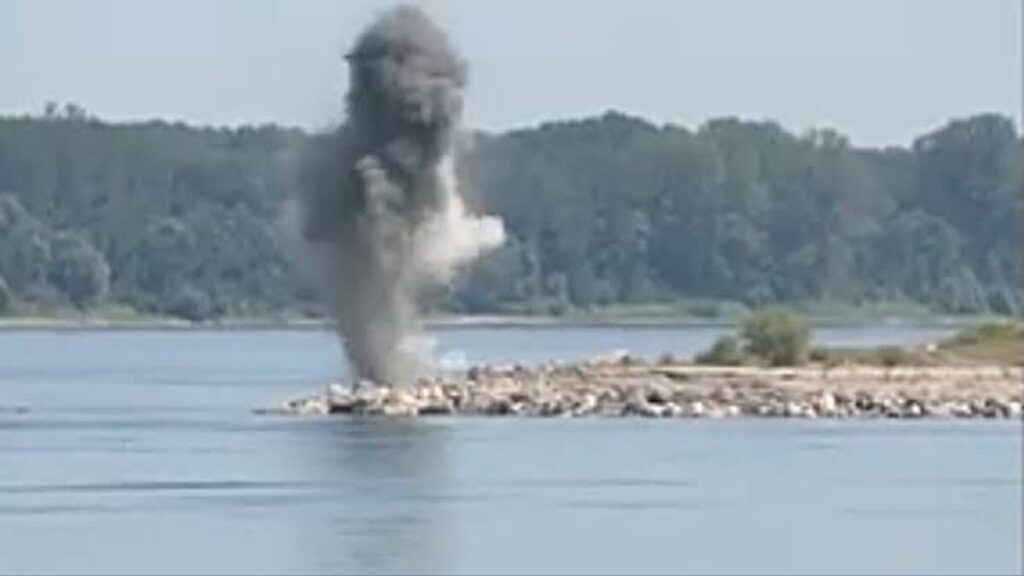
Romania has taken an unusual step to safeguard its energy supply by carrying out a controlled explosion in the Danube River, as exceptionally low water levels threatened the cooling systems of the country’s largest nuclear power station.
The operation was designed to improve water flow toward the Cernavodă Nuclear Power Plant, where prolonged drought has significantly reduced the river’s volume.
Authorities acted to ensure the facility continues receiving enough water to safely cool its reactors.
Military Conducts Precision Blast Along the Danube
Engineers from the Romanian military carried out the mission using around 180 kilograms of explosives in a carefully planned detonation
. The blast targeted a rocky section of the river that had become an obstacle to water movement during the extended dry spell.
By removing the obstruction, officials aimed to restore stronger water flow to the intake area serving the nuclear plant, reducing the immediate risk posed by the shrinking river.
Drought Had Already Affected Nuclear Operations
The emergency measures come after severe drought conditions had already disrupted operations at the Cernavodă Nuclear Power Plant.




Earlier, one of the station’s reactors was temporarily shut down as declining water levels made it more difficult to maintain the cooling systems required for safe operation.
Ensuring a stable supply of cooling water is essential for nuclear facilities, making the Danube’s declining flow a major operational concern.
A Key Source of Romania’s Electricity
Cernavodă is among Romania’s most critical pieces of energy infrastructure, producing about 20 percent of the country’s electricity.
The plant operates two Canadian-designed CANDU reactors, making it a cornerstone of the national power grid.
Because nuclear reactors require continuous cooling, any interruption in water availability can have significant consequences for electricity generation and plant safety.
Climate Pressures Are Increasing Across Europe
Romania’s response reflects a wider challenge facing nuclear power operators across Europe as climate change brings hotter summers and more frequent droughts.
Lower river levels and warmer water temperatures have forced several nuclear plants across the continent to scale back electricity production in recent years.
These conditions reduce the availability of cooling water and make it harder for facilities to operate at full capacity.
Balancing Energy Security With Environmental Challenges
The controlled explosion on the Danube illustrates the growing pressure governments face as they try to secure reliable electricity supplies while adapting to increasingly unpredictable weather patterns.
With droughts becoming more severe and prolonged, energy providers are being forced to adopt unconventional measures to protect critical infrastructure, highlighting the complex relationship between climate change, water resources, and energy security.

