
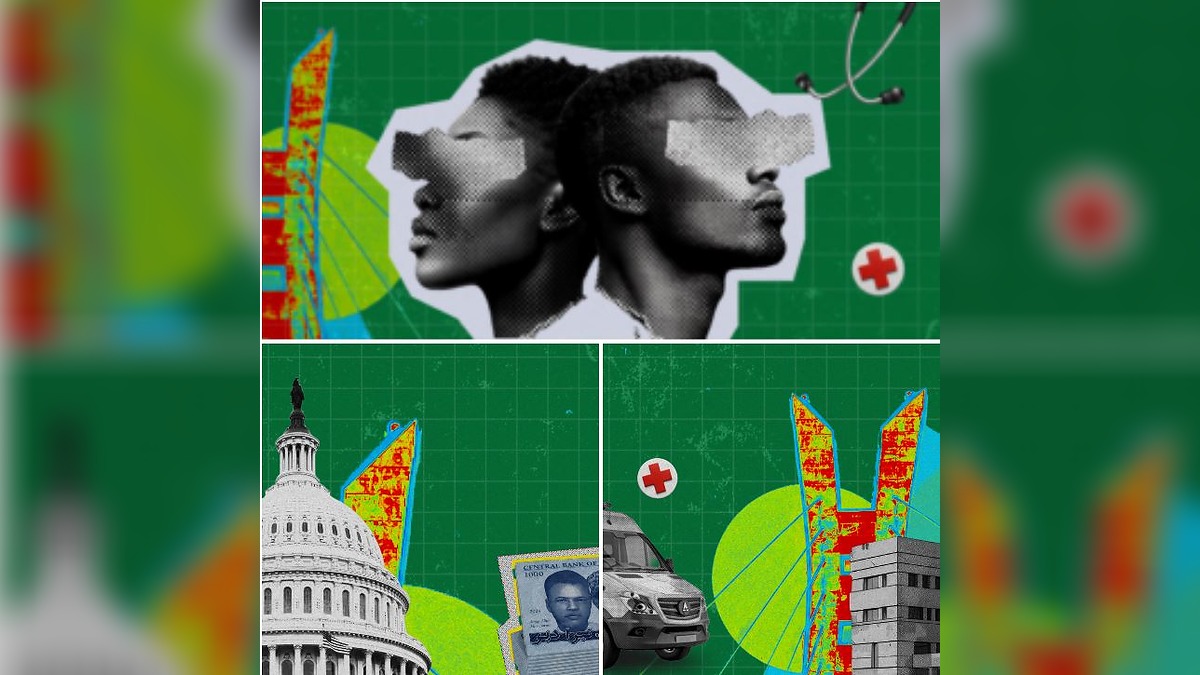
For many Lagos residents, seeking emergency medical assistance can become an ordeal long before they reach a hospital. Calls may go unanswered, multiple numbers may have to be tried, and families often end up relying on friends, private vehicles or personal connections to transport patients to care.
The problem is not necessarily that Nigeria has no ambulances, hospitals or medical personnel. Rather, the systems that should connect those resources when an emergency occurs often do not work together effectively.
That gap has created an opportunity for healthtech founders to build services around coordination, filling spaces that have remained unresolved within the wider healthcare system.
Medwaka’s Journey From Blood Donations to Emergency Response
Medwaka is one example of a company whose business model changed after its founders encountered the limitations of Nigeria’s healthcare infrastructure.
The company initially focused on addressing blood shortages affecting pregnant women in Ondo State. But as the founders worked on the problem, they encountered another obstacle that was just as critical: getting people from the point of an emergency to a facility capable of treating them.
That experience pushed Medwaka to rethink its approach.
Rather than simply adding another ambulance service, the company developed a dispatch and coordination platform designed to connect hospitals, ambulances and first responders that already exist but often operate independently.
The distinction is important. Nigeria’s emergency healthcare challenge is not simply a shortage of vehicles. It is also a failure to coordinate the resources available when time is critical.
When Healthcare Funding Fails at Facility Level
The same pattern can be seen beyond emergency response.
Nigeria’s primary healthcare system has faced persistent funding challenges, with money allocated to healthcare not always translating into resources available where patients actually receive treatment.
Even when funds are released, weaknesses in the system can prevent them from reaching facilities in ways that directly improve patient care.
As a result, informal providers have become an important part of healthcare access for millions of Nigerians.
Patent medicine vendors, unlicensed clinics and community-level caregivers often serve people who would otherwise struggle to access the formal healthcare system.
Their growing role illustrates how communities have adapted to gaps in public healthcare provision.
Donor Funding Has Become Part of the System
External funding has also played a major role in Nigeria’s health sector.
Over the past two decades, international development partners have provided significant support to healthcare programmes, partly reflecting the relatively low level of government health spending.




The dependence becomes particularly visible when major donors withdraw.
The reduction of USAID support in 2025 exposed vulnerabilities across Africa’s health ecosystem, affecting not only funding but also partnerships and infrastructure that had helped connect healthtech companies with public health programmes.
Some digital disease-surveillance systems were also affected when funding streams disappeared, highlighting how difficult it can be to maintain essential infrastructure when its long-term sustainability depends heavily on external financing.
Sexual Healthcare Shows Another Side of the Problem
The gaps are not limited to emergency medicine or healthcare financing.
Sexual and reproductive healthcare remains another area where social attitudes, policy and access intersect.
Contraceptive access can be restricted by stigma, while comprehensive sex education remains limited in many Nigerian schools. Questions surrounding reproductive decision-making also continue to raise broader concerns about women’s autonomy and access to reliable healthcare information.
Technology companies have attempted to address some of these shortcomings.
Whispa, for example, built its service around providing young people with confidential and affordable sexual and reproductive healthcare information, giving users a way to seek answers without the judgment they may encounter through traditional channels.
But digital platforms cannot resolve the structural problems surrounding healthcare education and policy on their own.
Innovation Cannot Replace Public Infrastructure
The emergence of healthtech companies is therefore both encouraging and revealing.
Founders have demonstrated that technology can help people navigate broken systems. Platforms can connect patients with providers, coordinate emergency transport and provide information that may otherwise be difficult to access.
But those innovations should not be mistaken for substitutes for functioning public infrastructure.
A dispatch platform cannot replace a national emergency-response system. A femtech company cannot single-handedly introduce comprehensive sexual health education into schools. Private innovation cannot permanently compensate for inadequate public healthcare financing.
These companies are often responding to problems they did not create.
Founders Are Exposing Where the System Breaks Down
The experiences of companies such as Medwaka and Whispa offer a different way of looking at Nigeria’s healthcare challenges.
Instead of simply measuring shortages through statistics, their journeys reveal what happens when people encounter those shortages in real life.
A founder reaches a point where the existing system cannot solve a problem, builds a workaround and discovers that thousands or millions of other people face the same obstacle.
In that sense, the companies are creating an informal record of the points at which public systems fail to meet people’s needs.
The recurring pattern is striking: families step in, communities improvise, donors fill financing gaps and entrepreneurs build services around missing infrastructure.
The Bigger Question for Nigeria’s Health System
The challenge for policymakers is not to discourage this innovation but to understand what it is revealing.
If entrepreneurs repeatedly have to build around emergency coordination failures, healthcare financing gaps and limited access to sexual health information, those ventures can be viewed as signals of where public intervention is most urgently required.
The broader argument advanced by the health edition of The Nigerian Life Compendium, an initiative of Zikoko Citizen, is that Nigeria’s healthcare story should not be reduced to statistics.
It is also a story about responsibility: who provides care when government systems fall short, who pays when funding disappears, and who steps in when essential services are missing.
For now, founders continue to build solutions around those gaps. But the existence of those solutions should ultimately raise a more fundamental question: why do so many essential parts of Nigeria’s healthcare system still depend on someone finding a workaround?

