
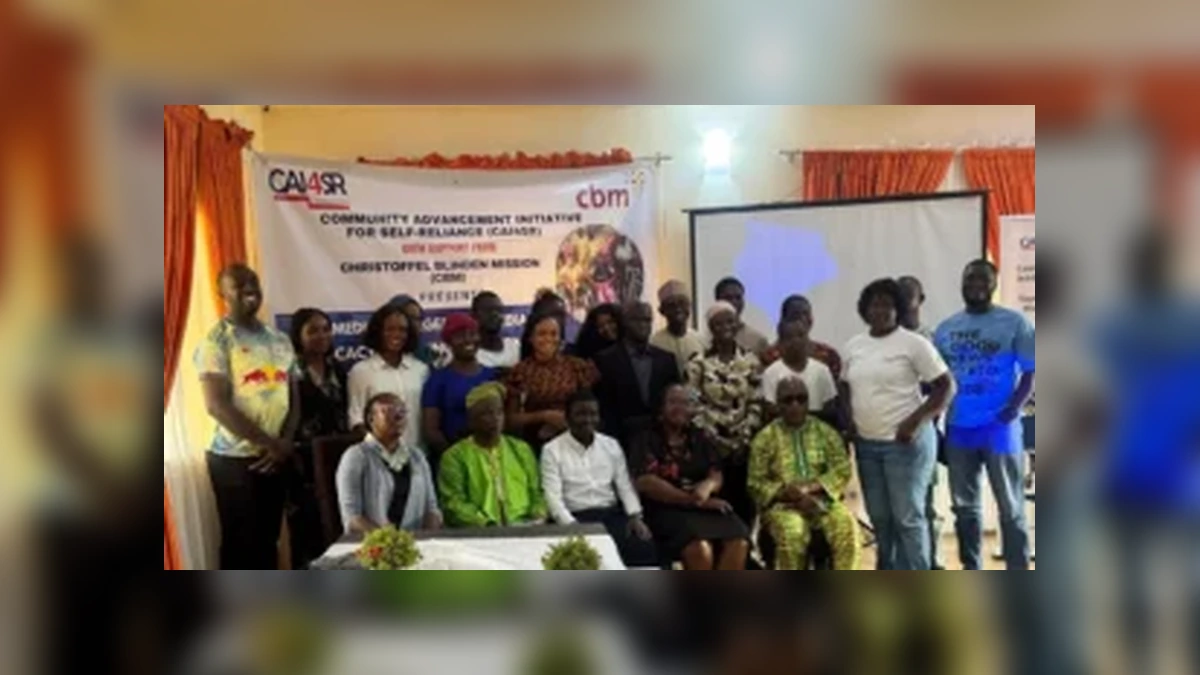
A disability-focused non-governmental organisation has called on Nigerian journalists to play a stronger role in challenging discrimination and negative stereotypes affecting persons with disabilities.
The Community Advancement Initiative for Self-Reliance (CAI4SR) made the appeal during a bi-monthly media awareness programme on disability rights and inclusive reporting held in Osogbo, Osun State.
The organisation said responsible media coverage could help improve public understanding of disability rights while encouraging greater compliance with laws protecting persons with disabilities.
CAI4SR Seeks Better Awareness of Disability Rights
CAI4SR Executive Director, Mrs Eni Ayeni, said journalists have an important responsibility in ensuring that disability-related issues receive accurate and meaningful coverage.
She urged members of the media to use their platforms to educate the public about the rights of persons with disabilities and promote equal treatment without prejudice.
According to Ayeni, greater public awareness is necessary to reduce the stigma that continues to affect people living with disabilities.
Osun Disability Law Faces Implementation Challenges
Ayeni noted that Osun State enacted its Disability Law in 2024, with provisions designed to protect the rights and privileges of persons with disabilities and impose sanctions for violations.
However, she said the existence of legislation had not eliminated the difficulties faced by PWDs.
She called on government authorities to move beyond passing laws and ensure that the provisions are properly implemented so that persons with disabilities can benefit from the protections provided by legislation.
Media Asked to Avoid Harmful Language
The CAI4SR executive director also encouraged journalists to exercise greater care when reporting stories involving disability.
She urged news organisations to avoid derogatory or insensitive expressions and instead adopt appropriate terminology that respects the dignity of persons with disabilities.
She said accurate language can help shape public attitudes and prevent media reports from reinforcing stereotypes.
Disability Rights Extend Across Several Areas
Mr Opeyemi Alabi, a facilitator at the programme, said disability legislation provides for the inclusion of persons with disabilities across different areas of public life.




He explained that the State Bureau of Persons with Disabilities has responsibilities covering areas including education, healthcare, social welfare, economic participation and civil rights.
Despite these legal protections, Alabi said persons with disabilities continue to encounter discrimination, while many of their experiences remain insufficiently represented in the media.
Journalists Told to Move Beyond Pity-Based Reporting
Alabi urged journalists to reconsider the way disability is portrayed in news reports and other forms of media.
He said persons with disabilities should not routinely be presented as helpless victims requiring sympathy or as extraordinary individuals simply because they perform ordinary activities.
Instead, he called for reporting that recognises their abilities, individuality and contributions to society.
‘Fix the Society’ Rather Than the Person
According to Alabi, disability reporting should focus more heavily on the barriers created by society than on presenting disability itself as a problem that needs to be corrected.
He urged journalists to produce stories that promote dignity, self-determination and recognition of the diversity of people living with disabilities.
He also stressed that persons with disabilities should be meaningfully involved in media production and programme development rather than being discussed without their participation.
Media Has Role in Policy and Public Accountability
Alabi said the media has considerable influence over how society understands disability and how institutions respond to concerns affecting PWDs.
He argued that news organisations, digital platforms and entertainment outlets can contribute to changes in public attitudes while also investigating shortcomings in the implementation of disability policies.
He said stronger reporting could help shift public perception away from pity and towards a rights-based understanding of disability.
Inclusive Communication Needed During Emergencies
The facilitator also highlighted the importance of accessible information during national emergencies, health crises and elections.
He called on broadcasters to ensure that important public information reaches persons with different forms of disability by using tools such as sign-language interpretation, closed captioning and audio descriptions.
According to him, emergency and civic information cannot be considered fully accessible if significant sections of the population are unable to understand or receive it.
Newsrooms Also Need Greater Inclusion
Alabi said media organisations should examine their own workplaces as part of efforts to improve disability reporting.
He argued that employing journalists, editors and producers with lived experience of disability could strengthen the accuracy and depth of coverage.
Such participation, he said, would allow newsrooms to develop reporting that is more nuanced, respectful and representative of the experiences of persons with disabilities.
CAI4SR Calls for Stronger Government Action
Ayeni reiterated the organisation’s call for government to ensure that disability laws are not only enacted but effectively enforced.
She said CAI4SR was continuing to engage government institutions and had observed progress through the initiative.
The organisation maintained that sustained cooperation between government, the media and disability advocates would be necessary to turn legal protections into meaningful improvements in the daily lives of persons with disabilities.

