
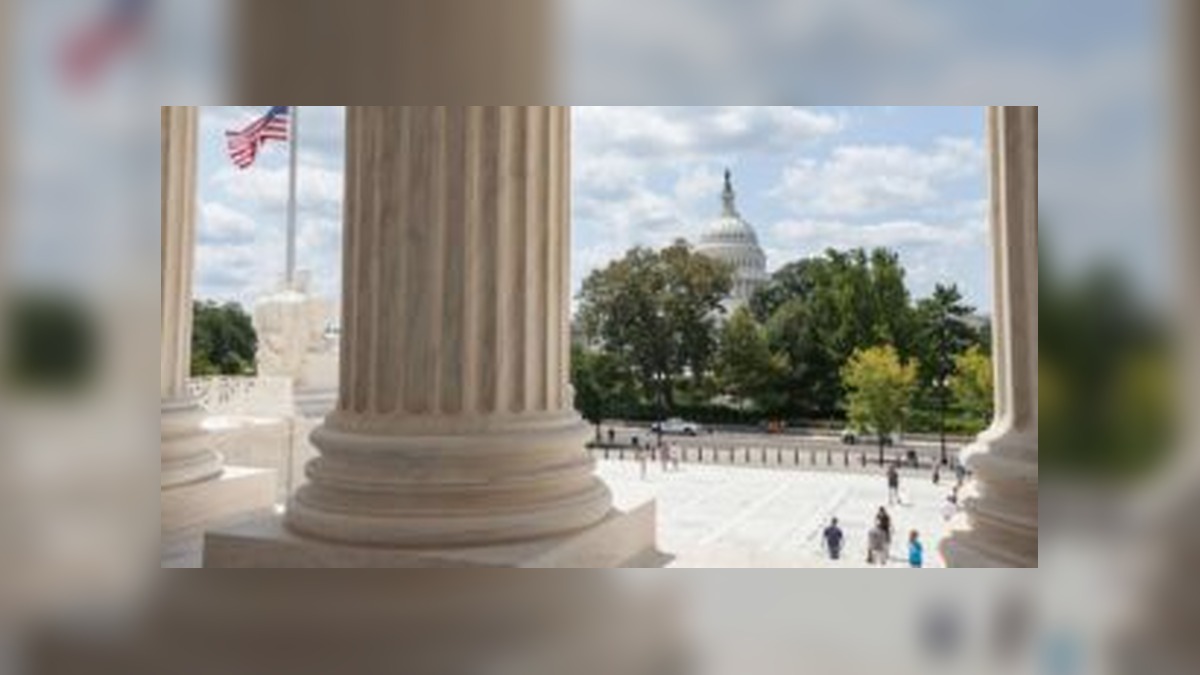
A growing debate over religion and publicly supported education has reached the U.S. Supreme Court, with lawmakers and legal advocates challenging restrictions affecting families and students who pursue faith-based education.
The latest dispute centres on Woolard v. Thurmond, a California case involving parents who educate their children at home through publicly funded independent-study programs.
Senators Cindy Hyde-Smith of Mississippi and Ted Budd of North Carolina have filed an amicus brief asking the Supreme Court to reject a Ninth Circuit ruling that classified the programs as public-school programs. The Supreme Court docket shows that the case was formally filed for review in August 2026.
Senators Challenge California’s Religious Curriculum Restriction
The senators argue that parents participating in California’s independent-study system should remain free to select faith-based educational materials.
Their brief maintains that parents can generally choose their children’s curriculum while complying with state educational requirements, but that religious materials are treated differently.
The senators contend that excluding religious curriculum from an otherwise available public program violates constitutional protections for religious exercise. Their filing also disputes the Ninth Circuit’s conclusion that parents participating in the program can be treated as state actors.
California Case Puts Parental Choice at the Centre
The Ninth Circuit’s ruling took a different view of the structure of the programs.
According to the court’s opinion, California’s independent-study programs operate under extensive legal requirements and supervision by state employees. The Ninth Circuit concluded that these features make them public-school programs rather than private homeschooling arrangements.
The Supreme Court will therefore face questions surrounding the constitutional treatment of religious curriculum within a publicly funded education system if it takes up the merits of the dispute.
Hyde-Smith Says Religious Materials Should Not Be Singled Out
Hyde-Smith said the senators’ filing argues that specifically restricting parents from using faith-based curriculum is unconstitutional.
She expressed hope that the argument would persuade the Supreme Court to overturn the lower-court decision.
The amicus brief has also attracted support from other Republican senators, including Pete Ricketts of Nebraska and Jim Risch of Idaho.
Notre Dame Challenges Another Religious Education Restriction
A separate Supreme Court dispute is bringing another aspect of religious education into focus.



Notre Dame Law School faculty and affiliated programs have filed an amicus brief supporting Bethany Hall and Cameron Johnson in cases involving Virginia’s restrictions on state higher-education funding for students pursuing religious-ministry programs.
The Notre Dame filing asks the Supreme Court to hear the challenges and reconsider the legal framework established by Locke v. Davey, a 2004 case concerning public scholarship funding and religious-ministry studies.
Legal Advocates Point to More Recent Supreme Court Rulings
The Notre Dame filing argues that Locke should be reconsidered in light of subsequent Supreme Court decisions involving religious organizations and public benefits.
The legal advocates contend that more recent rulings have placed greater restrictions on government programs that exclude religious participants from otherwise available benefits.
The filing was submitted on behalf of several Notre Dame legal programs and the Orthodox Union as part of the litigation involving the two Virginia students.
Catholic Student Ministry Expands at Baylor
While the legal disputes unfold, Catholic ministry is also expanding on some American college campuses.
At Baylor University in Texas, the St. Peter Catholic Student Center is seeking to build a substantially larger chapel after reporting strong growth in its student community.
The proposed facility would accommodate 460 people, compared with 175 seats in the current chapel and 220 when overflow arrangements are used.
The project carries a $10 million fundraising target, according to the Catholic centre’s campaign materials.
Existing Chapel Struggles With Growing Demand
Father Henry Carter Finch, who leads the Catholic ministry at Baylor, said the community has expanded considerably in recent years.
He has pointed to overflowing pews and a full Order of Christian Initiation of Adults programme as signs of increased demand for Catholic ministry among students.
The planned chapel and renovation project will proceed once the campaign reaches its $10 million target and receives the necessary approval from the Diocese of Austin.
Catholic University Reports Major Ranking Improvement
Another Catholic institution is highlighting a separate development in higher education.
The Catholic University of America has reported a 21-place improvement in the 2027 U.S. News & World Report national university rankings, moving from 169th to 148th.
The university also reported a No. 75 position in the Top Private Colleges category and a move to No. 72 among Best Value Schools.
University officials attributed the changes to investments in academic quality and student success.
Religion and Education Remain Closely Connected
The developments involving homeschooling, scholarship funding and Catholic campus life illustrate several different dimensions of religion’s continuing role in American education.
The California case focuses on whether families participating in publicly funded home-based education can use religious curriculum. The Virginia litigation concerns access to state financial assistance for students studying for religious ministry.
Meanwhile, developments at Baylor and Catholic University point to continuing activity around Catholic education and student ministry on American campuses.
The Supreme Court’s eventual treatment of these legal disputes could provide further guidance on how government-funded education programs interact with constitutional protections for religious exercise.

