
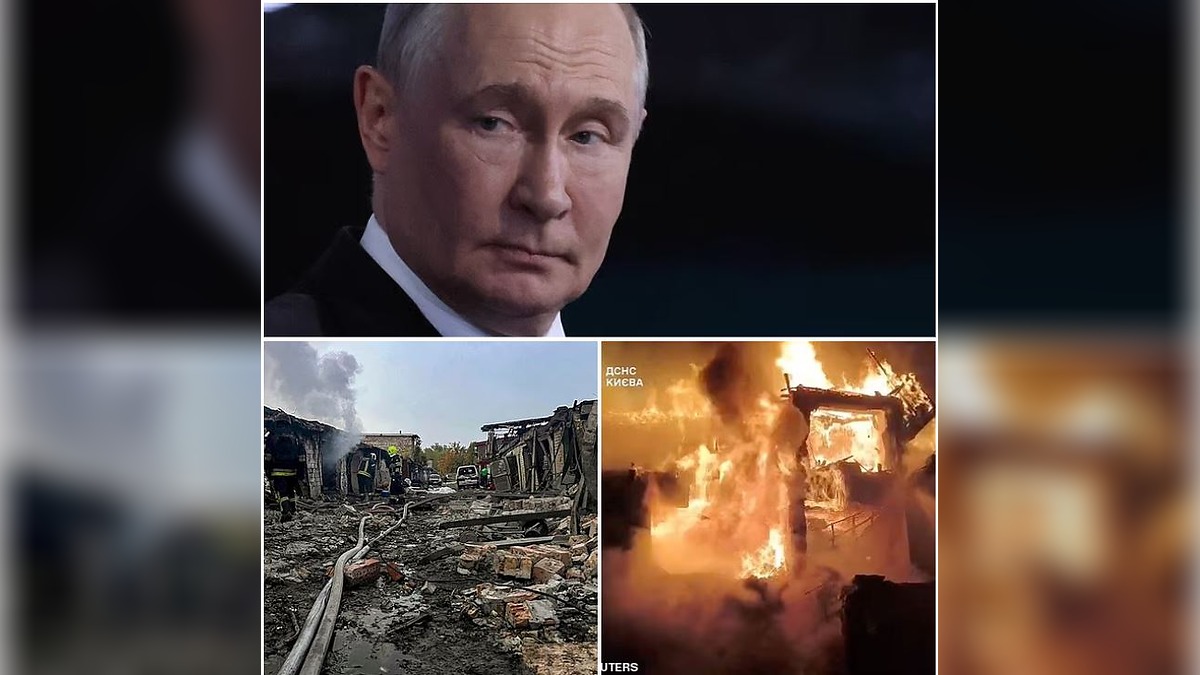
A prominent Russian foreign policy strategist has warned that Moscow could escalate its war against Ukraine to the nuclear level if European countries continue supporting Kyiv.
Sergei Karaganov, honorary chairman of Russia’s Council for Foreign and Defence Policy, told the BBC that Russia would initially rely on conventional military strikes but could turn to nuclear weapons if European governments refused to back down.
His remarks come amid heightened tensions between Moscow and European countries over continued military and financial assistance to Ukraine.
Karaganov Predicts Conventional Strikes Before Nuclear Escalation
Karaganov said Russia would not necessarily begin an escalation with nuclear weapons.
According to his scenario, Moscow would first launch conventional attacks against European targets. He warned, however, that the situation could move to the nuclear level if European governments continued supporting what he described as a war being fought against Russia with American assistance on Ukrainian territory.
He argued that Russia would eventually feel compelled to escalate if the conflict continued without a political settlement.
Russian Official Dismisses Prospect of Western Nuclear Retaliation
When questioned about the possibility that Britain or the United States could respond with nuclear weapons, Karaganov rejected the idea.
He argued that European countries would not retaliate against Russia with nuclear weapons and expressed the view that the United States would also avoid such a response.
Those comments represent Karaganov’s assessment rather than a guarantee of how Western governments would respond to a nuclear attack.
Moscow Accused of Intensifying Attacks on Ukraine
Karaganov also acknowledged that Russia had suffered significant casualties during the war while arguing that Moscow had not acted forcefully enough.
He said Russia was increasing the intensity of its attacks and claimed that the campaign was damaging Ukraine’s ability to operate as a viable state.
The comments come as fighting continues more than four years after Russia launched its full-scale invasion of Ukraine in February 2022.



European Countries Face Growing Security Tensions
The latest warning comes against a wider backdrop of deteriorating relations between Russia and European countries.
Western officials have accused Moscow of conducting activities including cyber-attacks, sabotage and drone incursions. European governments have increasingly described some of these incidents as part of a broader campaign operating below the threshold of conventional warfare.
One incident cited in the latest developments involved the discovery in Germany of a drone carrying an explosive device near Ukrainian cargo aircraft at Leipzig airport.
Russia has rejected Western characterisations of its activities and continues to present its actions as responses to what it considers threats from Ukraine and NATO.
Lavrov Accuses Europe of Waging War on Russia
Russian Foreign Minister Sergei Lavrov has also accused European countries of effectively participating in the war against Russia.
Speaking to the BBC about allegations of Russian hybrid attacks, Lavrov pointed to European and British weapons being supplied to Ukraine and subsequently used against targets inside Russia.
He argued that Moscow therefore had grounds to destroy those weapons.
The Kremlin has repeatedly framed the conflict as a broader confrontation between Russia and the West, while Western governments maintain that Russia launched the full-scale invasion and that their military assistance is intended to help Ukraine defend itself.
Kaliningrad Adds Another Nuclear Flashpoint
The warnings have coincided with a separate dispute over Kaliningrad, the Russian exclave situated between Poland and Lithuania.
In a diplomatic note sent to NATO and reviewed by Reuters, Moscow warned that it could use its full range of military capabilities, including nuclear weapons, if NATO countries attempted to isolate the region from the rest of Russia.
Russia described the situation as carrying a risk of direct armed conflict and also warned of possible strikes against decision-making centres in NATO member states.
The threat highlights the strategic sensitivity of Kaliningrad, which is heavily militarised and geographically separated from mainland Russia.
NATO Rejects Russia’s Nuclear Rhetoric
NATO Secretary General Mark Rutte responded by describing the alliance as defensive and called on Moscow to stop issuing nuclear threats.
NATO also said its exercises and activities did not pose a threat to Russian territory and urged Russia to end its full-scale invasion of Ukraine.
Rutte separately said NATO saw no imminent threat to its territory from Russia, while the alliance continues to support Ukraine and strengthen its own defensive capabilities.
Nuclear Rhetoric Raises Fears of Wider Escalation
The statements from Karaganov and the Russian government come as military and diplomatic tensions between Moscow and Western countries remain elevated.
While Karaganov’s comments do not constitute an announcement of Russian policy, his position carries significance because of his prominent role in Russia’s foreign-policy debate.
The separate warning over Kaliningrad, meanwhile, demonstrates how nuclear weapons continue to feature prominently in Moscow’s messaging toward NATO as the wider confrontation over Ukraine persists.

