
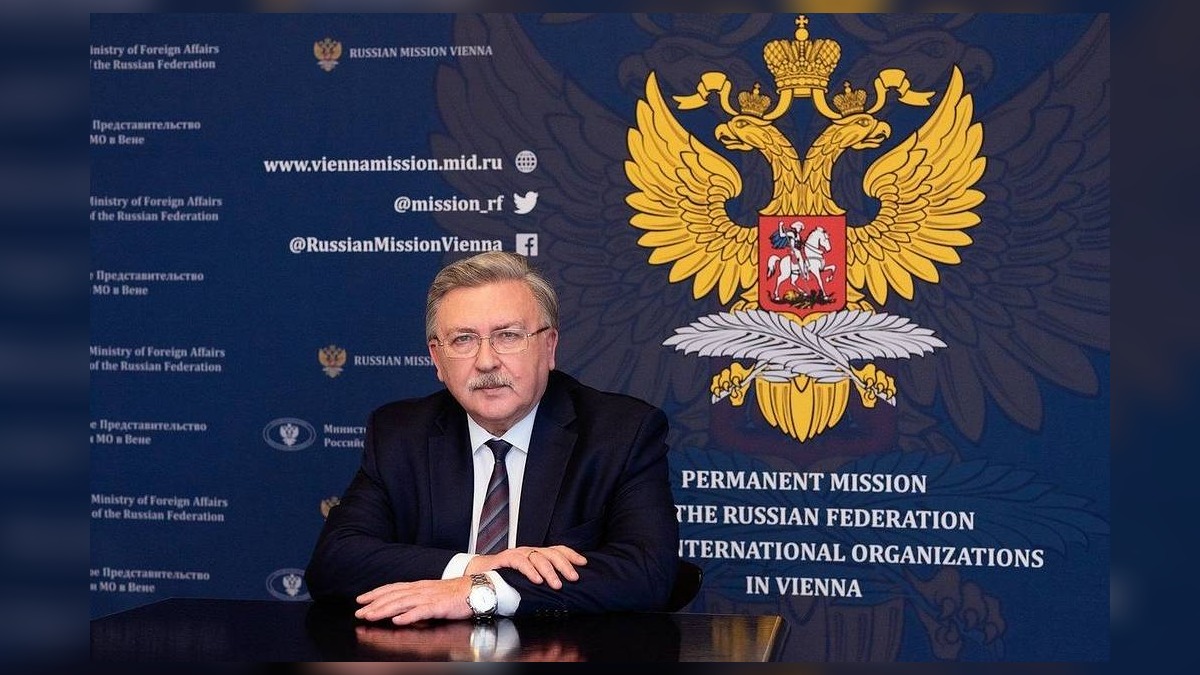
A senior Russian diplomat has questioned whether Switzerland can still be regarded as neutral from Moscow’s perspective after Swiss voters overwhelmingly rejected a proposal that would have imposed stricter constitutional limits on the country’s foreign and security policies.
Mikhail Ulyanov, Russia’s permanent representative to international organisations in Vienna, described Switzerland’s neutrality as “an attempt at wishful thinking” following the September 27 referendum.
Official Swiss results show 70.15% voted against the neutrality initiative, while 29.85% supported it. Turnout was 47.06%.
Russian Diplomat Says Switzerland Is No Longer Neutral for Moscow
Ulyanov responded to the referendum by arguing that Switzerland’s recent policies had already changed how Russia viewed the traditionally neutral European country.
“Switzerland is no longer a neutral state for Russia. This is Switzerland’s choice. No offense,” Ulyanov wrote on X, according to the Russian report.
He went further by questioning whether Switzerland possessed the political strength necessary to maintain strict neutrality.
Ulyanov described the country’s neutral status as “merely an attempt at wishful thinking” rather than what he considered a genuinely principled position.
His comments represent the Russian diplomat’s assessment and contrast sharply with the Swiss government’s position that the country remains neutral.
Swiss Voters Reject Neutrality Initiative by Wide Margin
The diplomatic criticism followed a decisive referendum result.
Official figures from Switzerland’s Federal Statistical Office show 1,854,767 voters opposed the neutrality initiative, compared with 789,130 who supported it.
Every Swiss canton rejected the proposal, meaning it failed both elements of the double-majority requirement for constitutional initiatives.
The result did not abolish Swiss neutrality. Instead, voters rejected proposals to impose a more restrictive definition of how neutrality must be implemented.
Initiative Sought ‘Perpetual and Armed’ Neutrality
The initiative would have explicitly defined Switzerland’s neutrality as “perpetual and armed” in the Constitution.
It also sought to prevent Switzerland from joining or cooperating with military and defence alliances unless the country itself was attacked or faced an imminent military attack.
Another major provision concerned economic sanctions.
Under the proposal, Switzerland generally would have been prohibited from imposing sanctions against states involved in wars, with exceptions for United Nations sanctions and measures intended to prevent sanctions from being circumvented.
Russia Sanctions Became Central to Neutrality Debate
Switzerland’s response to Russia’s invasion of Ukraine has been an important part of the country’s debate over neutrality.
Following Russia’s 2022 invasion, Switzerland largely adopted European Union sanctions against Moscow.
Supporters of the neutrality initiative argued that adopting such sanctions was inconsistent with a sufficiently strict interpretation of Swiss neutrality. The Swiss government rejected that argument and maintained that sanctions can be compatible with the country’s neutral status.
The referendum would therefore have substantially restricted the government’s ability to adopt similar sanctions independently in future conflicts.
NATO Cooperation Would Have Faced New Restrictions
The initiative also sought tighter restrictions on Switzerland’s relationships with military alliances such as NATO.
Although Switzerland is not a NATO member, it cooperates with other countries and international organisations on security matters.
The proposed constitutional changes would have sharply limited cooperation with military or defence alliances except under circumstances involving a direct or imminent attack against Switzerland.
Voters rejected those restrictions alongside the initiative’s proposed sanctions provisions.
Swiss Government Insists Neutrality Remains Intact
Switzerland’s government has stressed that rejecting the initiative should not be interpreted as abandoning neutrality.
Foreign Minister Ignazio Cassis argued during the referendum campaign that the vote concerned how neutrality should be applied rather than whether Switzerland should remain neutral.
After the referendum, Swiss authorities reiterated that position, saying the result allows the country to retain flexibility over sanctions and international security cooperation.
The Federal Council had opposed the initiative, arguing that Switzerland’s existing approach had protected its security, independence and diplomatic role for generations.
Moscow and Bern Remain Divided Over Meaning of Neutrality
The disagreement highlights fundamentally different interpretations of what Swiss neutrality should require.
From Moscow’s perspective, Switzerland’s participation in sanctions against Russia has damaged its credibility as a neutral state.
Swiss authorities, however, argue that neutrality does not prevent the country from imposing sanctions or cooperating internationally on security while remaining outside military conflicts and alliances.
Official Swiss material notes that neutrality has been embedded in the country’s constitutional framework since 1848 and is internationally recognised.
Referendum Leaves Existing Swiss Policy Largely Unchanged
The decisive rejection means Switzerland will not adopt the stricter constitutional framework proposed by the neutrality initiative.
The government retains the flexibility to participate in sanctions regimes and continue security cooperation with other countries while maintaining its official policy of neutrality.
For Russia, however, Ulyanov’s comments indicate that Switzerland’s formal declaration of neutrality does not necessarily mean Moscow will treat Bern as a neutral diplomatic actor.
The referendum has therefore left Switzerland’s official neutral status intact while exposing a widening political disagreement over what neutrality should mean in an era of sanctions, military cooperation and the continuing Russia-Ukraine war.
