The family of the lone juror who refused to acquit Lindsay Clancy in her triple-murder trial has spoken publicly for the first time, insisting that his Catholic faith did not determine his decision to vote for guilt.
The juror, whose identity remains sealed by the court, became the central figure in the case after his refusal to join the other 11 jurors resulted in an 11-1 deadlock and a mistrial on September 4.
His brother told the New York Post that the juror reached his decision by considering the evidence presented during the trial rather than allowing his religious beliefs to dictate his verdict.
“I don’t think religion had anything to do with it,” the brother said.
“He looked at the case, and he made the call. For me, that’s how I would do it. I would just listen to the case with all the evidence, and go from there.”
Family had no idea he was on the jury
The brother also revealed that the family was unaware the juror had been selected to hear one of the most closely watched murder cases in Massachusetts.
He said the juror never told his relatives that he was serving on the Clancy jury, leaving them stunned when the trial ended in a mistrial.
“We didn’t know, that’s why I was shocked,” the brother said.
“He didn’t tell us anything.”
The juror’s decision became public only after nearly a week of deliberations ended without the unanimous verdict required to resolve the case.
Eleven jurors supported finding Clancy not guilty by reason of insanity, while the unidentified juror continued to maintain that she should be found guilty.
Haitian Catholic family says harassment has intensified
The brother said the controversy has placed enormous pressure on the family, which he described as devoutly Catholic and originally from Haiti.
According to him, relatives have faced repeated calls and unwanted visits since the mistrial.
“My family cannot leave the house,” he said.
“People have been calling me like crazy. It’s crazy.”
He also claimed that notes had been left at his mother’s home and that the family did not understand why they were being targeted.
The court has separately moved to keep jurors’ identities sealed indefinitely, citing what Judge William Sullivan described as a “real and present” risk of harm amid intense attention surrounding the case.




Clancy admitted the killings but disputed criminal responsibility
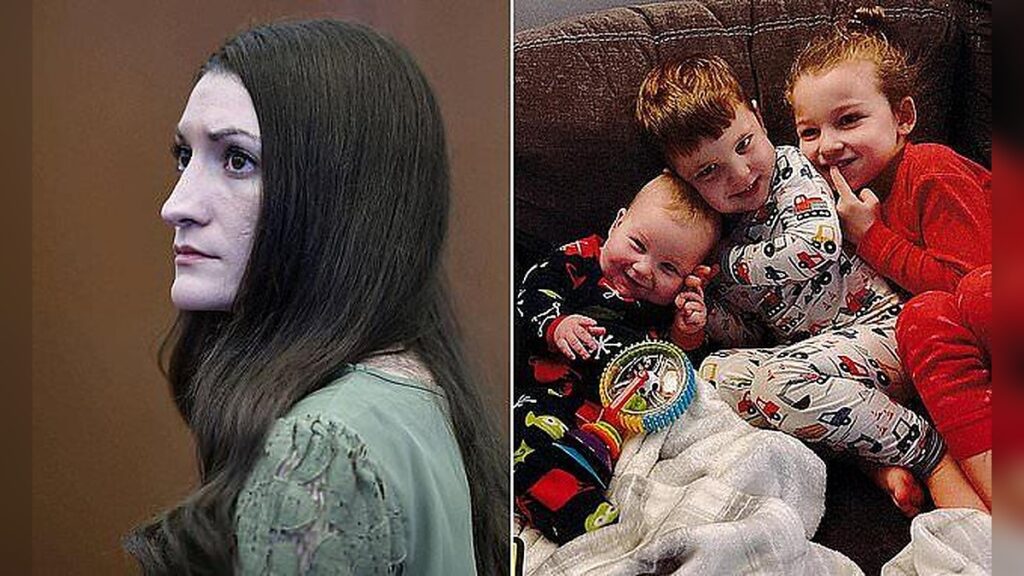
Clancy, a former nurse, was charged in connection with the January 2023 deaths of her three children, Cora, Dawson and Callan, at the family’s home in Duxbury, Massachusetts.
Prosecutors alleged that she strangled the children using exercise bands before attempting to take her own life.
Clancy did not deny causing the deaths.
Instead, her defense argued that she was experiencing severe postpartum psychosis and should therefore be found not guilty by reason of insanity.
The jury spent almost a week deliberating the case but ultimately could not reach a unanimous decision.
Fellow juror described tense deliberations
The holdout’s position had already drawn criticism from another juror who later spoke publicly about what happened inside the deliberation room.
Paula Devlin, 65, said the jurors repeatedly asked the lone holdout to explain why he continued to believe Clancy was guilty.
According to Devlin, the juror was reluctant to explain his reasoning and at one point declined to write his concerns on the board.
One issue he reportedly focused on was the amount of blood found in Clancy’s bedroom.
Devlin said jurors had heard expert testimony explaining the blood evidence but were unable to persuade him to abandon his concern.
Devlin previously described the deliberations as increasingly difficult as the jurors tried to reconcile their sharply different interpretations of the evidence.
Questions emerge over juror’s background
The controversy surrounding the holdout juror has also expanded beyond his decision in the Clancy case.
Reports have surfaced concerning allegations from 2021 involving domestic violence.
The charges arising from that incident were ultimately dismissed.
Additional allegations involving a teenage relative emerged in 2025, according to court documents reported by the New York Post.
The juror was not prosecuted in connection with those allegations either.
Those reports have prompted questions about the jury-selection process and whether the juror disclosed his previous encounters with the legal system when questioned during selection.
His identity, however, remains protected under the court’s order.
People in his community describe a different side
While the juror has become the subject of intense scrutiny since the mistrial, people who know him locally have also offered accounts portraying him as a regular churchgoer and a generous member of the community.
A local garage owner told the Post that he considered the juror a “really nice guy” and recalled an occasion when the man paid a woman’s gas bill after she said she could not afford it.
The garage owner also said the juror recently remarried and that his new wife indicated the family intended to keep a low profile because of the media attention.
Florida governor offers support to holdout
The public controversy has also attracted political attention.
Florida Gov. Ron DeSantis said he would welcome the juror to Florida and offered what he described as “asylum” amid reports of harassment directed toward the holdout.
Meanwhile, a fundraising campaign established in support of the juror drew substantial donations as supporters rallied around his decision to maintain his position during deliberations.
The Massachusetts judge’s decision to keep the jurors’ identities sealed reflects the extraordinary scrutiny that followed the mistrial, while the brother’s comments provide the family’s clearest explanation yet of why the holdout maintained his position.
