
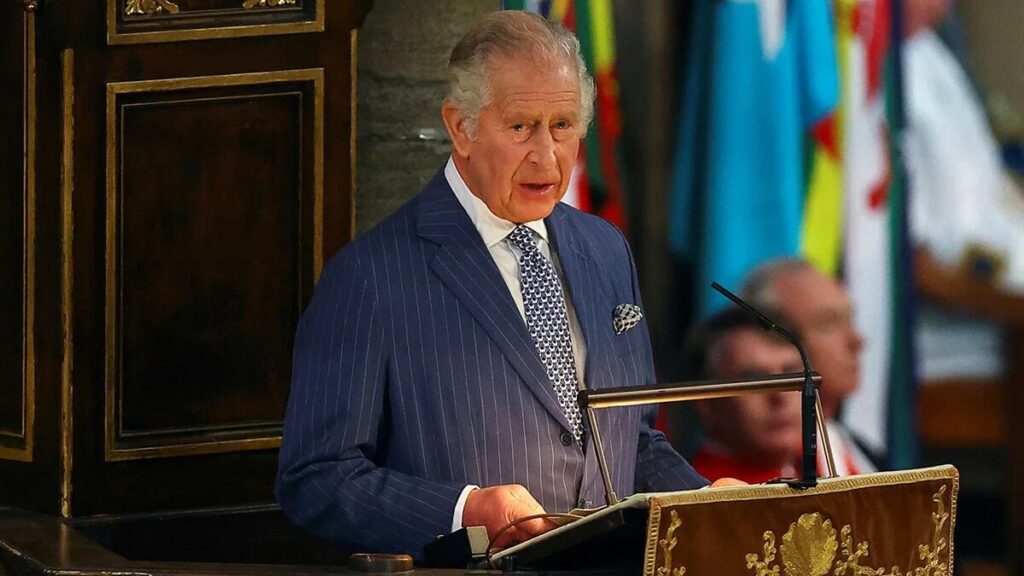
Questions are mounting over whether King Charles III should proceed with a planned state visit to the United States, as political voices in the UK grow increasingly divided over the timing.
The trip, expected to take place ahead of America’s 250th Independence anniversary celebrations, has yet to be officially confirmed—but it’s already sparking strong opinions.
At the center of the debate is concern that the visit could unfold against the tense backdrop of ongoing conflict involving Iran, raising fears it may place the monarch in an awkward diplomatic position.
Labour Voices Call for Caution
Emily Thornberry has emerged as one of the most prominent figures urging caution.
Speaking publicly, she suggested that moving ahead with the visit during an active conflict could risk putting the King in an uncomfortable spotlight.
According to her, the situation requires careful reconsideration, with options including scaling back the itinerary or postponing the trip altogether.
Her argument centers on avoiding any scenario where the monarch appears politically entangled or publicly embarrassed by global tensions.
Growing Political Pressure Across Parties
Thornberry isn’t alone. Ed Davey and former diplomat Peter Westmacott have also expressed concerns, describing the visit as potentially “problematic” given the current geopolitical climate.
Westmacott emphasized that both the government and the palace have a responsibility to consider how such a visit might be perceived by the British public.
There are also fears that the optics of the visit could be interpreted as tacit approval of U.S. foreign policy actions.
Meanwhile, a recent public opinion poll suggests the country itself is divided, with a significant portion of Britons favoring cancellation or delay.
Trump’s Confidence and Controversial Backdrop
On the other side of the Atlantic, Donald Trump appears confident the visit will go ahead.
He has spoken warmly about the King, referencing their past interactions and expressing enthusiasm about the anticipated trip.



However, Trump’s ongoing criticism of allies—including Keir Starmer—and his stance on the Iran conflict have only added fuel to the debate.
His remarks about NATO partners and pressure on countries to support U.S. military actions have heightened diplomatic tensions.
Buckingham Palace Keeps Distance
Buckingham Palace has maintained a neutral stance, noting that decisions around state visits ultimately fall under government guidance.
This underscores the delicate balance between the monarchy’s ceremonial role and the political realities shaping such high-profile engagements.
Supporters Say the Visit Matters More Than Ever
Despite the concerns, several influential voices argue the visit should go ahead.
Kemi Badenoch stressed that the King represents continuity, tradition, and stability—qualities she believes are especially important during times of political strain.
Similarly, Nigel Farage argued that tensions between the UK and U.S. actually make the visit more necessary, not less.
He pointed to the monarch’s unique ability to strengthen diplomatic ties beyond political disagreements.
Royal commentator Robert Hardman also supported proceeding with the trip, suggesting the milestone anniversary offers an opportunity to shift focus toward long-term shared history rather than current conflicts.
Impact and Consequences
If the visit is postponed or canceled, it could signal a cooling in UK-U.S. relations at a sensitive time.
Such a move might also be interpreted as a political statement, whether intended or not.
On the other hand, proceeding as planned carries its own risks.
The King could face scrutiny for appearing alongside a U.S. administration engaged in a controversial conflict, potentially affecting public perception of the monarchy’s neutrality.
Diplomatically, the decision could either reinforce or strain the so-called “special relationship” between the two nations.
What’s Next?
The final decision will likely depend on evolving global events and internal discussions between the UK government and the palace.
As the situation in the Middle East develops, officials will continue weighing the symbolic importance of the visit against its potential risks.
With the expected date approaching, clarity is anticipated soon—though for now, uncertainty remains.
Summary
Debate over King Charles’s potential U.S. visit highlights the complex intersection of diplomacy, public opinion, and global conflict.
While some leaders urge delay to avoid political complications, others see the trip as a crucial opportunity to reinforce international ties and celebrate shared history.
Bulleted Takeaways
- Emily Thornberry suggests delaying the visit due to the Iran conflict
- Several politicians, including Ed Davey, support postponement or cancellation
- Donald Trump expects the visit to proceed and has praised King Charles
- Buckingham Palace says the decision rests with the UK government
- Kemi Badenoch and Nigel Farage argue the visit is vital for diplomacy
- Public opinion in the UK remains divided on whether the trip should go ahead
- The decision could significantly impact UK-U.S. relations and the monarchy’s public image
