
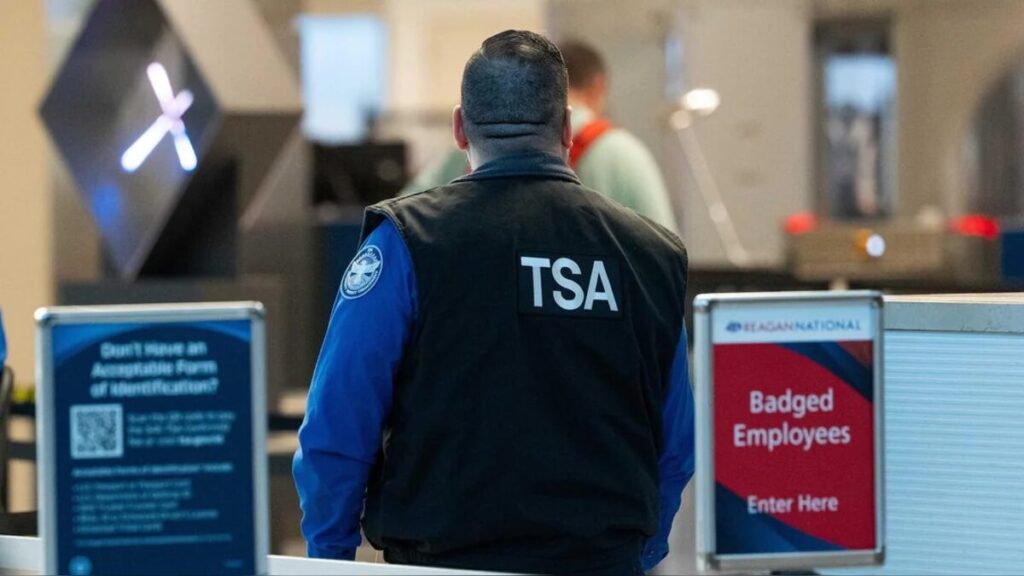
The ongoing government shutdown is creating chaos for travelers across the United States as hundreds of TSA agents quit over unpaid wages, leaving airports dangerously understaffed.
Security lines are stretching to unprecedented lengths, frustrating millions of passengers during one of the busiest travel seasons of the year.
Unpaid TSA Agents Quit in Droves
Since the government shutdown began on February 14, over 300 TSA officers have resigned, with countless others calling in sick or skipping shifts.
Officials warn that this mass departure is compounding long security lines, forcing travelers to plan for significant delays.
Airports like Hartsfield-Jackson International in Atlanta, the world’s busiest by passenger traffic, are now advising passengers to arrive at least three hours before departure.
Meanwhile, at Austin-Bergstrom International Airport, video footage shows lines spilling out of terminals and into parking lots, prompting officials to recommend arrivals 2.5 hours before domestic flights and three hours for international departures.
TSA Sounds the Alarm
On X, the TSA highlighted the severity of the crisis, noting: “3+ hour TSA lines for travelers. 300+ TSA officers who have quit.
A $0 paycheck for those continuing to serve. Enough is enough. No more playing politics with the lives of Americans. The Democrat shutdown of DHS must end now.”
The agency’s warning comes as spring break travel surges, with millions of passengers passing through checkpoints daily.




Airlines for America projects that 171 million travelers will fly between March 1 and April 30, a four percent increase from last year.
DHS Operates Under Emergency Measures
The partial government shutdown has left the Department of Homeland Security (DHS) without funding since February 22, prompting the TSA to enter “emergency operating status.”
DHS has consolidated resources to prioritize essential security operations and focus personnel on threat detection.
The funding deadlock stems from Democrats blocking a $64.4 billion spending package, citing the need for reforms following the fatal shootings of two Americans, Renee Good and Alex Pretti, by ICE agents in Minneapolis.
Other DHS agencies affected include the Federal Emergency Management Agency and Customs and Border Protection.
Political Blame and Public Outcry
As the shutdown drags on, DHS continues to publicly blame Democratic lawmakers, posting warnings about massive security lines and disrupted spring break travel.
Tweets from the agency describe the shutdown as a “nightmare for Americans” and urge Congress to restore funding immediately.
President Donald Trump also weighed in on Truth Social, praising TSA agents for continuing to work without pay and criticizing Democrats for prioritizing funds for other purposes over airport security.
Impact and Consequences
The shutdown is already having far-reaching effects:
- Travelers face hours-long waits at checkpoints, increasing the likelihood of missed flights.
- Airports must manage crowd control with fewer personnel, straining local infrastructure.
- TSA agents working without pay face financial hardships, lowering morale and increasing resignations.
- Spring break travel, expected to be one of the busiest ever, is experiencing unprecedented delays.
What’s Next?
With no resolution in sight, the partial shutdown could continue for weeks.
Senate Republicans are unlikely to reach the 60 votes required to pass DHS funding at the next vote, and the Senate will enter recess from March 30 to April 10.
Forecasts from Polymarket and Kalshi predict the shutdown could last 59 days, potentially setting a new record for the longest government shutdown in U.S. history.
Summary
The ongoing government shutdown is creating a perfect storm for U.S. airports: unpaid TSA agents are quitting in record numbers, spring break travelers are facing hours-long waits, and Congress remains deadlocked over DHS funding.
Officials warn that the crisis will only worsen unless immediate action is taken.
Bulleted Takeaways
- Hundreds of TSA agents have resigned due to unpaid wages amid the government shutdown.
- Airports nationwide are experiencing three-hour security lines.
- Spring break travel is surging, with 171 million expected travelers through April.
- DHS has entered emergency operating status to prioritize essential security operations.
- Political stalemate in Congress prevents funding resolution, prolonging the shutdown.
- Predictions suggest the shutdown could last 59 days, making it the longest in history.
