
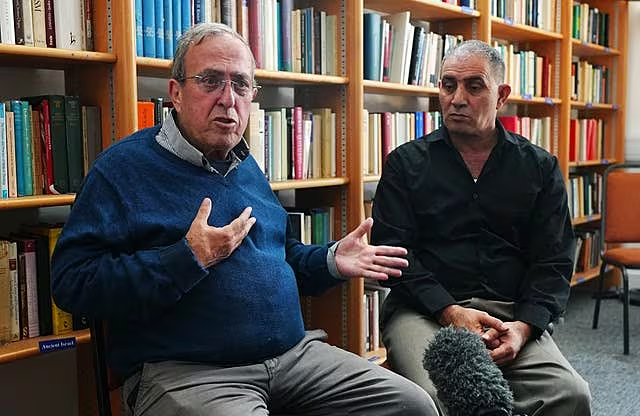
In a world often defined by division, the unlikely friendship between Rami Elhanan and Bassam Aramin stands out as something rare—two men from opposite sides of a long-running conflict choosing dialogue over anger, and cooperation over revenge.
Both men have lived through devastating personal loss tied to the Israeli–Palestinian conflict, yet instead of retreating into bitterness, they have built a shared mission: convincing others that coexistence is still possible.
From Soldiers and Activists to Bereaved Fathers
Elhanan, a former Israeli soldier who served during the Yom Kippur War, once lived a life shaped by conflict.
Aramin, meanwhile, was involved in resistance activities as a teenager and spent time in prison.
Their paths might have remained on opposite sides forever, but tragedy reshaped both of them.
Elhanan’s daughter, Smadar, was killed in a 1997 suicide bombing in Jerusalem.
That loss shattered his world and pushed him toward groups that brought together grieving families from both sides of the conflict.
Aramin later experienced his own unbearable loss when his 10-year-old daughter, Abir, was killed by Israeli forces in East Jerusalem in 2007.
That moment, like Elhanan’s earlier tragedy, became a turning point.
When Grief Became a Bridge Instead of a Barrier
Both men eventually joined the Parents Circle – Families Forum, a rare initiative where bereaved Israeli and Palestinian families meet not to debate politics, but to share grief.
At first, suspicion dominated. Elhanan has admitted he was skeptical when he first attended, unsure whether such meetings could lead anywhere meaningful.
But over time, something shifted.
He began to see Palestinians not through the lens of conflict or occupation, but as people carrying similar pain, loss, and trauma.
That shift in perspective became the foundation of his friendship with Aramin.
A Friendship Forged in Loss and Strengthened by Understanding
The bond between the two men deepened over time, especially after Aramin’s daughter was killed.
Elhanan was by his side during those painful hospital days, describing it as reliving his own loss all over again.




What could have broken them further instead tied them closer.
Their connection later grew through involvement with the group Combatants for Peace, which brings together former fighters and activists committed to non-violence.
Today, they describe each other not as allies, but as family.
Speaking Out in Public Spaces Like Dublin
Recently, the two activists traveled to Dublin for an event hosted by the aid organisation Trócaire, continuing their global advocacy for peace.
They have visited Ireland before and often speak about how audiences there connect deeply with their message, drawing parallels between their experiences and Ireland’s own history of conflict resolution.
Their message remains consistent: peace is not a fantasy, but a choice that requires effort, honesty, and respect.
The Hard Message Behind Their Peace Campaign
Despite their friendship, both men are realistic about how difficult reconciliation can be.
Aramin has spoken about the emotional struggle of trusting someone once seen as an “enemy,” especially after personal loss.
Elhanan has echoed that sentiment, stressing that respect is the foundation of any future peace.
They also reference broader historical lessons, including the Holocaust, to understand how cycles of violence and trauma can persist across generations if left unaddressed.
Known Context Around Peace Movements in the Region
Peace initiatives involving Israeli and Palestinian citizens have existed for decades, often led by civil society groups rather than governments.
Organizations like Parents Circle and Combatants for Peace operate in a difficult environment where political negotiations frequently stall, and public opinion on both sides can be deeply polarized.
Historically, moments like the Oslo Accords in the 1990s showed that dialogue is possible, but sustained peace has remained elusive due to ongoing political and security tensions.
Impact and Consequences
The work of Elhanan and Aramin carries symbolic weight far beyond their personal story.
It challenges dominant narratives that suggest reconciliation is impossible and offers a human face to a deeply political conflict.
Their message has influenced international audiences, academic discussions, and peace advocacy networks, particularly in Europe.
However, speaking out also comes with emotional and social consequences, including criticism from those who believe engagement with the “other side” is betrayal rather than healing.
What’s Next?
Both men continue to travel, speak, and participate in dialogue programmes, hoping to expand awareness and encourage more families to join similar initiatives.
Their long-term goal is not political leadership, but cultural change—shifting attitudes toward mutual recognition and dignity.
They often point to Northern Ireland’s peace process as an example of how entrenched conflict can eventually move toward resolution, even if progress is slow and imperfect.
Summary
Rami Elhanan and Bassam Aramin, two fathers from opposing sides of the Israeli–Palestinian conflict, have transformed personal tragedy into a shared mission for peace.
Through organisations like Parents Circle – Families Forum, they promote dialogue, respect, and human connection as alternatives to violence.
Their friendship stands as a rare symbol of hope in one of the world’s most enduring conflicts.
Bulleted Takeaways
- Rami Elhanan and Bassam Aramin lost daughters in conflict-related violence
- Both now work as Israeli-Palestinian peace activists
- They are members of Parents Circle – Families Forum
- Their friendship developed through shared grief and dialogue
- They also engage with Combatants for Peace initiatives
- Both spoke at a Trócaire event in Dublin
- They emphasize respect as key to peacebuilding
- Their message draws on lessons from other peace processes like Northern Ireland
- They advocate for non-violence and mutual recognition
- Their work highlights the human cost of the ongoing conflict

