
The global economy is once again being forced to adjust to geopolitical shockwaves, this time tied to the fallout from conflict involving Iran in the Middle East.
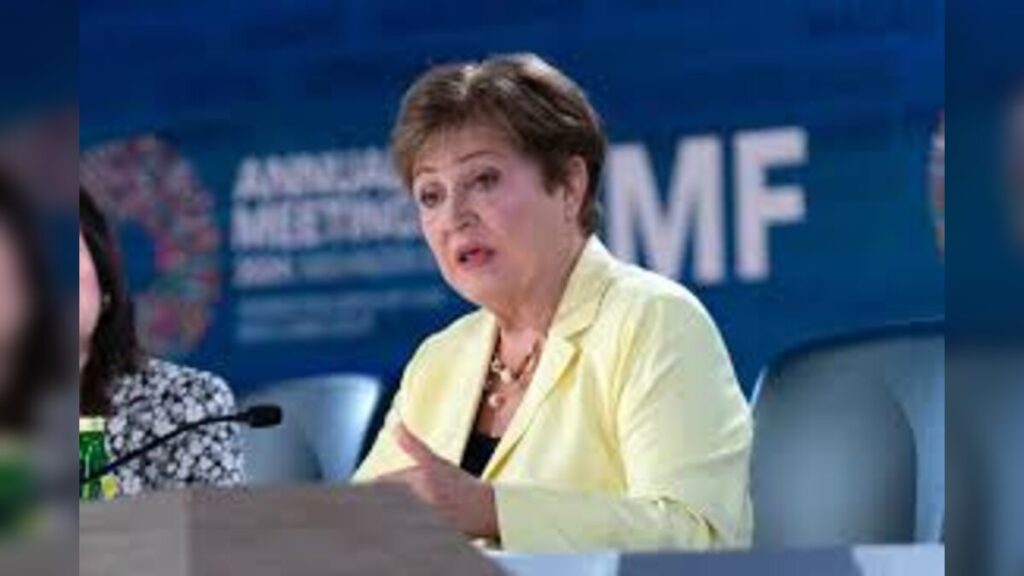
In its latest update, the International Monetary Fund has downgraded growth expectations while warning that inflation could stay higher for longer than previously predicted.
The message is blunt: instability in one of the world’s most sensitive regions for energy and trade is not staying local—it is spreading through markets worldwide.
A fragile global recovery hits another setback
Just when policymakers were hoping for steadier ground after years of pandemic disruptions and uneven recovery, the IMF is signaling another slowdown.
Global growth projections have been trimmed, reflecting weaker momentum across both advanced and developing economies.
The reason is not just domestic weakness in major economies, but external pressure—especially rising uncertainty linked to conflict in the Middle East.
Energy markets, already sensitive, have reacted quickly to fears of disrupted supply routes and volatility in oil prices.
And when oil moves sharply, everything else tends to follow.
Inflation refuses to fully retreat
One of the IMF’s biggest concerns is that inflation, which had been gradually cooling in many regions, may now remain stubbornly elevated.
Higher energy costs feed directly into transport, food production, and manufacturing.
That means even countries far from the conflict feel the pressure through imported goods and supply chains.
For households, it translates into slower relief from high prices.
For central banks, it complicates decisions about when—and how much—to cut interest rates.
Energy markets once again at the center of global tension
Whenever conflict involves the Middle East, energy markets immediately become a focal point.




Investors react to the possibility of disrupted shipping routes, production risks, and broader regional instability.
Even the anticipation of disruption can push oil prices higher, tightening financial conditions globally.
Emerging markets tend to feel this most sharply, especially those heavily dependent on imported fuel.
The IMF notes that this kind of shock doesn’t just affect prices temporarily—it can reshape inflation expectations over a longer period.
A familiar pattern of uncertainty for global policymakers
This is not the first time global growth forecasts have been revised downward due to external shocks.
Over the past decade, the world economy has repeatedly absorbed hits from pandemics, wars, supply chain breakdowns, and financial tightening cycles.
What makes this moment different is the layering effect: inflation has not fully stabilized, debt levels remain high in many countries, and geopolitical tensions are multiplying rather than easing.
That combination limits how much room policymakers have to respond aggressively.
Impact and Consequences
The immediate consequence is slower global expansion.
Businesses may delay investment decisions, governments could become more cautious with spending, and financial markets may remain volatile for longer.
For developing economies, the risks are more severe.
Higher import costs and weaker currency conditions can intensify inflation pressures, making everyday goods more expensive.
Advanced economies are not immune either—especially those still struggling to fully bring inflation under control without triggering economic slowdown.
In short, the IMF’s message points to a world economy that is still walking a narrow path between growth and stability.
What’s next for the global economy?
The outlook now depends heavily on whether geopolitical tensions escalate further or stabilize.
A de-escalation would likely ease energy prices and reduce inflation pressure relatively quickly.
But if uncertainty persists, central banks may be forced to keep interest rates higher for longer, slowing growth even more. Governments may also face renewed pressure to support vulnerable households and industries.
The IMF is expected to continue monitoring the situation closely in its next World Economic Outlook update, with energy prices and inflation trends as key indicators.
Summary
The IMF has lowered global growth expectations and warned that inflation could remain elevated due to economic fallout linked to the Iran war and broader Middle East tensions.
Rising energy costs and uncertainty are central to the revised outlook, affecting both advanced and developing economies.
The global economy remains vulnerable to geopolitical shocks, and the latest warning reinforces how interconnected modern markets have become.
Bulleted Takeaways
- IMF cuts global growth forecast due to geopolitical fallout from Iran-related conflict
- Inflation expected to remain higher for longer because of energy price pressure
- Oil markets are a key transmission channel for global economic disruption
- Developing economies face stronger inflation and currency risks
- Advanced economies may struggle to balance growth with inflation control
- Investment decisions could slow due to uncertainty and volatility
- Future outlook depends heavily on whether geopolitical tensions ease or escalate
- Global economy remains highly sensitive to external shocks and energy market swings

