
The Israeli defense establishment is accelerating efforts to expand its arsenal of locally produced assault drones, as officials respond to a rapidly evolving battlefield shaped by low-cost unmanned systems.
The push comes from the Israel Defense Forces and the Ministry of Defense procurement units, which are now prioritizing mass deployment of first-person-view (FPV) drones for frontline operations.
At the same time, the northern front is heating up.
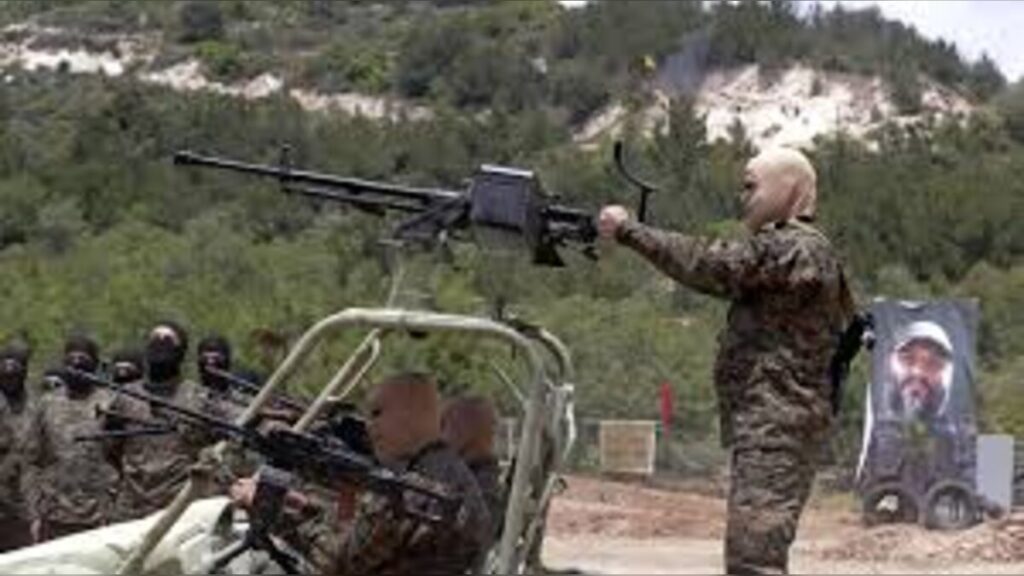
Hezbollah has intensified drone activity in southern Lebanon, with increasing reports of explosive FPV drones targeting Israeli positions and vehicles.
The result is a technological arms race where affordability, speed, and electronic resilience matter as much as firepower.
From Precision Strikes to Disposable Air Power
Recent battlefield developments highlight how quickly drone warfare has changed.
Israeli forces recently reported that an elite unit, Egoz, successfully eliminated a Hezbollah operative using an assault drone—reportedly a “Bat-type” system developed by Israeli defense tech company Xtend.
That moment reflects a broader shift: drones are no longer just surveillance tools.
They are becoming expendable strike weapons—cheap, precise, and increasingly central to infantry tactics.
Military planners are now openly discussing a future where every combat unit may have access to a small strike drone the same way soldiers currently carry grenades or rocket launchers.
A Massive New Procurement Push and Rising Costs
To keep pace, Israel is preparing a large-scale procurement program for around 12,000 FPV assault drones.
These systems are designed to be manually piloted using goggles and joystick controls, with features such as night vision and improved targeting capabilities.
The price difference is striking. Earlier drone models cost roughly NIS 3,500 per unit, while the new generation could cost between NIS 20,000 and 25,000 per drone.
That pushes the total value of the tender toward approximately NIS 30 million.
The shift reflects not just technological upgrades, but also a strategic decision to prioritize reliability, performance, and secure supply chains over low-cost mass production.
Supply Chain Politics: China, Security, and Western Alternatives
One of the most controversial elements in earlier procurement rounds was the inclusion of electronic components sourced from Chinese manufacturers, including video transmission systems linked to companies in Hong Kong.
Critics inside the defense and tech sectors warned that reliance on Chinese-linked components—such as those found in widely used commercial drones from DJI and Autel Robotics—could expose battlefield data and surveillance feeds to security risks.
The new tender appears to respond directly to those concerns by excluding mandatory Chinese components and shifting toward more Western-aligned supply chains, aiming to reduce vulnerabilities in electronic warfare and intelligence interception.




Hezbollah’s Low-Cost Drone Strategy Changes the Equation
While Israel is investing in higher-end systems, Hezbollah is reportedly leaning in the opposite direction: ultra-cheap, mass-produced FPV drones assembled from commercially available parts.
According to defense research assessments, many of these systems cost between $400 and $500 each.
They are often built using 3D-printed components and widely available electronics sourced from global online marketplaces.
This asymmetry creates a stark contrast: high-cost precision drones versus low-cost disposable attack systems deployed in large numbers.
Lessons From Ukraine’s Drone-Driven Battlefield
Military analysts frequently compare the current Middle East drone escalation to the war in Ukraine, where FPV drones have become a dominant battlefield force.
In Ukraine, drone production has reportedly reached thousands per day, with hundreds of thousands produced monthly.
These systems have reshaped frontline warfare, making armored movement more dangerous and forcing constant electronic countermeasures.
The same trend is now emerging in the Israel–Lebanon theater, where small explosive drones are increasingly shaping tactical decisions and limiting movement in contested zones.
Defense Industry Race and Global Competition
Israeli defense startups and established firms are competing for major contracts in the new procurement cycle.
Companies such as Xtend, Robotican, and Ondas Holdings are among those positioned to benefit, while others have withdrawn due to pricing constraints or shifting technical requirements.
Xtend, in particular, has gained international attention after securing contracts with the U.S. Department of Defense for AI-enabled drone systems designed for close-quarter combat operations.
However, industry experts caution that even large-scale procurement may not dramatically reshape battlefield realities unless production becomes truly mass-scale and cost-efficient.
The Tactical Evolution: Drones as Frontline Weapons
What is becoming increasingly clear is that FPV drones are no longer experimental tools.
They are evolving into standard infantry weapons with direct offensive roles.
Some defense analysts describe them as the modern equivalent of handheld explosive launchers—light, portable systems that can be deployed instantly without traditional line-of-sight targeting.
Yet this evolution also introduces new risks: increased battlefield saturation, faster escalation cycles, and the growing importance of electronic warfare systems designed to jam or intercept drone communications.
Impact and Consequences
The expansion of Israeli drone procurement could significantly reshape regional military dynamics.
On one hand, it strengthens precision strike capabilities and reduces reliance on traditional air support for certain missions.
On the other hand, it accelerates an arms race with non-state actors like Hezbollah, who can deploy cheaper systems at scale, forcing Israel to invest heavily in counter-drone technologies.
This imbalance may also increase battlefield unpredictability, as small, low-cost drones become capable of causing disproportionate damage to expensive military equipment.
What’s Next?
The next phase is likely to focus on scaling production and integrating drones more deeply into infantry units.
Training programs for FPV operation are expected to expand, while electronic warfare systems will be upgraded in parallel.
There is also a strong likelihood of further investment in AI-assisted targeting and autonomous navigation systems, reducing reliance on manual piloting under combat conditions.
Regionally, Hezbollah is expected to continue refining low-cost drone tactics, potentially increasing the frequency and sophistication of FPV attacks along the northern border.
Summary
The Israel Defense Forces is moving toward large-scale adoption of FPV assault drones as part of a broader transformation in modern warfare, driven by escalating drone activity from Hezbollah.
The shift reflects a global trend where cheap, fast, and disposable drones are becoming central to frontline combat, challenging traditional military advantages and forcing rapid adaptation across defense industries.
Bulleted Takeaways
- Israel is expanding procurement of 12,000 FPV assault drones
- New drones cost significantly more than earlier models due to advanced features
- Shift away from Chinese components due to security concerns
- Hezbollah is using low-cost, mass-produced FPV drones in increasing numbers
- Drone warfare is increasingly compared to the battlefield dynamics in Ukraine
- Israeli defense firms are competing for major contracts in the emerging drone market
- FPV drones are becoming standard frontline offensive weapons
- Electronic warfare and jamming resistance are now critical battlefield factors
- The drone arms race is intensifying between state and non-state actors
- Future warfare is moving toward mass deployment of cheap, expendable aerial systems

