
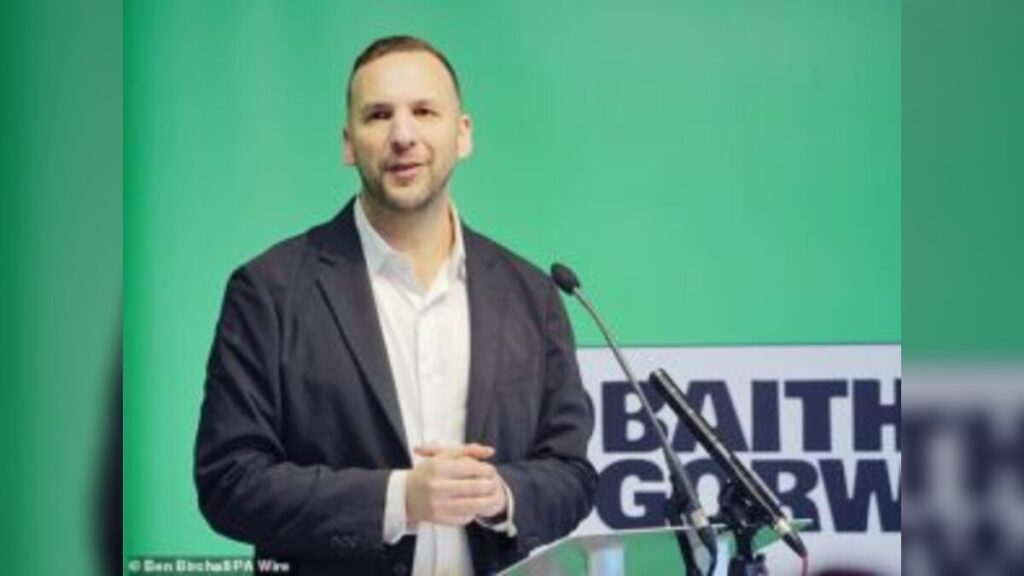
A fresh political controversy has erupted in the UK after Green Party leader Zack Polanski suggested that people with certain Right-wing beliefs may need to be excluded from parts of society rather than persuaded.
His remarks, made during a discussion on his Bold Politics podcast, have triggered accusations of authoritarian thinking from opponents across the political spectrum, reigniting debate about free speech, political tolerance, and democratic boundaries in modern Britain.
The backlash has been swift—and unusually intense for what began as a philosophical conversation about division in society.
Debate Over Whether Political Opponents Can Be “Changed”
Speaking with broadcaster Zakia Sewell, Polanski explored how society should respond to growing ideological divides.
He questioned whether individuals holding what he described as “toxic” Right-wing or far-Right views could realistically be persuaded to change.
He also floated a more controversial idea: whether society should focus less on changing such people and more on building systems that do not include them at all.
That framing immediately raised alarm bells among critics, who saw it as a shift away from political engagement and toward exclusion.
Winston Churchill Comments Add Fuel to the Fire
The controversy widened further when Polanski also challenged mainstream historical views of Winston Churchill.
He suggested that the widely held narrative portraying Churchill as an “amazing Prime Minister” should be questioned, describing the wartime leader as “deeply problematic.”
While reassessing historical figures is not unusual in academic debate, critics argued that linking this to modern political exclusion made his comments more provocative and politically charged.
Accusations of “Authoritarian Thinking” From Opponents
The strongest reaction came from Conservative Party chairman Kevin Hollinrake, who described Polanski’s remarks as authoritarian in tone and implication.
He argued that excluding people based on political beliefs echoes historical examples of political repression in regimes such as Soviet Russia and Castro-era Cuba.



His warning was clear: any system that seeks to remove ideological opponents risks sliding away from democratic norms.
A spokesperson for Reform UK went further, accusing Polanski of abandoning persuasion in favour of exclusion, saying his comments revealed a desire to sideline anyone outside his political outlook.
Tension Inside the Green Party Context
The controversy is particularly sensitive because it comes shortly after some Green Party candidates faced accusations of antisemitic hate speech ahead of local elections.
Although unrelated directly to Polanski’s comments, the timing has intensified scrutiny of the party’s internal culture and messaging discipline.
It also raises broader questions about how political parties manage public messaging during election periods when reputational pressure is already high.
Where Free Speech Meets Political Boundaries
At the heart of the debate is a familiar but unresolved question in modern politics: how should democratic societies deal with deeply opposing views?
Polanski’s comments suggest a more structural approach—reducing influence or participation of groups deemed harmful.
Critics argue this crosses a line from political disagreement into exclusionary thinking.
Supporters of open debate, however, warn that deciding who gets to participate in society based on ideology can undermine democratic pluralism.
Impact and Consequences
The immediate impact has been reputational pressure on Zack Polanski and the Green Party, with opponents using the comments to question the party’s commitment to pluralism.
It may also complicate the Greens’ messaging ahead of elections, especially as they try to appeal to a broader voter base beyond traditional supporters.
More broadly, the controversy feeds into a growing political culture war in the UK over free speech, ideological tolerance, and what counts as acceptable political discourse.
What’s Next?
Attention will now turn to whether Polanski clarifies or softens his remarks in response to criticism.
The Green Party may also face internal pressure to distance itself from interpretations of his comments, particularly if opponents continue to frame them as exclusionary.
Meanwhile, the issue is likely to resurface during election campaigning, where political language is closely scrutinised and easily amplified.
Summary
Zack Polanski has sparked controversy after suggesting that some Right-wing individuals may be too entrenched in their views to be included in a shared society.
His comments, made during a podcast discussion, have been criticised as authoritarian by political opponents, who argue they undermine democratic inclusion and free debate.
The debate has quickly expanded beyond one interview, touching on broader concerns about political tolerance and free expression in the UK.
Bulleted Takeaways
- Zack Polanski suggested some Right-wing views may be beyond persuasion
- He questioned whether society should exclude certain ideological groups
- He also criticised mainstream views of Winston Churchill
- Conservatives and Reform UK accused him of authoritarian thinking
- Kevin Hollinrake compared the logic to historical authoritarian regimes
- Controversy comes amid scrutiny of Green Party candidates ahead of elections
- Debate centres on free speech versus political exclusion
- Critics say his comments undermine democratic inclusion
- Supporters of open debate warn against ideological filtering
- Issue likely to continue shaping election and media discussions

