
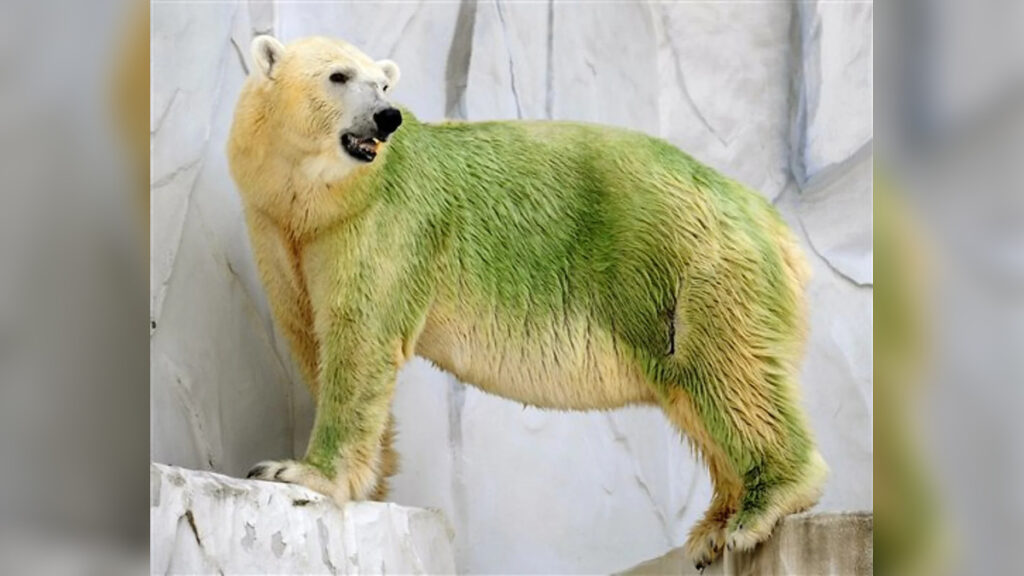
Visitors at the Moscow Zoo were surprised after a polar bear named Terpey appeared with an unusual greenish tint to its fur.
The sighting was captured on video and later shared by the Novosti Moskvy Telegram channel, quickly drawing curiosity online.
Despite its striking appearance, zoo officials and specialists say there is no cause for concern regarding the animal’s health.
Why the Polar Bear’s Fur Turned Green
Experts explain that the phenomenon is natural and linked to the unique structure of polar bear fur.
Each hair is hollow and filled with air, a feature that helps the animals conserve heat in Arctic environments.
During warmer periods, however, microscopic algae can develop inside these hollow hairs.
When this happens, the fur may temporarily take on a greenish coloration.




The effect is purely external and does not affect the animal’s well-being.
Zoo specialists confirmed that Terpey shows no signs of illness or distress, and the color change is considered a harmless seasonal occurrence.
Public Reaction and Viral Video Interest
The video of the green-tinted polar bear quickly circulated on social media, sparking both surprise and fascination among viewers.
Many initially questioned whether the coloration indicated a health issue, prompting the zoo’s clarification.
Such rare visual changes often attract attention at major zoological parks, especially when they involve iconic species like polar bears.
Another Star Resident Celebrates a Milestone
In related news from the Moscow Zoo, another well-known resident, the Pallas’s cat named Timofey, recently celebrated his sixth birthday.
Timofey, who was born on June 11, 2020, at the Novosibirsk Zoo during the peak of the COVID-19 pandemic, has become a recognizable symbol of the Moscow Zoo.
Healthy Routine and Seasonal Weight Changes
Zoo staff also noted that Timofey has successfully completed his post-winter weight adjustment period.
During this phase, the cat naturally reduces its heavier winter weight, stabilizing at around 3.7 kilograms.
Experts say such seasonal changes are normal for the species and reflect healthy adaptation to environmental conditions, particularly in controlled zoo habitats.

