
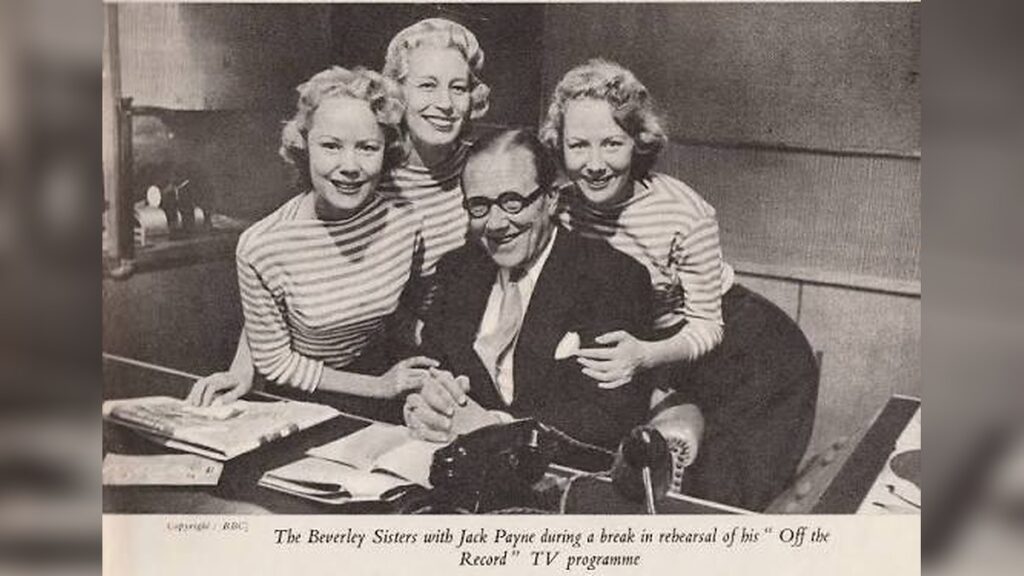
The curtain has fallen on one of Britain’s most celebrated musical acts following the death of Teddie Beverley, the final surviving member of the legendary Beverley Sisters.
She passed away at the age of 99, bringing to a close a remarkable chapter in British entertainment history.
For decades, Teddie and her sisters, Joy and Babs, captivated audiences across the United Kingdom and beyond, becoming synonymous with post-war variety entertainment and chart success.
The Trio That Defined a Generation
The Beverley Sisters rose to prominence during the 1950s and 1960s, establishing themselves as one of the most recognisable singing groups of their era.
Their blend of close harmonies, glamour and stage presence helped turn them into household names.
Over a career spanning more than two decades, the trio became one of Europe’s highest-earning and most successful musical acts.
Their popularity extended from concert halls to television screens, while theatres and nightclubs regularly reported record-breaking attendance whenever the sisters performed.
Chart Success and Festive Classics
Among the group’s best-known recordings were festive favourites that became staples of British Christmas celebrations.
Songs such as I Saw Mommy Kissing Santa Claus, Little Drummer Boy and Little Donkey all secured places in the UK Top 20 during the 1950s.
Their success helped cement their reputation as one of the country’s most beloved vocal groups, with their recordings continuing to be associated with the golden age of British popular music.
A Bond Unlike Any Other
The Beverley Sisters were renowned not only for their musical talents but also for their extraordinary closeness.




Friends, colleagues and interviewers frequently remarked on the sisters’ unique connection.
They often spoke simultaneously and were known for completing one another’s thoughts.
During one interview, they famously brushed aside concerns about who was answering questions, insisting that they all thought exactly alike.
Their bond extended far beyond the stage. Even while touring, the sisters were known to prefer staying together, sometimes choosing to share a single hotel room despite having separate accommodations reserved.
Matching Style and Shared Lives
Throughout their career, the trio cultivated a distinctive image.
They frequently appeared in coordinated outfits adorned with sequins, feathers and fur, creating a glamorous visual identity that became instantly recognisable.
Their shared lifestyle was equally remarkable.
The sisters travelled in the same Rolls-Royce, complete with the personalised registration plate “BEV 3,” reflecting both their success and their collective identity.
In later years, they settled in neighbouring homes in New Barnet, north London.
The sisters affectionately described the properties as being detached yet almost connected, highlighting how inseparable they remained throughout their lives.
Family Connections Beyond Music
The Beverley Sisters’ fame also intersected with the sporting world.
Joy Beverley was married to former England football captain Billy Wright, one of the most respected figures in English football history.
The relationship further elevated the family’s public profile during an era when both entertainment and sport were becoming increasingly central to British culture.
Remembering a Remarkable Legacy
Teddie Beverley’s passing marks the end of a trio whose influence stretched across generations of music fans.
Their enduring popularity, distinctive harmonies and unwavering sisterly bond made them one of the defining acts of British showbusiness.
With the deaths of Joy, Babs and now Teddie, the Beverley Sisters have become part of entertainment history.
Yet their recordings, performances and extraordinary story continue to preserve the legacy of a group that helped shape Britain’s musical landscape for more than 20 years.

