
Juliana Hounsfield was doing something entirely ordinary—collecting her 11-year-old son from a birthday party—when her phone rang and shattered the normal rhythm of the day.
On the line was news that her husband, Nick Hounsfield, had collapsed while playing hockey and was suspected of having suffered a stroke.
The call marked the beginning of a medical crisis that would expose not only the fragility of health but also the consequences of years spent under extreme professional and emotional strain.
An Entrepreneur Driven by an Extreme Work Ethic and a £30m Vision
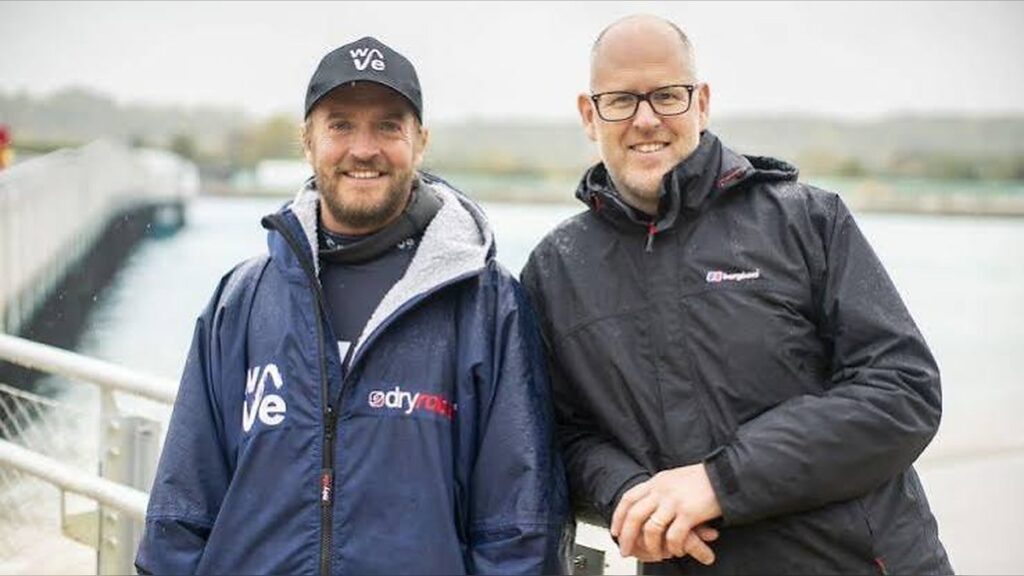
Nick, a 46-year-old surfer, runner, and entrepreneur, had spent nearly a decade building an ambitious project: an inland surfing lagoon known as The Wave near Bristol.
The facility represented a £30 million investment and a personal vision of wellbeing, community, and water-based recreation.
But behind the achievement was a punishing routine.
Juliana describes years of 4 a.m. starts, late-night finishes, and constant pressure as Nick attempted to turn an untested concept into a functioning enterprise.
Although outwardly fit and healthy, she later reflected that the prolonged stress and sleep deprivation may have created conditions that his body could no longer absorb without consequence.
Collapse on the Field and the Critical Delay in Emergency Response
The emergency unfolded during a hockey match in February 2020.
Teammates noticed Nick becoming confused and unable to speak properly.
Despite clear neurological symptoms, ambulance response was delayed, leaving him at the scene for over an hour after the first emergency call.
When Juliana arrived, she found him sitting on the floor, disoriented and unable to communicate.
She made the immediate decision to transport him herself to hospital, fearing that valuable time was being lost.
His inability to speak strongly suggested a neurological event, yet the situation had not yet been treated as a confirmed stroke.
Misdiagnosis Concerns and Lost Time in Hospital Assessment
At hospital, initial assessments questioned whether Nick had suffered a stroke at all.
Despite clear symptoms such as speech loss and physical stiffness on one side of his body, clinicians suggested alternative explanations, including functional neurological disorder.
Juliana, aware of the importance of rapid intervention in stroke cases, grew increasingly alarmed as critical treatment delays continued.
Only after she pushed for further review with the help of a doctor friend was a CT scan finally arranged.
The scan, conducted around seven hours after the initial emergency call, revealed multiple clots in the brain and confirmed that Nick had experienced several strokes rather than a single episode.




By this stage, the original clot had fragmented, reducing the effectiveness of clot-busting treatment that is ideally administered within a narrow therapeutic window.
Life in the Early Days of Recovery and a Household Under Pressure
Nick was discharged from hospital just days later due to broader pressures on the healthcare system during the early stages of the pandemic.
He returned home still unable to speak, read, or write.
The family immediately entered a period of intense adjustment.
Juliana assumed full responsibility for both caregiving and financial stability while continuing her professional work as an osteopath.
Although his physical recovery progressed, Nick’s emotional volatility became a significant challenge.
Frustration linked to his communication difficulties sometimes led to outbursts, placing strain on the household and forcing everyone to adapt to a new and unpredictable reality.
Emotional Strain on Children and a Home Rebuilt Around Care
The couple’s three sons—then aged 16, 14, and 11—were directly affected by the sudden change in family dynamics.
The home environment became more cautious and emotionally sensitive as everyone adjusted to Nick’s condition.
While he remained a loving father, his frustration occasionally manifested in anger, including shouting and breaking household items.
The family gradually learned coping strategies, including stepping away during moments of escalation to avoid further distress.
Despite the challenges, the children remained supportive and closely connected to their father as he navigated recovery.
Relearning Communication and the Long Road of Rehabilitation
Nick’s recovery required intensive and sustained rehabilitation focused on rebuilding basic communication skills.
At first, he was entirely non-verbal, unable to translate thoughts into speech.
Over time, through structured therapy, repetition, and self-directed learning, he gradually regained his ability to speak and read.
Juliana describes the process as slow but remarkable, with incremental improvements building over months.
A key part of his recovery involved engagement with water-based environments, which he incorporated into his rehabilitation routine.
Working physically at The Wave became both therapeutic and functional.
Return to Work, Changing Direction and Personal Reinvention
Within seven months, Nick returned to work in a limited capacity, and by 18 months his communication had improved significantly, though not fully returned to baseline.
Subtle difficulties with word retrieval and speech pacing remain part of daily life.
Eventually, differences over the direction of The Wave led to his resignation as director.
The business later entered administration before being relaunched under new ownership.
Nick has since shifted focus toward “blue health” initiatives exploring the link between water environments and mental wellbeing.
He also serves as an ambassador for the Stroke Association and has co-authored a book on water and recovery.
A Family Rebalanced by Survival, Recovery and Ongoing Awareness
Six years on, life for the Hounsfield family is more stable, though shaped by long-term awareness of stroke recovery and recurrence risk.
Juliana remains attentive to her husband’s health while balancing work and family responsibilities.
Their eldest son is training as an osteopath, while the younger children continue through education and early adulthood transitions.
For Juliana, the defining outcome is not just survival, but adaptation.
The crisis that once threatened to overwhelm their family has instead become a long, ongoing process of rebuilding—one that continues to evolve with time, resilience, and care.

