
For most couples, planning a wedding is filled with excitement, anticipation and joyful decisions.
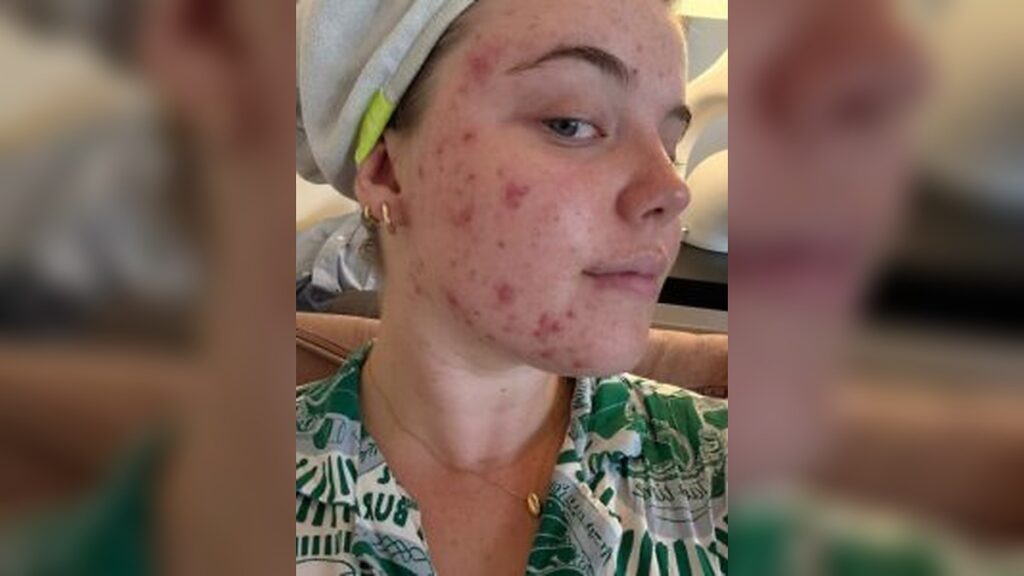
For 26-year-old Chloe, however, the thought of walking down the aisle became a source of overwhelming anxiety because of a skin condition she had battled for more than a decade.
Night after night, she found herself waking in tears after reliving the same disturbing dream.
In it, she was preparing for her wedding day, desperately trying to cover severe acne with the help of a professional make-up artist.
No matter how many times she removed and reapplied her make-up, nothing looked right.
Eventually, time ran out, she missed the ceremony, and the wedding was called off.
The recurring nightmare reflected years of emotional pain caused by persistent cystic acne that had dominated her life since childhood.
A Childhood Marked by Bullying and Self-Consciousness
Chloe’s struggle began at just 13 years old when severe acne first appeared.
What started as a skin condition quickly became something that affected every aspect of her confidence.
School was particularly difficult. She endured relentless teasing from classmates, who mocked her appearance with cruel nicknames.
Each morning often began with bloodstained pillowcases caused by inflamed, painful spots that had burst overnight.
Terrified of being seen without make-up, she carefully hid behind her hair, avoided making eye contact and did everything possible to keep attention away from her face.
Endless Treatments Brought Only Temporary Relief
Throughout her teenage years, Chloe tried virtually every available cream, gel and over-the-counter treatment.
At 17, doctors prescribed the contraceptive pill in the hope that controlling hormone levels would reduce the severe outbreaks believed to be driven by excess testosterone.
When those treatments failed, she moved on to isotretinoin, a powerful prescription medication commonly reserved for severe acne. At 18, she completed her first six-month course, taking 80mg daily.
The drug caused significant side effects. Her skin and lips became painfully dry, with cracked corners of her mouth frequently bleeding.
Because of the medication’s potential to cause severe birth defects, strict pregnancy prevention measures were also required throughout treatment.
Although the medication temporarily cleared her skin during her first year studying graphic design at Loughborough University, the improvement proved short-lived.
Acne Continued to Shape Her Adult Life
By the age of 21, Chloe underwent a second six-month course of isotretinoin.
Once again, her skin cleared briefly before the acne eventually returned.
Doctors repeatedly assured her that age would eventually improve the condition, but those reassurances brought little comfort as fresh, painful cysts continued appearing on her face every morning.
The constant cycle of hope and disappointment gradually changed her personality.
She became someone who avoided attention whenever possible, uncertain whether her quiet nature was genuine or simply the result of years spent hiding behind layers of make-up.
Love Brought Support, But Not an End to the Struggle
During freshers’ week in 2018, Chloe met fellow student Isaac, who would later become her fiancé.




Unlike many others, Isaac never judged her appearance.
Having experienced acne himself during his teenage years, he understood both the physical discomfort and emotional burden that accompanied the condition.
When the couple moved in together during university, he became the only person Chloe felt comfortable seeing her without make-up.
Their social life often revolved around her confidence levels, with outings frequently cancelled whenever her skin flared badly.
Even while playing lacrosse for the university, Chloe found herself worrying more about hiding from photographs and avoiding close team gatherings than focusing entirely on the sport.
A Marriage Proposal Triggered New Fears
Isaac proposed in January last year while the couple stood at the top of London’s O2 Arena.
Although Chloe instantly accepted, her excitement was quickly overshadowed by panic.
Instead of imagining dresses and celebrations, she wondered whether they could simply elope to avoid having guests staring at her or photographers documenting every moment.
As wedding plans progressed, she left much of the organisation to her mother because she struggled to feel enthusiastic about a day that would place her at the centre of attention.
It was during this period that her recurring wedding nightmares became almost routine.
Family Determined to Find Another Solution
Isaac’s mother, Louise Atkinson, a health writer for the Daily Mail, refused to accept that Chloe had exhausted all available options.
Having experienced acne herself, while her husband Jon had once suffered from severe acne covering his face, chest and back, Louise understood exactly how devastating the condition could become.
She began contacting specialists across the country in search of newer treatment approaches for stubborn hormonal acne.
While many dermatologists recommended another full course of isotretinoin, Chloe was unwilling to repeat the high-dose treatment after enduring its severe side effects twice before.
A Different Approach Offered Fresh Hope
Eventually, Louise arranged an online consultation with dermatologist Dr Adam Friedmann, who specialises in treating complex and persistent acne cases.
Rather than immediately recommending another aggressive treatment, Dr Friedmann proposed something different.
He suggested microdosing isotretinoin, prescribing just 10mg every other day—approximately one-sixteenth of the dosage Chloe had previously taken.
Alongside the medication, he introduced the antibiotic erythromycin to reduce inflammation and prescribed Rozex gel to tackle redness and lingering skin damage.
Patience Was Needed Before Progress Appeared
For the first three months, Chloe saw virtually no improvement.
The medications cost around £160 every three months, a significant expense while she worked as a marketing executive for a sports company.
Feeling discouraged, she considered abandoning the treatment altogether.
However, during a follow-up consultation, Dr Friedmann encouraged her to continue.
He increased the isotretinoin dose to 20mg daily and replaced erythromycin with the antibiotic Trimethoprim.
Only then did subtle changes begin to emerge.
Gradually, existing blemishes started healing while new cysts stopped appearing.
A Clear Face Brought New Confidence
One of the biggest tests came in March after Chloe was unexpectedly made redundant.
Previously, stress would almost certainly have triggered another severe acne flare-up.
This time, remarkably, her skin remained calm.
A few weeks later, while shopping with Isaac, she suddenly realised she had left home without wearing any make-up at all.
It was a moment she once believed impossible.
As her skin continued improving, Dr Friedmann reduced her isotretinoin back to 10mg daily while discontinuing both the antibiotic and prescription cream.
The long-term plan is to continue gradually lowering the medication after her wedding, eventually reducing it to occasional maintenance doses if needed.
Wedding Dreams Have Finally Replaced Wedding Nightmares
Today, Chloe says the emotional burden she carried for more than a decade has finally begun to lift.
Rather than worrying about painful cysts or hiding behind heavy make-up, she now finds herself thinking about hairstyles, dresses and the ordinary details that occupy most brides before their big day.
She plans to do her own make-up using lightweight foundation that enhances her natural complexion instead of masking it.
Most importantly, the terrifying dream that haunted her for months has finally disappeared.
After years spent believing acne defined her life, Chloe says she is finally looking forward to her wedding—not because her skin is perfect, but because she feels comfortable simply looking like herself.

