
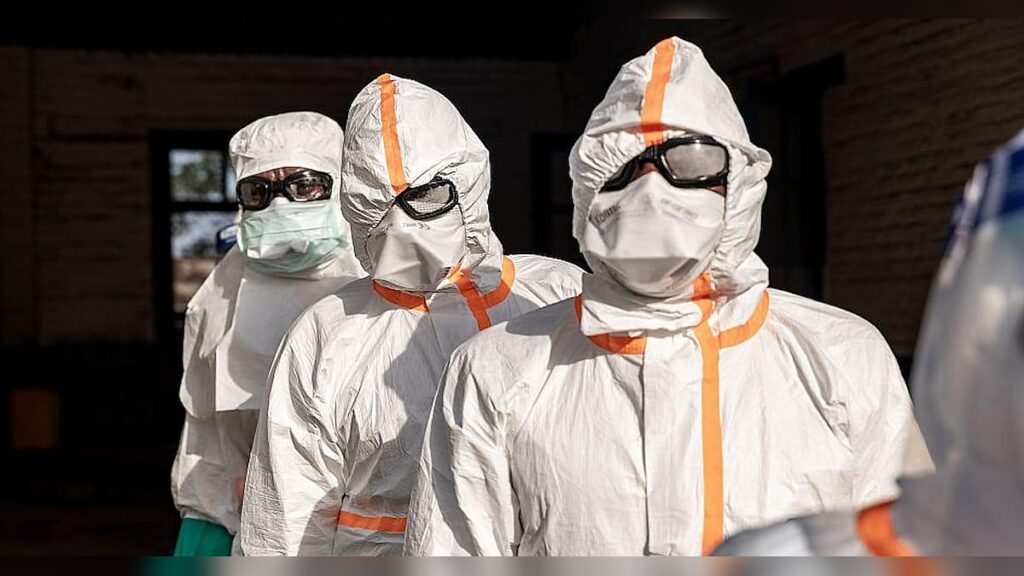
French health authorities have confirmed the country’s first Ebola infection connected to the current outbreak in the Democratic Republic of Congo (DRC), marking a significant development in an epidemic that has already claimed hundreds of lives in Central Africa.
The patient, a doctor who recently returned from a humanitarian mission in the DRC, tested positive for the virus after arriving in mainland France.
Officials said the individual is currently in stable condition and has been placed in isolation as a precautionary measure to prevent further transmission.
Health Officials Move Quickly to Contain Potential Spread
Following confirmation of the case, French health authorities immediately launched contact-tracing operations to identify anyone who may have come into close contact with the infected doctor.
Experts continue to stress that the risk to the wider European population remains low.
Nevertheless, authorities are taking no chances, particularly because the infection involves the Bundibugyo strain of Ebola, a rare variant for which no approved vaccine currently exists.
The case represents only the second time during the current outbreak that an Ebola patient has been treated in Europe.
Earlier this year, an American doctor who contracted the disease in the DRC was transferred to Berlin for specialist medical care.
Congo Remains the Center of a Growing Health Crisis
The outbreak was officially declared an international public health emergency by the World Health Organization (WHO) on May 17.
Since then, the disease has continued to spread primarily within the DRC and neighboring Uganda.
Official figures indicate that more than 1,000 infections and over 260 deaths have been recorded.
However, humanitarian organizations believe the actual numbers could be significantly higher due to limited surveillance and healthcare resources in some of the hardest-hit regions.
The outbreak has become one of the fastest-growing Ebola emergencies since the devastating West African epidemic between 2014 and 2016, which infected more than 28,000 people and killed approximately 11,000.
Aid Groups Warn Many Cases May Be Going Undetected
Humanitarian organization Oxfam recently raised concerns that the outbreak’s true scale may not yet be fully understood.
According to the group, inadequate healthcare infrastructure in Ituri Province—one of the areas most affected by the virus—is making it difficult to identify and track infections.
Limited access to testing, shortages of trained personnel, and insufficient surveillance systems could allow transmission chains to continue unnoticed.
WHO Director-General Dr. Tedros Adhanom Ghebreyesus acknowledged the challenge last month, warning that response efforts are struggling to keep pace with the epidemic’s rapid growth.
The first known case was detected in May, but investigators fear the virus may have been circulating for months before it was officially identified.



Water Shortages and Equipment Gaps Hamper Response
Aid workers on the ground say poor access to clean water is one of the most serious obstacles to controlling the disease.
Oxfam reported that only around one in five health facilities in Ituri has reliable access to adequate clean water supplies.
Because handwashing and sanitation are critical tools for preventing Ebola transmission, the shortage has raised concerns that containment efforts are being weakened.
The organization also reported shortages of personal protective equipment (PPE) for frontline healthcare workers, further increasing the risk of infections among medical staff and communities.
Manel Rebordosa, Oxfam’s field response coordinator in Ituri, described the situation as deeply concerning, noting that access to water—the most basic defense against infectious disease—is severely limited across many affected communities.
Contact Tracing and Healthcare Capacity Under Pressure
Another major concern involves contact tracing, a key strategy used to stop Ebola outbreaks.
Oxfam estimates that only 43 percent of known contacts linked to confirmed infections are currently being monitored.
That figure is substantially lower than the tracing rates achieved during previous Ebola outbreaks in the same region.
Healthcare services are also under enormous strain.
More than 70 medical facilities have reportedly been destroyed in eastern Congo, leaving vast areas with extremely limited access to doctors and treatment centers.
Compounding the crisis, international funding for humanitarian operations in the DRC has fallen sharply, reaching its lowest level in a decade.
International Concerns Continue to Grow
The confirmation of an Ebola case in France comes after several recent health scares in other countries.
Suspected infections were investigated in Brazil, Italy, and Austria in recent weeks, although all ultimately tested negative.
Even so, public health agencies around the world have been preparing for the possibility of imported cases.
The United States has warned that the current epidemic could potentially become the largest Ebola outbreak on record, while British health authorities have instructed hospitals and frontline services to remain prepared for possible cases arriving from affected regions.
Healthcare workers in the United Kingdom have been advised to rapidly identify, isolate, and assess anyone displaying symptoms after travel to outbreak zones within the virus’s 21-day incubation period.
Understanding the Bundibugyo Ebola Strain
Unlike the West African epidemic, which involved a different Ebola species, the current outbreak is being driven by the Bundibugyo virus, a rare strain first identified in western Uganda in 2007.
A second, smaller outbreak occurred in the DRC in 2012.
Together, those two previous events resulted in just over 200 confirmed and probable cases and approximately 66 deaths.
Despite its rarity, experts warn that the Bundibugyo strain can be highly dangerous.
Like other forms of Ebola, it is believed to spread through direct contact with infected blood or bodily fluids, contaminated surfaces, or contact with the bodies of people who have died from the disease.
Symptoms typically begin with fever, headache, muscle aches, vomiting, and diarrhea before potentially progressing to internal bleeding, organ failure, and death.
Scientists Race to Develop a Vaccine
Researchers are working urgently to develop protection against the Bundibugyo strain.
Scientists at Oxford University are currently developing a vaccine candidate, but researchers have cautioned that human trials are still months away.
As a result, any approved vaccine is unlikely to be available for widespread use in affected African communities in the immediate future.
If successful, a vaccine could significantly reduce severe illness and fatalities while helping to slow transmission.
Until then, public health experts emphasize that surveillance, rapid isolation of patients, contact tracing, access to clean water, and adequate protective equipment remain the most important tools for controlling the outbreak.
As health officials monitor the newly confirmed case in France, attention remains focused on Central Africa, where efforts to contain one of the world’s most serious infectious disease emergencies continue to face mounting challenges.
