
Christians across the Middle East and North Africa marked the solemnity of the Assumption of the Blessed Virgin Mary on Aug. 15 with processions, prayers and longstanding cultural traditions.
From Lebanon and Syria to Tunisia, communities found different ways to honor the Virgin Mary, with celebrations reflecting both their religious devotion and the customs of their local communities.
For many, the feast provided an opportunity to preserve traditions and gather together despite war, economic hardship and insecurity.
Lebanon’s Villages Turn to Mary
In Lebanon, celebrations continued despite the country’s economic difficulties and the wider instability caused by ongoing conflict.
Villages and towns observed the feast according to their own customs, with streets filled with processions dedicated to the Virgin Mary.
In the southern town of Jezzine, a large procession ended with a striking display in which a rosary made from balloons was released into the sky.
A statue of the Virgin Mary was subsequently raised above the assembled crowd using a crane, symbolically representing her Assumption into heaven.
Flower petals fell over worshippers gathered below.
A Centuries-Old Feast Meets Local Tradition
The celebrations took a different form in Bhamdoun, in Mount Lebanon, where residents maintained a communal culinary tradition associated with the feast.
Villagers worked together to prepare hreeseh, a traditional dish made with wheat and meat.
The meal was cooked for hours in large cauldrons, with residents taking turns stirring it.




The practice provided another example of how religious observances in the region have become intertwined with traditions handed down through generations.
Syria Revives a Colourful Carnival
In Syria, the security situation led some churches to announce the cancellation of public festivities earlier in the year amid concerns over the reported rise in kidnappings of Christians.
Nevertheless, religious observances and some celebrations still went ahead.
Among them was the Marmarita Carnival, a longstanding event that dates back to 1975.
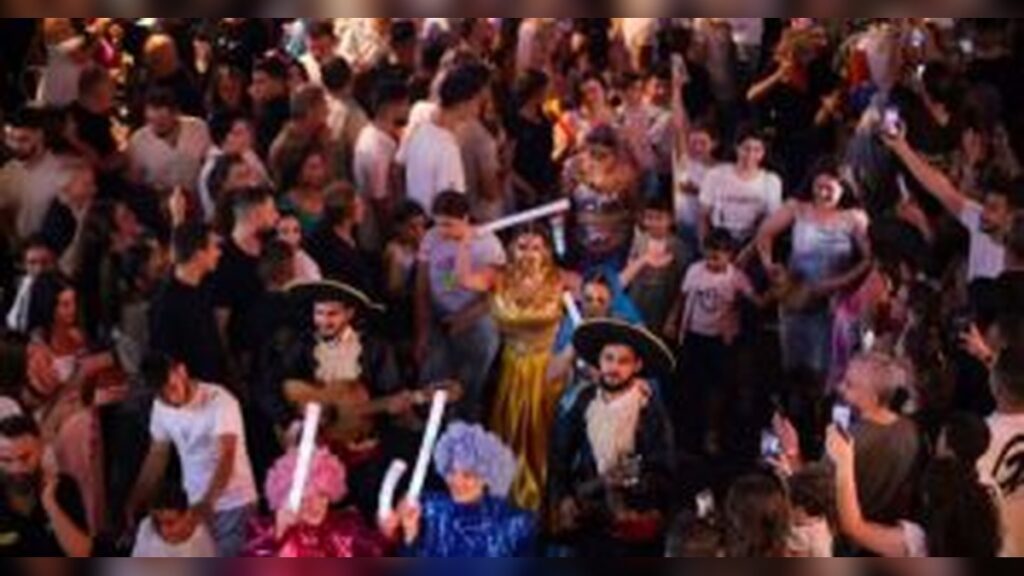
The carnival returned this year, bringing music, colourful costumes and processions to the streets.
The event has become an important part of the Assumption celebrations in the town, attracting local residents as well as members of the Syrian diaspora.
Tunisia Preserves a Maritime Marian Tradition
In Tunisia, the focus was on La Goulette, a port town near Tunis known for its annual procession honouring Our Lady of Trapani.
The celebration began with Mass at the Church of St. Augustine and St. Fidelis before worshippers carried a statue of the Virgin Mary through the town’s streets.
The tradition has its roots in the Sicilian fishermen who settled in La Goulette during the 19th century.
They would take the statue toward the sea while praying for Mary’s protection, asking her to watch over fishermen, bless the waters and help provide a plentiful catch.
A Tradition That Returned After Decades
The procession eventually became part of La Goulette’s wider cultural heritage and drew participation from people of different religious and cultural backgrounds, including Muslims.
However, the tradition disappeared during the 1960s after much of the town’s European Christian population departed Tunisia.
It was eventually revived in 2017, restoring a distinctive part of the town’s religious and cultural history.
Faith Endures Amid Uncertainty
The celebrations in Jezzine, Bhamdoun, Marmarita and La Goulette represent only a fraction of the ways Christians across the Middle East and North Africa observed the Assumption.
While the circumstances facing Christian communities vary significantly from one country to another, the celebrations shared a common thread: devotion to the Virgin Mary and a determination to preserve inherited traditions.
In churches, streets and family settings, the feast offered communities an opportunity to express faith and solidarity while maintaining customs that have survived generations of political, economic and social change.
For Christians across the region, the Assumption remained not only a solemn religious observance but also a moment of continuity, community and hope.

