
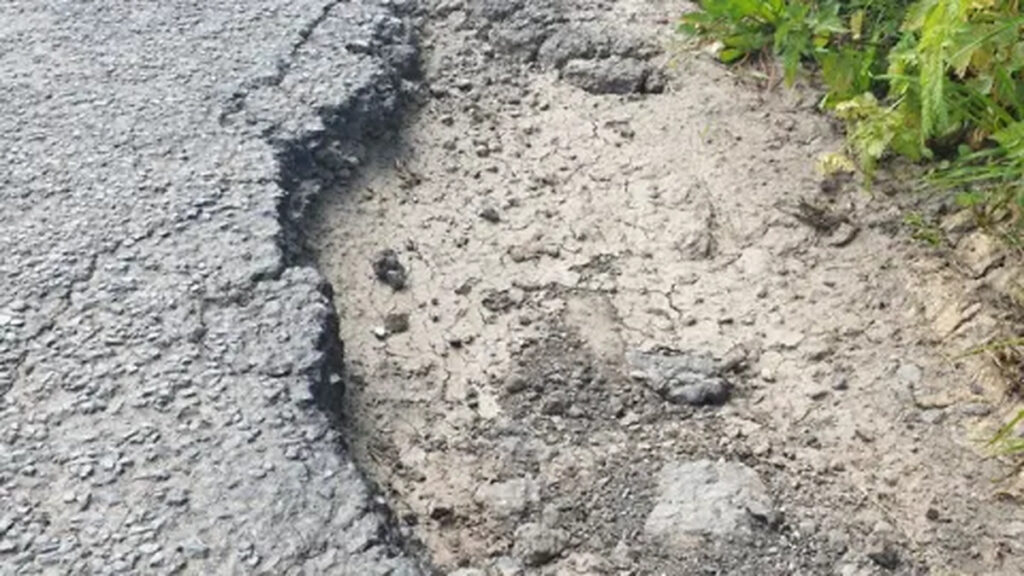
A compensation claim worth less than £200 turned into a costly legal battle after Gloucestershire County Council spent more than £2,000 defending itself against a motorist seeking reimbursement for damage caused by a pothole.
The dispute, which lasted approximately 15 months, stemmed from an incident in May 2023 when Victoria Broadbent, 44, struck a pothole in Cirencester while driving the family’s Volkswagen Golf.
The impact caused a tyre to burst, prompting her husband, Richard Broadbent, 54, to submit a claim for £189.60 to cover the repair costs.
Rather than approving the request, the council rejected the claim, setting the stage for a prolonged legal confrontation that concluded only two days before the case was due to be heard in the small claims court.
Freedom of Information Request Reveals Legal Spending
Following the settlement, Mr. Broadbent obtained financial records through a Freedom of Information request, revealing that Gloucestershire County Council had spent £2,139 on legal fees while contesting the relatively modest claim.
The amount exceeded the original compensation request by more than ten times, prompting criticism over the use of public funds in defending the case.
Although the council ultimately agreed to reimburse the repair costs and court expenses, it did so without accepting legal responsibility for the damage.
Council Relied on Highways Act Defence
When rejecting the initial application, the authority cited Section 58 of the Highways Act, a legal provision frequently used by local councils in pothole-related claims.
The legislation allows highway authorities to avoid liability if they can demonstrate that roads were subject to reasonable inspection and maintenance procedures and that they were unaware of any defect requiring repair.
However, evidence gathered by the Broadbents suggested the council had prior knowledge of the pothole before Mrs. Broadbent’s vehicle was damaged.
Records Suggested the Hazard Was Already Known
Documents relating to the road’s maintenance history indicated another motorist had struck the same pothole just three weeks earlier and had also submitted a compensation claim.
According to the records, council officials had identified the pothole for repair on the next working day following that earlier incident.
Despite this, the defect remained in place when Mrs. Broadbent encountered it.




Like the Broadbents, the earlier driver’s compensation request was also rejected.
Dashcam Footage Became a Point of Contention
Mr. Broadbent, a former Metropolitan Police officer, said he was determined to pursue the matter despite the council’s refusal to settle early.
He stated that he had offered dashcam footage showing the moment the vehicle hit the pothole, but claimed council representatives declined to review the video.
Instead, he said legal representatives questioned whether the incident had occurred at all, despite the existence of recorded evidence.
After months of legal correspondence, discussions with council lawyers, and judicial involvement, the dispute ended with a financial settlement shortly before the scheduled court hearing.
Claimant Criticises Council’s Handling of the Case
Speaking after the case concluded, Richard Broadbent described the council’s approach as excessive and disappointing.
He argued that devoting significant public resources to resist what he considered a well-supported compensation claim reflected poorly on an authority expected to serve residents.
He also suggested the council’s persistence helped explain why it approves a comparatively small proportion of compensation requests.
Gloucestershire Pays Out on Few Pothole Claims
Nationally, drivers frequently struggle to recover the cost of vehicle repairs caused by potholes, despite councils being responsible for maintaining local roads.
Around 24 percent of pothole compensation claims across the UK result in successful payouts.
Figures from Gloucestershire paint an even starker picture.
During the past five years, the county council received 2,539 compensation claims but approved only 3.15 percent of them, making it one of the lowest payout rates among local authorities.
Consumer and Motoring Experts Raise Concerns
Scott Dixon, founder of the Complaints Resolver website, argued that councils routinely mount strong legal defences against compensation claims to discourage motorists from pursuing them.
He suggested authorities appear willing to invest substantial sums contesting claims while continuing to face criticism over inadequate road maintenance, pothole repairs, and drainage issues.
Simon Williams, head of policy at the RAC, also questioned the handling of the Broadbents’ case.
He noted that councils regularly rely on Section 58 of the Highways Act when rejecting compensation requests but argued that, based on the available evidence, Gloucestershire County Council should have settled the claim before incurring thousands of pounds in legal expenses.
Williams further observed that even when motorists are successful, compensation awards often fail to cover the full cost of repairing damaged vehicles.
Public Satisfaction With Gloucestershire’s Roads Remains Low
Public opinion surveys also indicate ongoing dissatisfaction with the condition of Gloucestershire’s road network.
Research conducted by the National Highways and Transport Network found that only 21 percent of respondents were satisfied with the condition of local roads, compared with a national average of 26 percent.
Satisfaction with the council’s handling of pothole compensation claims was similarly low, with just 22 percent expressing approval—again falling below the national average of 27 percent.
