
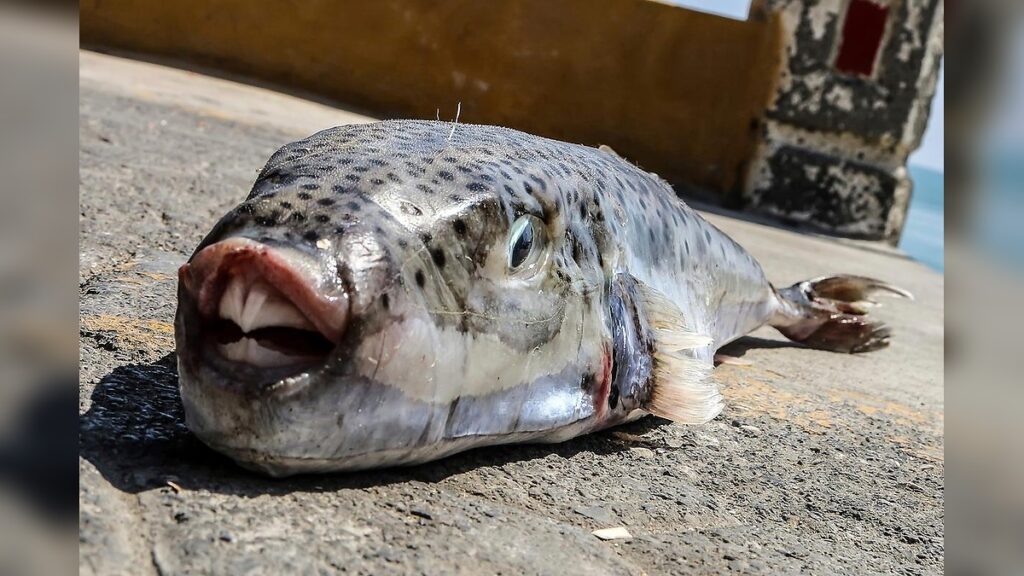
Holiday destinations across the Mediterranean are facing a growing environmental and public safety challenge as an aggressive invasive pufferfish continues to spread through popular swimming and fishing areas.
Greek authorities have responded by installing protective sea barriers and launching new eradication initiatives aimed at limiting the impact of the dangerous species on both residents and tourists.
Aggressive Fish Raises Safety Concerns Along Greek Coastline
The silver-cheeked toadfish, a highly invasive species known for its powerful bite and toxic flesh, has established itself in large parts of the Mediterranean.
Authorities say the fish has become increasingly common in Greek waters, particularly around well-known tourist islands such as Rhodes, prompting fresh warnings as the summer holiday season attracts thousands of beachgoers.
The Greek Red Cross has issued public safety advice after reports of encounters between swimmers and the fish increased.
The species possesses exceptionally strong, fang-like teeth capable of cutting through hard materials including bone, wood and even metal, making any bite potentially serious.
Toxic Flesh Makes Species Dangerous Beyond Its Bite
Beyond its aggressive behaviour, the fish poses another major threat because its organs and flesh contain tetrodotoxin, a powerful neurotoxin that can be fatal if consumed.
Exposure to the toxin can interfere with the nervous system and may lead to respiratory failure, heart complications and death in severe cases.
Health officials advise anyone bitten by the fish to immediately wash the wound thoroughly with clean water and soap, apply firm pressure using sterile gauze or a clean cloth to control bleeding, and seek emergency medical treatment without delay because of the severity of the injuries the fish can inflict.
Climate Change Linked to Mediterranean Expansion
Marine experts believe the species originally migrated from the Indian Ocean into the Mediterranean through the Suez Canal after warmer sea temperatures created more favourable conditions.
The fish entered from the Red Sea and has steadily expanded its range over the past two decades.
Although sightings date back to around 2003, scientists say population numbers have risen dramatically in recent years.
The invasive fish is now found across large sections of the eastern Mediterranean and has spread westward, reaching coastal waters near Italy and Spain.
Fishermen Report Heavy Economic Damage
Commercial fishermen have been among those hardest hit by the invasion.




The fish is blamed for destroying catches and shredding fishing equipment, leaving many coastal communities facing mounting financial losses.
Greek fisherman Alexis Charalampakis described the species as extremely destructive, warning that its bite is powerful enough to sever a finger and accusing it of devastating marine ecosystems by consuming large quantities of sea life.
According to marine researchers, the species can cause thousands of euros in annual losses through damaged nets, reduced fish stocks and disrupted fishing operations.
Swimmer Injuries Add to Growing Alarm
While fishermen have dealt with the invasive species for years, reports involving swimmers have become more frequent.
One of the latest incidents occurred near Athens in the coastal suburb of Varkiza, where an elderly woman reportedly required stitches after being bitten unexpectedly while in the water.
The incident has heightened concerns among authorities responsible for safeguarding beaches during the busy tourist season.
Floating Sea Barriers Introduced to Protect Popular Beaches
Greek officials have begun deploying floating protective barriers in an effort to reduce the risk posed by invasive marine species.
Around 2.5 kilometres of floating net barriers have already been installed in bays on Evia, Greece’s second-largest island.
The system was initially designed to keep large jellyfish blooms away from beaches following last summer’s outbreaks, but officials say it has also become a useful defence against invasive pufferfish.
Local authorities are preparing to install an additional seven kilometres of reinforced netting delivered from Athens, with hopes that the stronger barriers will discourage the fish from entering designated swimming zones.
Chalkida Vice Mayor Antonis Spanis said protecting public safety remains the municipality’s highest priority while expressing confidence that the measures will help visitors enjoy a safer summer.
Governments Expand Incentives to Remove Invasive Fish
Authorities are also attempting to reduce the growing population through financial incentive programmes.
Cyprus introduced payments for fishermen in 2024 to encourage the removal of the species from coastal waters as part of a government-backed eradication campaign.
Officials say the programme has already resulted in the destruction of more than 100 tonnes of the fish, which has virtually no natural predators in the Mediterranean.
Greece has now introduced a similar initiative, offering fishermen €5.33 (approximately £4.56) for every kilogram of silver-cheeked toadfish delivered to authorities for disposal.
The fish are later incinerated, while additional fuel subsidies are being provided in parts of the southern Aegean and around Crete through an EU-supported programme.
Scientists Divided Over How the Species Should Be Managed
Despite official efforts to reduce the population, not everyone agrees that eradication is the best solution.
The Initiative to Save Pufferfish has criticised large-scale removal campaigns, arguing that the species deserves protection and should be managed with greater ecological consideration rather than widespread destruction.
Marine biologist Ioannis Batjakas, based on the island of Lesbos, has also questioned reports portraying the fish as actively attacking humans.
He argues that, like many marine species, the pufferfish generally becomes aggressive only when disturbed or threatened.
Even with differing scientific opinions, Greek authorities continue expanding protective measures as the invasive species establishes itself across one of the world‘s busiest tourist regions, balancing environmental management with efforts to protect swimmers, fishermen and coastal economies.
