
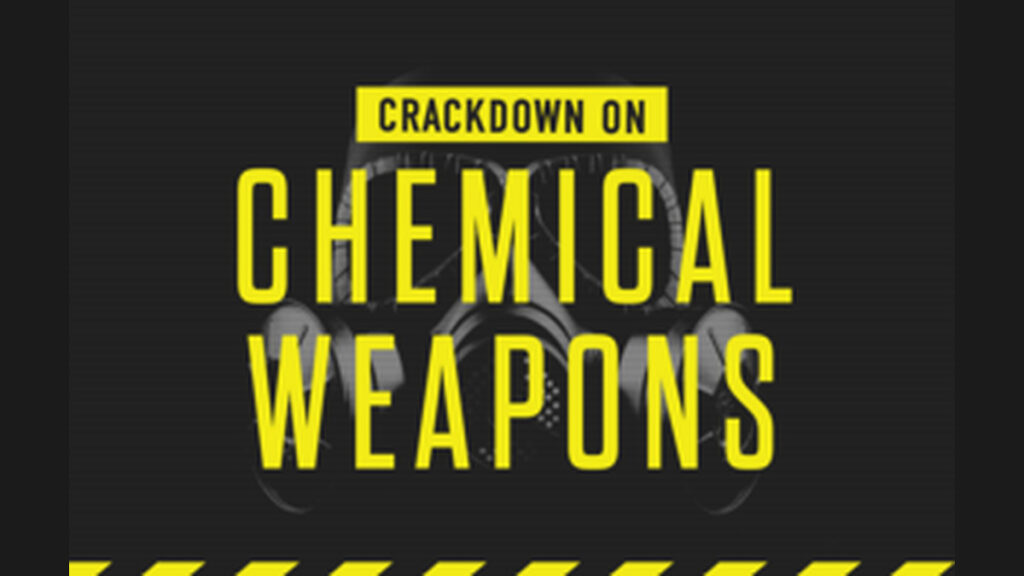
The UK government has announced a new round of sanctions against individuals and research institutions it says played key roles in Russia’s chemical weapons programme, intensifying pressure on Moscow over the development of toxic substances linked to the deaths of Russian opposition leader Alexei Navalny and British citizen Dawn Sturgess.
The sanctions, unveiled on 6 July, affect seven individuals and two major scientific organisations accused of contributing to the research, development and production of the Novichok nerve agents and the highly toxic compound Epibatidine.
British officials argue these substances were used in attacks that violated international law and the Chemical Weapons Convention.
Sanctions Focus on Scientists and Research Institutes
According to the UK government, the latest restrictions are aimed at those directly involved in developing and testing prohibited chemical agents.
Among the organisations targeted are SC Signal, a Russian state scientific research institute, and the State Scientific Research and Testing Institute for Military Medicine (GNIII VM).
The government also highlighted the continued designation of the State Scientific Research Institute for Organic Chemistry and Technology (GosNIIOKhT), which had already been sanctioned in 2020 for its alleged involvement in Russia’s chemical weapons activities.
Officials said the sanctions are designed to disrupt the scientific and technical infrastructure supporting the production of internationally banned toxic agents.
Individuals Accused of Developing Deadly Toxins
The measures also target several senior researchers, directors and technical specialists whom the UK says contributed to prohibited chemical weapons research.
Among those named is Vladimir Kondratyev, who allegedly co-authored scientific work examining the toxic properties of Epibatidine.
Researchers Andrei Antokhin and Viktor Taranchenko were also sanctioned over their reported involvement in studies related to Novichok nerve agents.


Other individuals listed include Artur Zhirov, Sergei Chepur, Aleksandr Makhlay and Ivan Kravstov, all of whom held senior positions within Russian scientific institutions connected to the programme.
Government Says Russia Violated International Law
The announcement follows Britain’s longstanding position that Russia bears responsibility for the poisoning of Alexei Navalny.
UK officials maintain that only the Russian state possessed the capability, motive and opportunity to deploy the lethal toxin allegedly used against the opposition figure before his death in custody in 2024.
British authorities also continue to link Russia’s chemical weapons programme to the 2018 Salisbury poisoning, during which Novichok was used in an attack that ultimately led to the death of Dawn Sturgess after she came into contact with the discarded nerve agent.
The government says both incidents demonstrate a pattern of prohibited chemical weapons use that breaches international obligations.
Foreign Secretary Condemns Chemical Weapons Use
Foreign Secretary Yvette Cooper described Russia’s repeated use of chemical weapons as a serious breach of international law and a growing threat to global security.
She said the use of Novichok in Salisbury and Epibatidine against Navalny reflected a continued willingness by Russia to employ banned substances that inflict suffering on civilians.
Cooper added that the UK would continue working alongside international partners to expose violations of the Chemical Weapons Convention, pursue accountability and discourage any future use of chemical weapons.
NATO Summit Provides Broader Security Context
The sanctions were announced ahead of the NATO Summit in Ankara, where allied leaders are expected to discuss continued military support for Ukraine and long-term security challenges posed by Russia.
The UK said it would use the summit to reinforce cooperation with NATO partners, strengthen collective defence and reaffirm support for Ukraine while responding to what it described as increasingly reckless actions by Moscow.
British officials argue that Russia’s full-scale invasion of Ukraine, alongside its alleged use of chemical weapons, represents a sustained threat to European and global security.
UK Continues Expanding Russia Sanctions
The latest designations form part of Britain’s wider sanctions campaign against Russia following its invasion of Ukraine.
The government says more than 3,400 individuals and organisations have now been sanctioned in response to Russian aggression and related hostile activities.
The announcement also comes just before the 112th Executive Council meeting of the Organisation for the Prohibition of Chemical Weapons (OPCW) in The Hague, where member states are expected to discuss international efforts to uphold the global ban on chemical weapons.
British officials say they will continue coordinating with allies to investigate alleged violations, hold those responsible accountable and strengthen international efforts to prevent the future use of prohibited toxic agents.
