
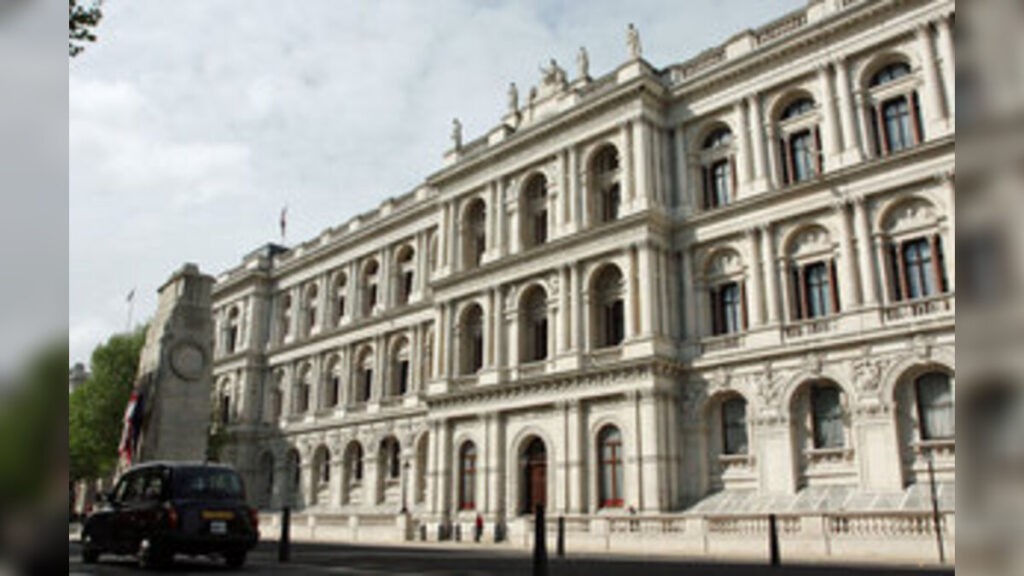
A broad coalition of foreign ministers from Australia, Belgium, Croatia, Cyprus, Denmark, Finland, France, Greece, Iceland, Luxembourg, Malta, Norway, Portugal, Slovenia, Spain, Sweden, and the United Kingdom has issued a coordinated statement urging immediate de-escalation in Lebanon and a renewed push toward political settlement in the region.
The ministers stressed that the continuation of hostilities in Lebanon is threatening fragile regional calm and warned that ongoing war risks undoing recent progress toward broader de-escalation efforts.
Talks Between Lebanon and Israel Welcomed Amid US Facilitation
The statement highlighted growing diplomatic momentum following an initiative by Lebanese President Joseph Aoun to open direct talks with Israel, an effort that has reportedly been accepted by Israel with facilitation from the United States.
The ministers strongly encouraged both sides to take advantage of this opening, describing direct negotiations as a possible pathway toward long-term stability not only for Lebanon and Israel but for the wider region.
They also pointed to a ceasefire framework involving the United States and Iran, calling on all actors to urgently reduce tensions and support diplomatic engagement instead of military escalation.
Strong Condemnation of Violence on All Sides
The joint declaration took a firm stance against ongoing violence, condemning Hezbollah’s attacks on Israel and demanding that they stop immediately.
At the same time, the ministers also condemned large-scale Israeli strikes on Lebanon carried out on 8 April, which Lebanese authorities report resulted in more than 350 deaths and over 1,000 injuries.
The statement emphasized that civilians and civilian infrastructure must be protected under international humanitarian law, regardless of the conflict dynamics.
UN Peacekeepers and Civilian Protection Underlined
The ministers also expressed serious concern over attacks targeting the United Nations Interim Force in Lebanon (UNIFIL), stressing that peacekeepers must never be put at risk.
They reiterated that the safety and security of UN personnel is non-negotiable and must be guaranteed at all times, calling such incidents unacceptable under international norms.
Support for Lebanon and Reaffirmation of Sovereignty
Beyond condemnation, the ministers expressed strong solidarity with the Lebanese people and government, particularly in light of widespread displacement affecting more than one million people.
They confirmed readiness to support emergency humanitarian assistance in coordination with Lebanese authorities.
The statement also reaffirmed Lebanon’s sovereignty and territorial integrity, emphasizing full implementation of UN Security Council Resolution 1701 (2006).
In a notable political reference, the ministers welcomed Lebanon’s recent government decisions to prohibit Hezbollah’s military activity, strengthen state authority in Beirut, and enforce a monopoly over weapons, urging swift and full implementation of these measures.
Impact and Consequences
The joint statement signals intensified international pressure for a political rather than military resolution to the Lebanon-Israel conflict.
By publicly backing direct talks, the coalition is effectively encouraging a diplomatic reset at a moment of heightened violence.
However, the strong condemnations on both sides also reflect the fragility of the situation.
Continued strikes or retaliatory attacks could undermine emerging diplomatic channels and further destabilize an already volatile region.
Humanitarian consequences remain severe, with mass displacement and infrastructure damage increasing pressure on Lebanon’s already strained state institutions and international aid systems.
What’s next?
Attention now turns to whether the proposed Lebanon-Israel talks will move beyond preliminary acceptance into structured negotiations.
Much depends on sustained US facilitation and whether both parties can maintain restraint amid ongoing tensions.
International partners are expected to increase diplomatic engagement and humanitarian support in the coming weeks, while also pressing for compliance with UN resolutions and de-escalation commitments.
The implementation of Lebanon’s internal security and weapons control decisions will also be closely watched as a key indicator of state authority strengthening on the ground.
Summary
Foreign ministers from 17 countries have called for urgent de-escalation in Lebanon, backed direct talks between Lebanon and Israel, and condemned violence from all sides while stressing civilian protection, support for UN peacekeepers, and respect for Lebanon’s sovereignty.
Bulleted Takeaways
- 17 foreign ministers call for Lebanon’s inclusion in regional de-escalation efforts
- Support expressed for direct Lebanon-Israel talks facilitated by the United States
- Hezbollah attacks on Israel strongly condemned and ordered to stop
- Israeli strikes on 8 April condemned, with over 350 dead and 1,000 injured reported by Lebanese authorities
- UNIFIL peacekeeper attacks condemned as unacceptable
- More than one million displaced people in Lebanon highlighted
- Strong backing for Lebanon’s sovereignty and UN Resolution 1701
- Ministers welcome Lebanon’s move to restrict Hezbollah’s military role and strengthen state authority
- International community ready to support humanitarian aid and political dialogue
