
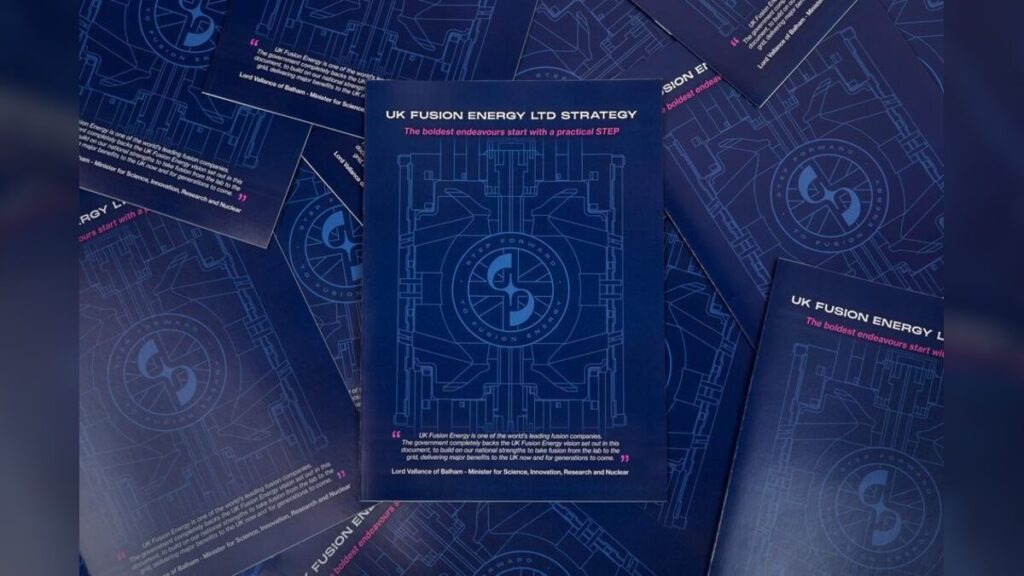
A major shift in clean energy ambition is unfolding as UK Fusion Energy Ltd unveils a detailed roadmap aimed at turning fusion power from scientific promise into a commercial reality.
The newly released strategy builds on the UK government’s broader fusion plans and lays out how the country intends to lead a global market projected to reach trillions in value by the end of the century.
With strong financial backing—about £1.3 billion in public investment—the plan focuses on moving beyond decades of research into full-scale energy production, positioning the UK at the forefront of one of the most transformative energy technologies of the future.
From Research Labs to Real Power Plants
At the heart of the strategy is the development of STEP Fusion, a prototype plant expected to begin operations around 2040.
The facility will be built in West Burton and is designed to demonstrate how fusion energy can be generated reliably and commercially.
The initiative represents a shift from experimental science to practical energy generation.
The UK aims to integrate advanced engineering, artificial intelligence, and industrial expertise to bring this ambitious project to life.
A National Effort Gains Momentum
Momentum behind the fusion push was on full display during Fusion Fest 2026, where key players including UK Atomic Energy Authority and Department for Energy Security and Net Zero aligned their efforts.
The event highlighted a unified national mission: to convert decades of scientific leadership into a thriving commercial fusion sector.
Industry leaders, policymakers, and investors gathered to map out how collaboration will accelerate delivery and unlock economic opportunities.
Strategic Partnerships Driving Progress
A defining feature of the strategy is its strong emphasis on partnerships.




ILIOS Consortium has been selected to lead construction efforts, while Tokamak Energy will contribute cutting-edge superconducting magnet technology.
Meanwhile, Dassault Systèmes is supporting the digital backbone of the project through its advanced engineering platform, helping create a “digital twin” of the fusion plant for long-term optimization.
These collaborations signal a transition from planning to execution, supported by significant investments—£70 million for magnet systems and £30 million for digital infrastructure.
Why Fusion Energy Matters Now
Fusion energy has long been considered the “holy grail” of clean power.
It promises a virtually limitless, low-carbon energy source that could meet rising global demand while reducing dependence on fossil fuels.
As countries worldwide race to secure reliable and sustainable energy, the UK sees fusion as both an environmental solution and an economic opportunity—capable of generating jobs, strengthening supply chains, and boosting industrial growth.
Impact and Consequences
The rollout of this strategy could reshape the UK’s energy and industrial landscape.
Regions like the East Midlands are expected to benefit significantly, with the development of a clean energy supercluster attracting investment, businesses, and skilled jobs.
On a broader scale, success in fusion could enhance national energy security, reduce carbon emissions, and position the UK as a global exporter of advanced energy technology.
However, the project also carries risks, including high costs, technical challenges, and long development timelines.
What’s Next?
The next phase focuses on execution—turning strategic plans into tangible progress.
Key priorities include advancing engineering designs, scaling up partnerships, and continuing to attract investors and supply-chain partners.
With site ownership secured and major contracts already awarded, the project is entering a critical delivery stage.
Over the coming years, attention will shift toward construction milestones, technology testing, and regulatory approvals leading up to the 2040 launch target.
Summary
The UK’s new fusion energy strategy represents a decisive move from research into real-world application.
By combining government backing, industrial collaboration, and cutting-edge technology, the country aims to lead the global transition toward commercial fusion power.
If successful, the initiative could redefine how energy is produced and consumed, not just in the UK but across the world.
Bulleted Takeaways
- The UK has launched a major strategy to commercialize fusion energy
- STEP Fusion is expected to begin operations by 2040
- £1.3 billion in government funding supports the initiative
- Strong partnerships with companies like Tokamak Energy and Dassault Systèmes are driving progress
- The project could create jobs, boost industry, and strengthen energy security
- Fusion energy offers a long-term, low-carbon solution to global energy needs
