
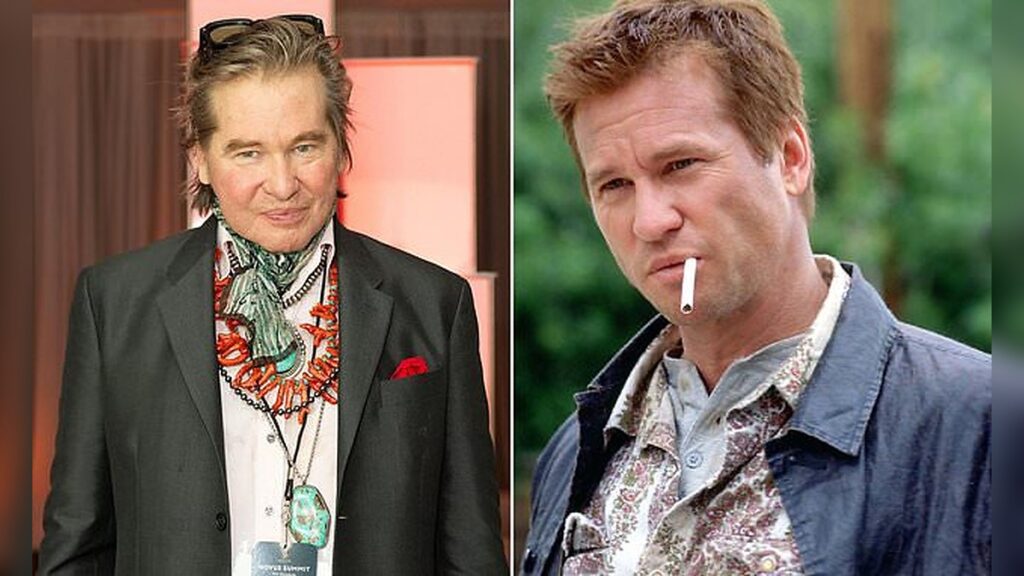
A resurfaced social media post has renewed attention on long-standing tensions surrounding the late actor Val Kilmer, with filmmaker Adam Marcus drawing sharp criticism after making inflammatory remarks about their time working together.
Marcus, who directed Kilmer in the 2008 direct-to-DVD thriller Conspiracy, reportedly used a Threads post on Sunday night to express frustration about his experience on set.
According to Entertainment Weekly, the message—later deleted—contained unusually harsh language directed at the actor, who died in April 2025 at the age of 65 following pneumonia complications linked to a previous cancer battle.
In the post, Marcus allegedly referred to Kilmer as the “worst human being I’ve ever known,” alongside a throwback image of the two on set.
He also used derogatory language while reflecting on the production, framing the experience in combative terms and dismissing anticipated criticism about speaking negatively about someone who has died.
Inside the production of Conspiracy
Kilmer starred in Conspiracy as William “Spooky” MacPherson, a disabled former special operations Marine who returns from service in Iraq carrying both physical and emotional scars.
The character is drawn into a mystery after visiting a friend in the American Southwest, only to discover that the man has vanished without a trace.
As the story unfolds, MacPherson’s personal investigation leads him into a wider conspiracy, suggesting that his friend’s existence has been deliberately erased.
The film, released straight to DVD in 2008, sits among the lesser-known entries in Kilmer’s extensive filmography but has continued to attract discussion due to behind-the-scenes accounts.
A history of strained Hollywood collaborations
Marcus is not the first filmmaker to publicly express frustration about working with Kilmer.




Over the years, several directors have described difficult experiences during major productions, particularly in the 1990s.
Joel Schumacher, who directed Kilmer in Batman Forever (1995), once referred to the actor in an Entertainment Weekly interview as “childish and impossible” and described him in deeply critical terms while reflecting on production challenges.
Their collaboration, which placed Kilmer in the role of the Caped Crusader, remains one of the most frequently cited examples of on-set tension.
Another filmmaker, John Frankenheimer, who directed The Island of Dr. Moreau (1996), reportedly vowed never to work with Kilmer again after production difficulties.
Frankenheimer, known for acclaimed films such as The Manchurian Candidate, died in 2002 at the age of 72.
The film itself is also remembered for its troubled production history and the presence of Marlon Brando, who also had a reputation for being demanding on set.
Kilmer’s response to criticism
Kilmer addressed such accounts publicly in a 2003 interview with Rolling Stone, pushing back against claims made by former collaborators while acknowledging disagreements over his professional conduct.
He suggested that criticism from figures like Frankenheimer should be viewed in context, while also defending his work ethic and approach to acting.
Regarding Schumacher’s remarks, Kilmer questioned the framing of his behaviour on set and defended his professionalism, arguing that his contribution to successful films had been undervalued in some narratives.
He also noted his financial impact on the industry, stating that his films had generated significant revenue, and challenged accusations that portrayed him as unstable or unprofessional.
Later reflections and a more measured perspective
In his later years, Kilmer adopted a more reflective tone when discussing his career and public reputation.
In the 2021 documentary Val, he acknowledged that his behaviour had sometimes been difficult for others to navigate, while also expressing acceptance of both his flaws and achievements.
“I have behaved poorly. I have behaved bravely. I have behaved bizarrely to some,” he said in the film.
“I deny none of this and have no regrets because I have lost and found parts of myself that I never knew existed. And I am blessed.”
The documentary, released toward the end of his life, offered a more personal portrait of the actor as he confronted illness and reflected on a career that spanned major studio blockbusters, cult films, and deeply polarizing collaborations.
