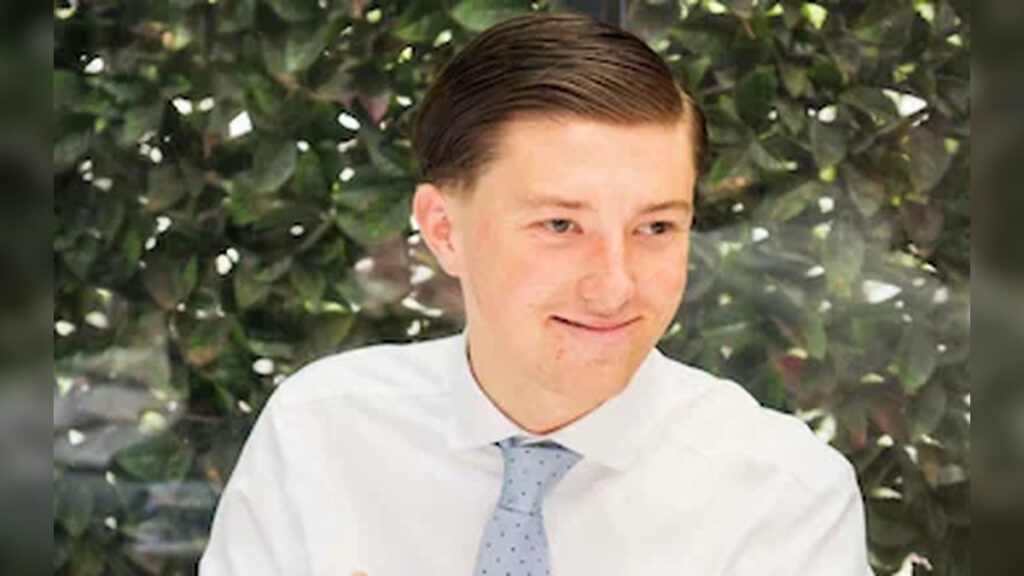
Public anger has intensified after newly released body-worn camera footage showed the final moments of 18-year-old Henry Nowak, a finance student at the University of Southampton, following a fatal stabbing in Southampton city centre last December.
The footage has triggered a fierce national debate over policing decisions made at the scene and whether the response reflected deeper institutional failings.
The video shows the teenager repeatedly telling officers he had been stabbed and pleading for medical help, while also being restrained and handcuffed as he lay critically injured.
He died shortly afterwards from blood loss complications, according to court proceedings.
Officers Face Scrutiny Over Treatment of Fatally Injured Student
The footage has placed Hampshire Police under intense scrutiny after it appeared officers initially dismissed Henry Nowak’s claims that he had been stabbed.
In one exchange, an officer can be heard responding, “I don’t think you have mate,” even as the injured student insisted multiple times that he could not breathe and required urgent medical assistance.
Authorities later acknowledged errors in judgment. Deputy Chief Constable Robert France issued an apology to the family, stating: “I’m sorry that he was handcuffed and arrested.”
The Independent Office for Police Conduct (IOPC) has since opened an investigation into the officers’ actions at the scene, focusing on how the situation was assessed and handled in real time under highly pressured and confusing circumstances.
Killer’s False Claims and Court Outcome Add to Public Anger
The attacker, Vickrum Digwa, who used an eight-inch ceremonial dagger during the assault, was sentenced to a minimum of 21 years in prison after being found guilty of murder.
Court proceedings revealed that Digwa did not know his victim but made false allegations at the scene, claiming he had been subjected to racist abuse and that his turban had been removed during an alleged attack.
These claims were later discredited during the trial.
Prosecutors described his account as a “wicked lie,” noting that he attempted to mislead officers while the real victim lay fatally injured nearby.
Political Figures Clash Over Claims of “Two-Tier” Justice
The case has quickly moved beyond the courtroom, igniting a political row over policing, race, and institutional trust.



Reform UK leader Nigel Farage condemned the handling of the incident after viewing the footage, arguing that it reflected what he described as a “two-tier” justice system.
He claimed the response showed that allegations of racism were treated more seriously than a violent crime, urging the public to respond with what he called “pure cold rage.”
He also argued that the case illustrated broader cultural problems in law enforcement and public institutions, calling for an end to what he described as unequal treatment and diversity policies that, in his view, distort fairness in policing.
His comments drew immediate criticism and support in equal measure across the political spectrum.
Conservative Party leader Kemi Badenoch also weighed in during a television appearance, rejecting divisive language while warning against escalating racial framing.
She stated that “all lives matter” and urged a focus on shared identity rather than group-based narratives, cautioning that repeated emphasis on racial categories risks deepening societal divisions.
Government Reaction and Call for Investigation
Prime Minister Keir Starmer described the case as deeply distressing, offering condolences to Henry Nowak’s family and emphasizing the importance of accountability.
He confirmed that the IOPC investigation into police conduct was appropriate and necessary.
He also highlighted the broader issue of knife crime, stressing the need for continued efforts to prevent similar tragedies and support affected families and communities.
Cabinet Office minister Nick Thomas-Symonds separately described the footage as “every parent’s nightmare,” calling the officers’ conduct at the scene “shocking” and affirming that the matter must be thoroughly examined without bias.
Wider Debate Over Law, Identity, and Policing Standards
The case has also drawn attention from international figures, including billionaire Elon Musk, who reportedly expressed interest in supporting legal scrutiny of the police response.
Meanwhile, questions have emerged in political and legal circles about whether training on bias, diversity, or cultural sensitivity may have influenced officers’ split-second decisions during the chaotic incident.
These claims remain unproven and are part of wider public debate rather than established findings.
The Attorney General’s office is also considering whether the sentence handed to Digwa should be reviewed under the unduly lenient sentence scheme, following multiple requests.
Family Response and Continuing Investigation
Despite the public controversy, Henry Nowak’s family has been widely praised for their composure throughout the legal process.
Court officials and political leaders alike have acknowledged their dignity in the face of prolonged proceedings and distressing evidence.
As the IOPC continues its investigation, authorities are expected to examine decision-making at the scene frame by frame, including how officers interpreted information provided by both the victim and the attacker.
The outcome is likely to shape future guidance on how emergency responders balance competing risks in rapidly evolving violent incidents, particularly when misinformation is introduced at the scene.
For now, the case remains one of the most closely watched policing controversies in recent years, with its implications extending far beyond Southampton.
