
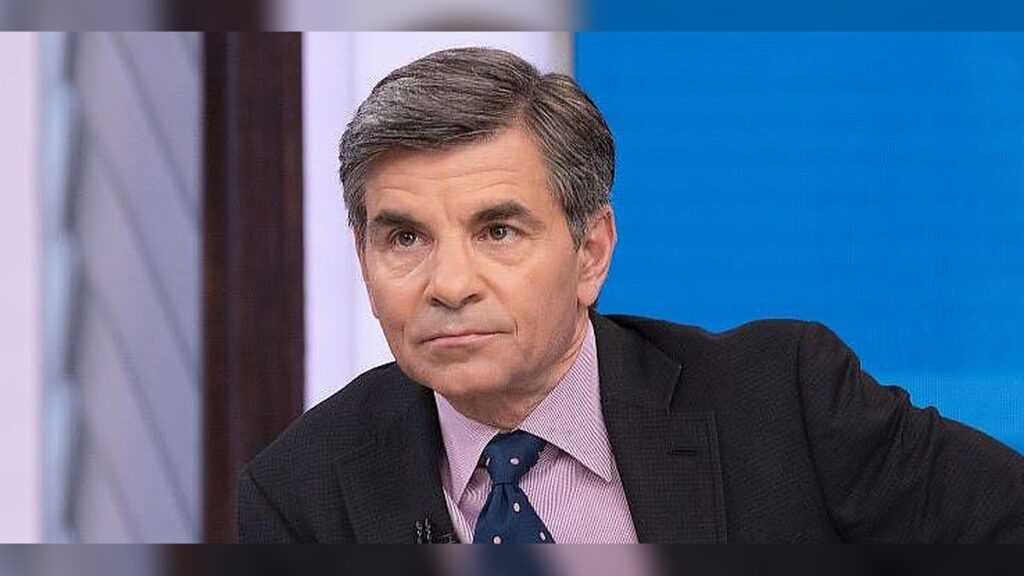
Recently released diary entries written by former White House COVID-19 adviser Anthony Fauci reveal previously undisclosed private exchanges with prominent television journalists, including ABC’s George Stephanopoulos, during the height of the coronavirus pandemic.
Among the entries is an account of a July 28, 2020, appearance on Good Morning America, where Fauci discussed public criticism directed at him by then-President Donald Trump.
According to the diary, Stephanopoulos sent Fauci a text message immediately after the interview that read, “Thank you, Tony. So impressive,” a compliment Fauci documented in his personal records.
Trump Criticism Featured During Television Interview
The diary recounts that Stephanopoulos questioned Fauci about Trump sharing social media posts that described him as a “fraud.”
Rather than directly addressing the attacks, Fauci wrote that he deliberately avoided engaging with the controversy.
During the televised interview, Fauci stated that he did not pay attention to such comments and intended to remain focused on his responsibilities regardless of political criticism.
In his written reflections, he described Trump’s approach as inconsistent, noting that the former president appeared cordial during private interactions while publicly amplifying criticism through social media.
Diaries Released Before High-Profile Senate Hearing
The records became public shortly before a Senate hearing examining the federal government‘s response to the COVID-19 pandemic.
The release has generated renewed attention because the journals provide a detailed look into Fauci’s personal thoughts throughout one of the most scrutinized periods of his public career.
During the hearing, Fauci invoked the Fifth Amendment and declined to answer questions related to the origins of the coronavirus and other matters connected to the investigation.
Seeking Advice on Responding to Fox News Commentary
Several diary entries reveal Fauci’s concern over persistent criticism from commentators on Fox News.
In a June 2021 entry, he described reaching out to longtime NBC News and MSNBC journalist Chuck Todd for guidance on whether he should continue publicly responding to what he viewed as personal attacks.




According to Fauci, Todd advised him that responding would likely amplify the criticism and provide additional material for future television segments.
Fauci wrote that he appreciated Todd’s support, describing him as both a respected journalist and someone who understood the pressures he was facing.
Repeated Complaints About Conservative Television Hosts
Throughout multiple entries in 2021, Fauci documented frustration with commentary from Fox News personalities, particularly Tucker Carlson, Laura Ingraham, and Sean Hannity.
He accused the hosts of undermining public vaccination efforts and expressed concern that their messaging could discourage Americans from receiving COVID-19 vaccines.
Fauci also objected to claims questioning his testimony regarding National Institutes of Health funding and research connected to the Wuhan Institute of Virology.
In later entries, he referred to Carlson in particularly harsh language and repeatedly described the nightly criticism as emotionally exhausting while insisting he would continue carrying out his responsibilities as director of the National Institute of Allergy and Infectious Diseases and chief medical adviser to President Joe Biden.
Growing Relationships With Television Personalities
Beyond his exchanges with Stephanopoulos and Todd, the journals describe developing relationships with several high-profile television anchors.
Fauci wrote that he formed what he considered a friendship with CNN’s Jake Tapper, noting that the pair exchanged messages after interviews and that he visited Tapper’s Washington, D.C., home on multiple occasions.
The diaries also reference text exchanges with CNN anchor Dana Bash and positive interactions with former CNN host Chris Cuomo, whom Fauci credited with publicly defending him during the pandemic.
Reflections on National Recognition
Many entries focus on Fauci’s rapidly expanding public profile as COVID-19 dominated headlines in 2020.
He documented extensive media coverage, including front-page newspaper stories and opinion columns discussing his role in the federal pandemic response.
One diary entry described a Washington Post profile as highly flattering, while another claimed that he had become one of the country’s most recognized public figures during the health crisis.
The writings repeatedly reference interviews, newspaper coverage, and television appearances that elevated his visibility throughout the pandemic.
Final Entries Describe Ongoing Political Backlash
Fauci continued keeping detailed journals through December 2022, when he retired from federal service.
In one of his final entries, he wrote that members of the far-right political movement and supporters of the QAnon conspiracy theory harbored deep hostility toward him.
The diaries do not contain admissions of criminal wrongdoing, and Fauci has not been charged with or convicted of any crime.
Debate Over COVID-19 Origins Remains Unresolved
The release of the journals comes as debate continues over the origins of COVID-19.
Two primary theories remain under discussion: one proposing a laboratory-related incident involving research in Wuhan, China, and another suggesting the virus emerged through natural transmission from animals to humans.
The newly released diaries primarily document Fauci’s personal experiences with media attention, political criticism, and his relationships with journalists during the pandemic rather than providing new scientific conclusions about the virus’s origin.
