
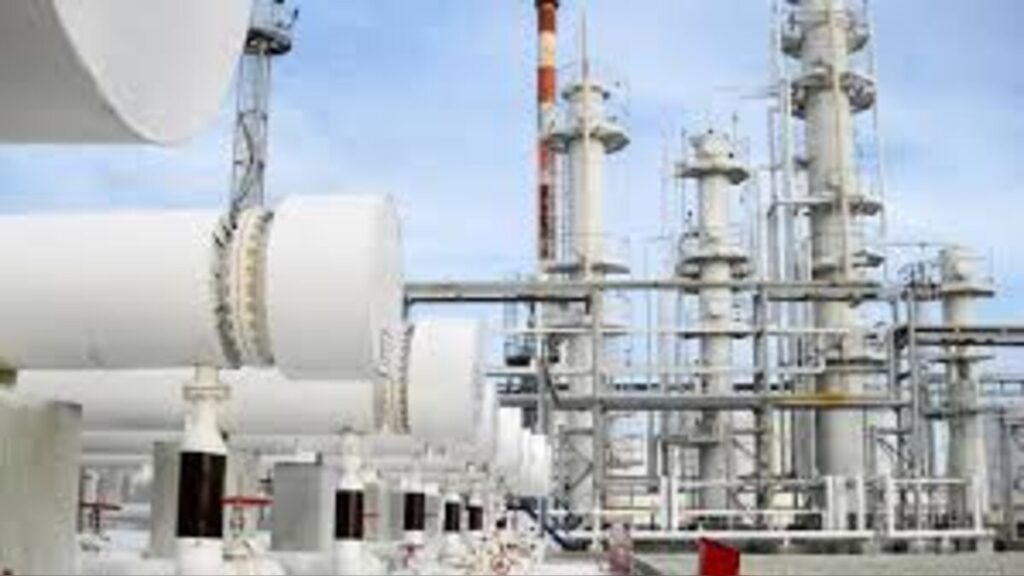
Nigeria’s industrial landscape just got a fresh jolt as the Dangote Refinery has struck a major technology partnership with Honeywell.
The deal is designed to push the refinery far beyond fuel production and deeper into petrochemicals, a move that could reshape parts of West Africa’s manufacturing ecosystem.
Rather than simply refining crude oil, the facility is now positioning itself as a large-scale producer of industrial raw materials used in everyday products—from packaging to detergents.
Turning Oil into Everyday Materials
At the heart of the agreement is the deployment of Honeywell UOP’s Oleflex technology.
This system will help the refinery produce an extra 750,000 metric tonnes of propylene every year.
Propylene is not a household name, but it quietly powers much of modern life.
It is used to make polypropylene, a plastic found in food packaging, medical supplies, textiles, and countless consumer goods.
Alongside this, the refinery will also produce 400,000 metric tonnes of linear alkylbenzene annually, a key ingredient in detergents and cleaning products used across homes and industries.
A Step Toward a Full Petrochemical Hub
What makes this development stand out is the direction it signals.
The Dangote facility, already one of the most ambitious industrial projects in Africa, is shifting from being primarily fuel-focused to becoming a fully integrated petrochemical complex.
This expansion builds on its existing petrochemical operations within the Lekki complex, which already includes polypropylene production capacity of around 830,000 metric tonnes per year.
Industry observers say this evolution puts the refinery in the same conversation as some of the world’s major petrochemical hubs.




Scale, Capacity, and Global Ambition
The refinery is no small operation to begin with.
It currently processes up to 650,000 barrels of crude oil per day and is on track for phased expansion toward 1.4 million barrels per day by 2028.
If that target is achieved, it could become the largest refinery in the world by throughput—an ambition that reflects the scale of investment and long-term planning behind the project.
The addition of large-scale petrochemical output strengthens its global competitiveness, especially in plastics and detergent feedstock markets.
Why This Matters for Nigeria’s Economy
Beyond the industrial engineering, the bigger story is economic.
Nigeria has long depended heavily on imported refined products and industrial raw materials. This expansion aims to reduce that reliance.
By producing polypropylene and linear alkylbenzene locally, manufacturers in sectors like packaging, consumer goods, and cleaning products may gain more stable supply chains and reduced import costs.
Economists also point out that increasing local production could ease pressure on foreign exchange demand, as fewer raw materials would need to be imported.
Impact and Consequences
The ripple effects could be significant. Manufacturing costs may drop if local access to petrochemical inputs improves.
That could make Nigerian-made goods more competitive both domestically and across West Africa.
There is also potential job creation across engineering, logistics, chemicals, and downstream manufacturing sectors.
However, the scale of such a complex also raises expectations around environmental management, infrastructure strain in Lekki, and the need for consistent regulatory oversight as production expands.
What’s Next?
The agreement between Dangote Refinery and Honeywell is part of a broader rollout rather than a one-off upgrade.
Next steps will likely focus on installation of advanced processing systems, integration with existing refinery units, and gradual ramp-up of petrochemical output.
As expansion continues toward full-scale capacity targets, attention will also shift to export potential, particularly within West African and global petrochemical markets.
Summary
Dangote Refinery is accelerating its transformation from a fuel production giant into a fully integrated petrochemical powerhouse.
With new technology from Honeywell, the facility is set to significantly increase production of key industrial materials, strengthening Nigeria’s push toward industrial self-sufficiency and export competitiveness.
Bulleted Takeaways
- Dangote Refinery partners with Honeywell for major petrochemical expansion
- New capacity includes 750,000 tonnes of propylene annually using advanced Oleflex technology
- Facility will also produce 400,000 tonnes of linear alkylbenzene for detergents
- Expansion builds on existing polypropylene production of 830,000 tonnes per year
- Refinery already processes 650,000 barrels per day with plans to reach 1.4 million barrels by 2028
- Goal is to reduce Nigeria’s reliance on imported industrial raw materials
- Expected benefits include stronger manufacturing output, improved supply chains, and export growth potential

