
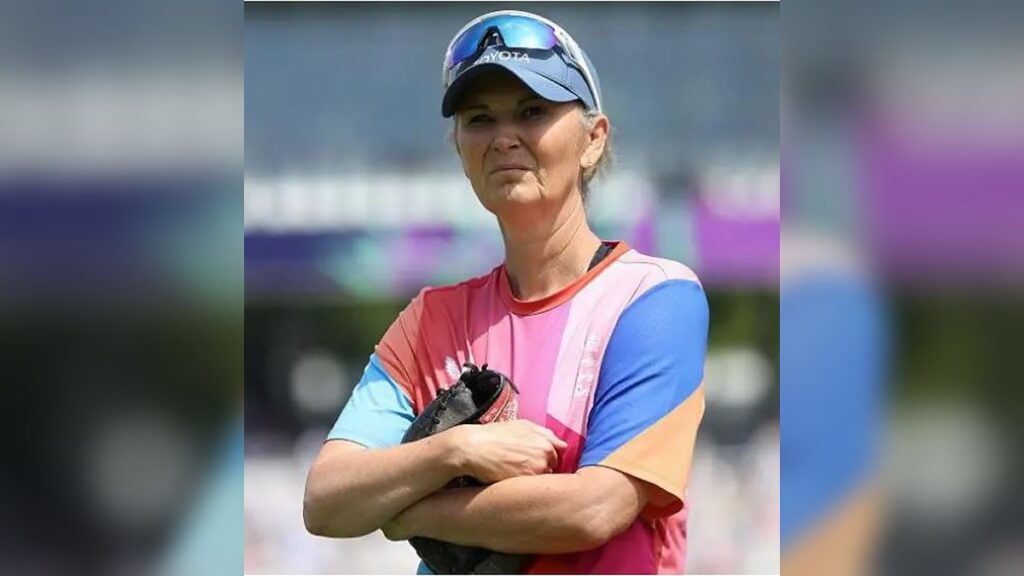
England’s hopes of capping their impressive Women’s Cricket World Cup campaign with a title ended in disappointment after a comprehensive seven-wicket defeat to Australia at Lord’s, leaving head coach Charlotte Edwards facing crucial decisions ahead of next year’s Ashes series.
Although reaching the final marked significant progress for England, the manner of the defeat highlighted the gap that still separates them from the world’s leading side.
England Falls Short on the Biggest Stage
The World Cup final had been viewed as an opportunity for England to emulate recent successes achieved by the Lionesses and the Red Roses on major sporting stages.
Instead, Australia produced a commanding performance to claim the title, exposing England’s shortcomings with both bat and ball.
England entered the match believing they would need to deliver an almost flawless performance to overcome their long-time rivals. Instead, they struggled to build momentum, producing what many regarded as their weakest display of the tournament.
Ashes Now Become Edwards’ Defining Challenge
Attention now shifts to next summer’s Ashes series, which could prove to be a defining period for Edwards’ tenure as head coach.
The situation has drawn comparisons with former England men’s captain Michael Vaughan, who sought to rebuild his team before the landmark 2005 Ashes after years of disappointing results against Australia.
Edwards acknowledged that England’s squad will be reviewed before the Ashes, indicating that selection changes remain a possibility despite the progress made during the World Cup.
She said the coaching staff would assess the composition of the team over the remainder of the summer while preparing for an important 12 months ahead.
Tournament Showed Signs of Clear Improvement
Despite the final defeat, England’s overall tournament represented a significant step forward compared with recent major competitions.
Much of the current squad endured an early group-stage exit at the T20 World Cup less than two years ago before suffering a 16-0 Ashes whitewash. Even at last year’s 50-over World Cup, England advanced only after an inconsistent group-stage campaign.




This time, the team reached the final through a far more convincing run, suggesting meaningful progress under Edwards’ leadership.
Emerging Players Strengthen England’s Future
Several players enhanced England’s long-term prospects during the tournament.
Freya Kemp and Dani Gibson added greater power to the middle order, while Alice Capsey continued her development into one of England’s established batters. Sophie Ecclestone also produced performances that suggested a return to her best form.
Captain Nat Sciver-Brunt returned strongly after recovering from a calf injury, while Heather Knight demonstrated that she remains a valuable contributor despite speculation over the latter stages of her career.
England also benefited from improved fitness and fielding standards throughout much of the competition.
Leadership Depth Continues to Grow
One encouraging development for England has been the emergence of additional leadership options.
Vice-captain Charlie Dean impressed while deputising during Sciver-Brunt’s injury absence, strengthening her credentials as a potential future captain.
The coaching staff have also invested in developing other leaders within the squad. Dani Gibson was given captaincy responsibilities during a training camp earlier this year, gaining valuable experience that could benefit England in future international competitions.
Squad Decisions Loom Ahead of Ashes
While several areas have improved, England still face difficult selection decisions.
Wicketkeeper Amy Jones endured a disappointing tournament with the bat despite her consistently reliable work behind the stumps. Her performances are likely to increase discussion over whether England should begin planning for a long-term successor.
Potential alternatives include Kira Chathli and Ellie Threlkeld, although neither has firmly established herself at international level.
Another option could involve Alice Capsey taking on wicketkeeping duties, creating room for highly rated youngster Davina Perrin to strengthen England’s batting lineup.
Teenager Tilly Corteen-Coleman, who was included in the World Cup squad without featuring, is also viewed as a player who could receive greater opportunities in the coming months.
Australia Remains the Standard to Beat
Although England re-established themselves among the world’s elite by reaching the final, Australia once again demonstrated why they remain the benchmark in women’s cricket.
Australian captain Sophie Molineux suggested after the victory that her side has yet to reach its full potential, underlining the scale of the challenge England faces before the next Ashes series.
Edwards believes her team has rebuilt confidence and regained the support of English cricket fans following previous disappointments.
However, transforming that progress into victories over Australia remains the ultimate objective, and one that will define England’s next chapter.

