
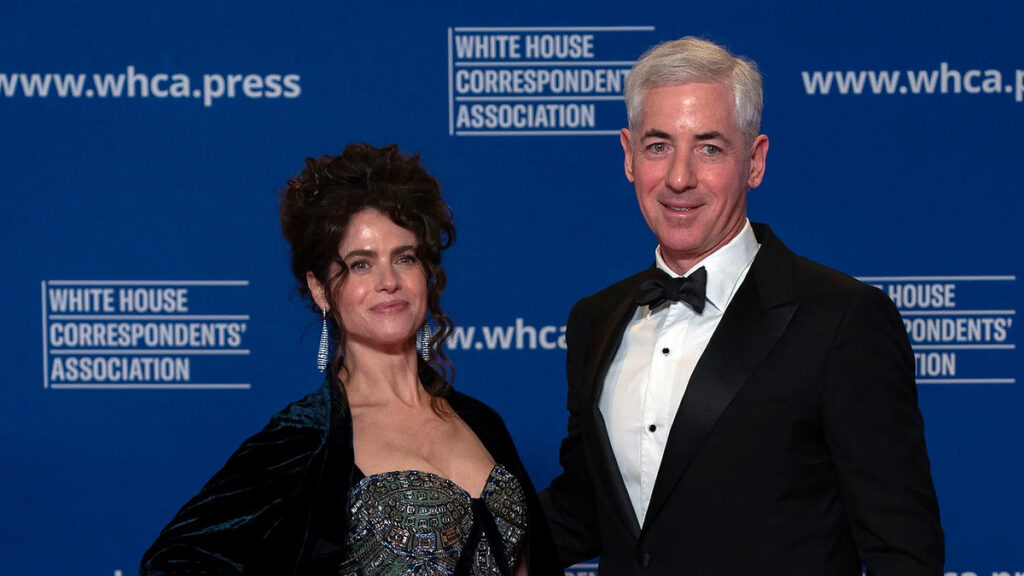
Billionaire investor Bill Ackman and designer and entrepreneur Neri Oxman are establishing a major new neuroscience and longevity centre in Manhattan, betting that privately backed research can compete more aggressively for elite scientific talent and accelerate the development of treatments.
The couple are launching the Ackman Oxman Institute, known as AOI, with Ackman saying they are committing approximately $400 million in Pershing Square stock to establish the organisation.
He added that another contribution of a similar size or potentially larger could follow.
The ambition is substantial. Ackman says the goal is to create a leading institution focused on brain research, rehabilitation, recovery, human optimisation and longevity.
Why Ackman Changed His Mind
The idea is not entirely new.
Ackman and Oxman considered creating a neuroscience institute around five years ago, but ultimately decided against it.
At the time, they believed the cost of acquiring suitable property in New York was prohibitive and that recruiting leading scientists away from universities would be too difficult.
According to Ackman, both conditions have since changed.
He said the property required for the institute became available at a discount of roughly 70%, significantly improving the economics of the project.
At the same time, he argued that universities have become less appealing workplaces for some researchers because of campus politics, concerns about antisemitism and declining financial resources.
Ackman’s comments reflect his long-running criticism of major American universities, particularly Harvard, where he has previously challenged leadership decisions, policies concerning diversity and inclusion, and the institution’s handling of antisemitism.
AOI Wants Research to Reach Patients Faster
The institute is being designed around a different model from a conventional academic research centre.
Ackman says AOI will be explicitly patient-focused, with an emphasis on turning scientific discoveries into treatments, medical devices and practical interventions rather than measuring success primarily through academic publications.
The institute intends to bring research, clinical trials and rehabilitation closer together so discoveries can move more quickly from laboratories to patients.
Ackman argues that scientific progress should ultimately be judged by its ability to improve lives, rather than simply by the number of papers researchers produce.
A Nonprofit With Commercial Ambitions
Although AOI will operate as a nonprofit organisation, it is not being designed to avoid commercial activity.
Ackman says the institute will maintain what he describes as highly commercial instincts.
It plans to establish a venture investment operation capable of funding companies built around technologies developed through its research.
Returns generated from those businesses could then be reinvested into additional scientific research.
That structure is intended to create a cycle in which research produces technology, technology generates commercial opportunities and those financial returns help fund the next generation of research.
A 680,000-Square-Foot Manhattan Campus
The scale of the planned campus is another indication of the couple’s ambitions.
The Pershing Square Foundation acquired a largely vacant biotechnology facility of almost 400,000 square feet on Manhattan’s West Side after Ackman was alerted to the property by a real estate contact.




The foundation is also under contract to acquire an adjoining 130,000-square-foot building and is pursuing a neighbouring vacant lot.
With additional construction permitted under existing zoning, Ackman estimates that the eventual campus could expand to approximately 680,000 square feet.
That would give AOI a physical footprint larger than the laboratory space at Rockefeller University, according to Ackman’s comparison.
Neuroscience and Longevity Under One Roof
AOI is expected to bring several areas of research together rather than treating them as separate disciplines.
The proposed programme includes neuroscience, rehabilitation, nutrition, clinical trials and longevity research, creating a broad scientific platform focused on improving brain health and human recovery.
Mount Sinai is expected to be an important partner, although Ackman stressed that the institute will work across institutional boundaries rather than operating exclusively through one medical or academic organisation.
The philosophy is straightforward: no single university, hospital or research institution should be assumed to possess all of the strongest ideas or scientists.
Family Experience Shaped the Vision
The project has also been deeply influenced by personal experience.
Ackman said the treatment and rehabilitation of his 26-year-old daughter, Lucy, after she suffered a brain hemorrhage helped convince the family that significant opportunities remain to improve how severe neurological injuries are treated.
Lucy was found unconscious in her Brooklyn apartment and required emergency surgery.
Her subsequent recovery exposed the family to both the extraordinary ability of the brain to recover and the limitations that remain within modern medicine.
Ackman has previously said he pushed doctors to consider experimental approaches during her treatment, including an attempt involving mitochondrial injections into her eye intended to help preserve her sight.
Those experiences have helped shape the institute’s focus on moving promising scientific ideas more quickly toward patients.
AI and Brain-Computer Interfaces Are Central to the Plan
Artificial intelligence is expected to play a major role in AOI’s research strategy.
Ackman believes advances in AI and brain-computer interfaces could fundamentally alter the treatment of neurological injuries and diseases.
He has specifically pointed to companies such as Neuralink, Precision Neuroscience and Synchron as examples of organisations developing technologies that could eventually interact directly with the human brain.
The institute therefore intends to position itself at the intersection of neuroscience and artificial intelligence.
For Ackman, that could become particularly important in cases where conventional treatments cannot fully restore lost functions.
Building a High-Profile Scientific Leadership Team
AOI has already begun assembling its leadership structure.
Ackman said a chief executive has been identified and is expected to be announced by October.
The organisation is also searching for a chief scientific officer, chief AI and technology officer and other senior executives.
Its board already includes prominent figures from science, medicine, technology and philanthropy.
Among those named are inventor Dean Kamen, Regeneron co-founder and chief scientific officer George Yancopoulos, Nobel Prize-winning biochemist James Rothman, neuroscientist Bernardo Sabatini and neurosurgeon Chris Kellner.
Pershing Square Foundation CEO Olivia Flatto, Oxman and Ackman are also members of the board.
Ackman Wants to Redefine How Scientific Success Is Measured
The creation of AOI represents more than a large philanthropic investment.
It is also a direct experiment in whether a privately funded, commercially minded nonprofit can build a major scientific institution outside the traditional university structure.
Ackman believes changing economic and cultural conditions have created an opportunity to attract researchers who might previously have remained within academia.
The institute’s model will test whether combining substantial private capital, clinical research, entrepreneurial investment and scientific collaboration can shorten the journey between discovery and treatment.
A Personal Mission With a Much Bigger Ambition
Ackman’s motivation ultimately extends beyond investment or institutional competition.
His family’s experience with Lucy has given the project a personal urgency, while his wider criticism of universities has shaped the organisational model he wants AOI to pursue.
The central premise is that neurological recovery may be capable of advancing far beyond today’s limits if scientists have the resources, freedom and incentives to pursue ambitious ideas.
Ackman says his family learned through Lucy’s recovery that even catastrophic brain injuries do not necessarily eliminate the possibility of meaningful recovery.
AOI is now being built around the belief that the next breakthroughs in neuroscience could emerge when researchers, clinicians, entrepreneurs and technologists are brought together with a single objective: turning promising science into better outcomes for patients.

