
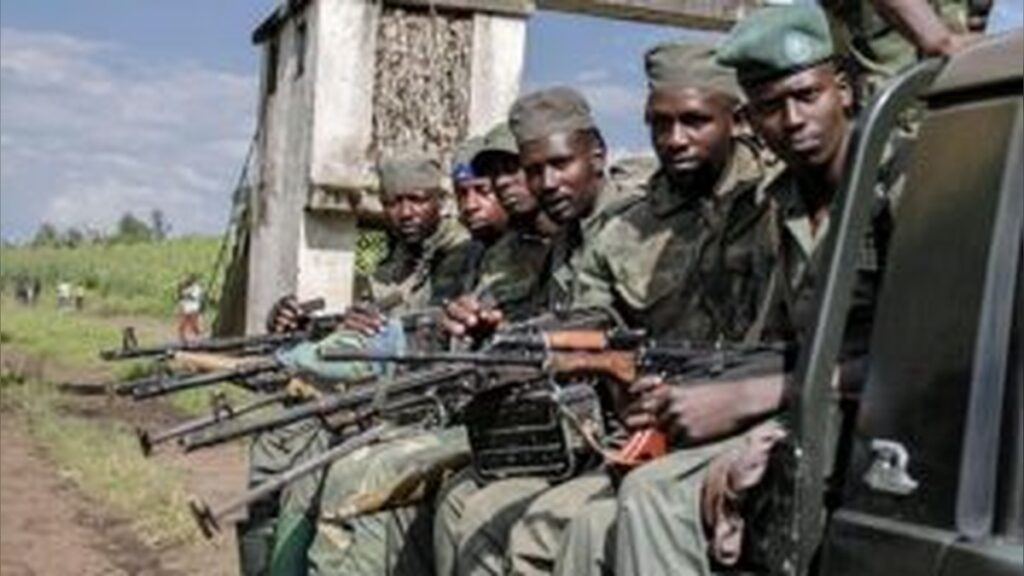
The Democratic Republic of Congo has taken its long-running dispute with neighboring Rwanda to the International Court of Justice (ICJ), accusing Kigali of violating international law through its alleged involvement in the conflict that has devastated eastern Congo for decades.
The legal action seeks to hold Rwanda accountable for what Congolese authorities describe as unlawful military activities and support for armed groups operating inside DR Congo.
Kinshasa Alleges Multiple Treaty Violations
In its application to the court, the Congolese government argues that Rwanda has breached several international conventions by allegedly deploying forces and supporting armed organizations on Congolese territory following the aftermath of the 1994 Rwandan genocide.
Justice Minister Guillaume Andali said the case focuses on alleged violations involving treaties related to genocide prevention, racial discrimination, the protection of women and the prohibition of torture.
The government is asking the ICJ to examine the accusations and determine whether Rwanda bears legal responsibility for the alleged actions.
Reparations Among the Demands
Beyond requesting a legal ruling, DR Congo is asking the court to order Rwanda to halt the alleged violations and award reparations for damage suffered by both the Congolese state and victims affected by the conflict.
The ICJ, headquartered in The Hague, will now review the application before deciding how the case will proceed.
Rwanda Maintains Longstanding Denials
Rwanda had not publicly responded to the latest filing at the time of publication.
For years, Kigali has consistently rejected accusations that it supports rebel movements inside eastern DR Congo, despite repeated allegations from United Nations experts and several Western governments that Rwanda has provided backing to the M23 rebel group.



Rwandan officials have repeatedly denied those claims.
Earlier Legal Attempts Failed
This is not the first occasion on which DR Congo has sought legal action against Rwanda before the ICJ.
A case filed in 2001 was later withdrawn, while another submitted in 2006 was dismissed after the court concluded it lacked jurisdiction because Rwanda had not accepted the court’s authority over the dispute.
The latest filing represents a renewed effort by Kinshasa to seek international legal accountability.
Conflict Rooted in the Aftermath of the Genocide
The tensions between the two countries trace back to the 1994 Rwandan genocide, during which around 800,000 people—primarily from the Tutsi community—were killed by Hutu extremists.
In the aftermath, approximately one million Hutus fled into what is now the Democratic Republic of Congo, reshaping the region’s ethnic and political landscape.
The arrival of large refugee populations contributed to growing instability in eastern Congo, where ethnic tensions and competing armed groups have fueled recurring violence for decades.
Rebel Groups Continue to Fuel Regional Instability
Rwanda has previously launched military operations inside DR Congo, arguing they were necessary to pursue individuals responsible for the genocide.
One of the armed groups still active in eastern Congo is the Democratic Forces for the Liberation of Rwanda (FDLR), which includes members linked to the 1994 genocide.
Kigali considers the FDLR an ongoing security threat and has accused the Congolese government of cooperating with the group—an allegation Kinshasa firmly rejects.
Meanwhile, the M23 rebellion has intensified the crisis, with the group capturing significant areas of the mineral-rich eastern region, including the strategic city of Goma earlier this year.
Peace Agreement Yet to End Fighting
Although Rwanda and DR Congo signed a U.S.-brokered peace agreement in December aimed at reducing hostilities, violence has continued across eastern Congo.
The persistence of armed clashes despite diplomatic efforts has underscored the complexity of one of Africa’s longest-running conflicts.
As the International Court of Justice begins considering the latest complaint, the case could become another significant chapter in the decades-long legal and political struggle between the neighboring nations.

