
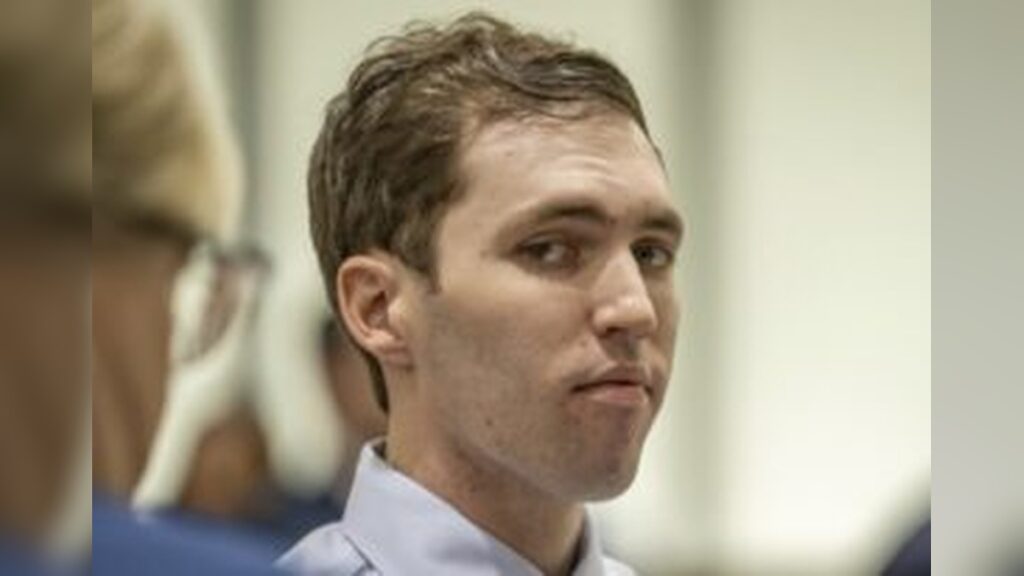
A Utah judge has ruled that the man accused of killing political commentator Charlie Kirk can still face the death penalty if convicted, despite finding that one of the prosecutors improperly spoke to the media about the case.
The decision preserves the prosecution’s ability to pursue capital punishment while also holding a member of the prosecution team accountable for violating restrictions on public statements.
Prosecutor Found in Contempt Over Media Remarks
Fourth District Judge Tony Graf determined that Deputy Utah County Attorney Christopher Ballard breached the court’s pretrial publicity order by making comments that extended beyond what had been authorized.
The judge concluded that Ballard improperly discussed aspects of the evidence and publicly suggested that prosecutors had a strong case against the defendant.
As a result, Ballard was found in civil contempt of court.
The ruling also requires the prosecution to cover the legal costs incurred by the defense in bringing the contempt motion.
Defense Bid to Eliminate Capital Punishment Rejected
Attorneys representing Tyler Robinson had asked the court to remove the possibility of the death penalty, arguing that the prosecutor’s comments could influence potential jurors and jeopardize Robinson’s right to a fair trial.
Judge Graf rejected that request, ruling that eliminating capital punishment would be an excessive response and was not legally available as a sanction under Utah’s civil contempt laws.
The judge said the prosecutor’s misconduct did not justify stripping the state of one of its available sentencing options.
Defendant Faces Multiple Serious Charges
Robinson, 23, has been charged with aggravated murder and several additional felony offenses stemming from the fatal shooting of Charlie Kirk during a Turning Point USA event at Utah Valley University in September 2025.
Prosecutors allege Robinson intentionally targeted Kirk because of his political views, an accusation that could support the aggravated murder charge and make the defendant eligible for the death penalty under Utah law if he is found guilty.



Robinson has not yet entered a plea and remains in custody without bail.
Ballistics Dispute Sparked Court Conflict
The latest legal dispute centered on comments Ballard made about forensic evidence, including a bullet fragment recovered from Kirk’s body.
Defense lawyers argued those statements violated the court’s restrictions and risked contaminating the jury pool through media coverage.
However, Judge Graf also noted that the defense had contributed to public misunderstanding by filing court documents suggesting ballistics testing had excluded Robinson’s alleged firearm, prompting prosecutors to publicly respond.
While the judge found Ballard ultimately crossed the legal line, he concluded the broader circumstances did not justify the severe sanction requested by the defense.
Court Orders Safeguards for Future Jury
To help ensure Robinson receives a fair trial, the court approved additional protections for the jury selection process.
These measures include expanding the pool of prospective jurors and conducting more detailed questioning to identify anyone whose views may have been influenced by extensive publicity surrounding the high-profile case.
The court believes these steps will better protect the integrity of future proceedings than removing the death penalty from consideration.
Defense Suffers Another Pretrial Defeat
Friday’s ruling marks another unsuccessful attempt by Robinson’s legal team to limit the prosecution’s case before trial.
Earlier in the week, Judge Graf denied a separate defense request seeking to require Robinson’s former roommate and romantic partner, Lance Twiggs, to testify in person during the preliminary hearing.
Instead, prosecutors are expected to rely on recorded statements in which Twiggs allegedly told investigators that Robinson confessed to the shooting and later discussed concealing the rifle.
Preliminary Hearing Approaches
The case is scheduled to move forward in early July with a preliminary hearing, where prosecutors must present enough evidence to establish probable cause for a trial.
Investigators are expected to introduce surveillance footage, forensic analysis, witness testimony and alleged communications that they say connect Robinson to the fatal shooting.
Capital Punishment Still a Possibility
Judge Graf’s ruling means prosecutors retain the option of seeking the death penalty if Robinson is ultimately convicted of aggravated murder.
Should a guilty verdict be returned, the case would proceed to a separate sentencing phase in which jurors would determine whether capital punishment should be imposed.
For now, the prosecution’s strategy remains intact despite the court’s finding that one of its attorneys violated the pretrial publicity order.

