
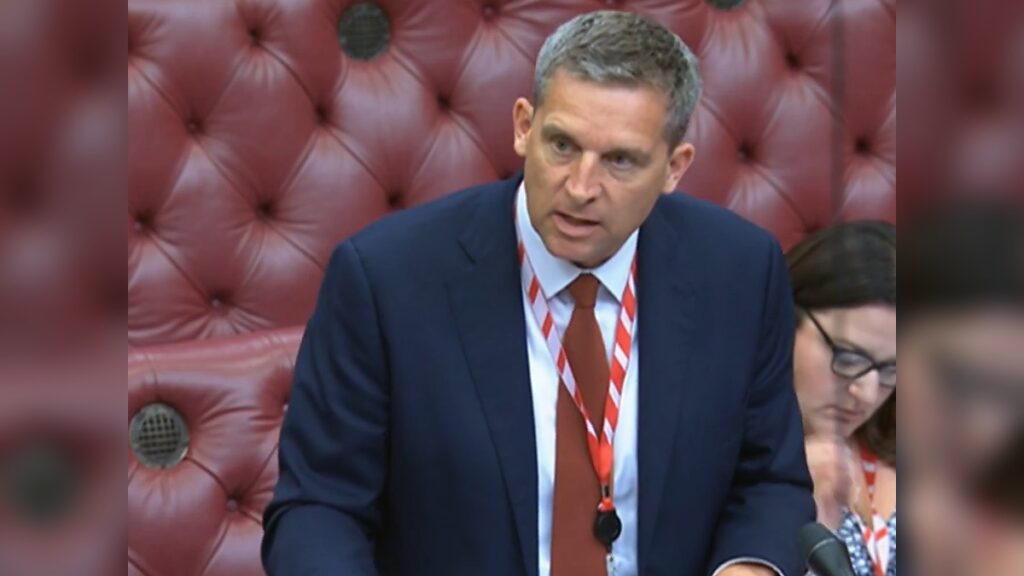
Lord James Timpson has resigned from his role as prisons minister, bringing an end to a turbulent period in which he oversaw Labour’s controversial efforts to reduce pressure on the overcrowded prison system.
The businessman-turned-politician was appointed by Prime Minister Sir Keir Starmer in July 2024 after stepping away from his position as chief executive of the family-owned Timpson Group, a company well known for employing former offenders.
His appointment was initially welcomed by allies who believed his background could bring a fresh and unconventional approach to tackling long-standing problems within Britain’s prisons and probation services.
Minister Leaves After Two Years at Centre of Prison Reform Debate
During his time in government, Lord Timpson became one of the key figures behind Labour’s early release programme, introduced as part of wider measures to address severe overcrowding in prisons.
The scheme allowed thousands of prisoners to leave custody earlier than originally expected, sparking fierce political debate over whether the policy prioritised prison capacity over public safety.
While supporters argued that reducing overcrowding was essential to improving prison conditions and rehabilitation, critics warned that releasing offenders early could place additional pressure on police, probation teams and communities.
Prison Violence and Rehabilitation Concerns Remain Major Challenges
Lord Timpson’s departure comes amid continued concerns about conditions inside prisons, including violence, drug use and overstretched probation services.
Outgoing chief inspector of prisons Charlie Taylor recently warned that efforts to tackle drug problems and improve offender rehabilitation remained insufficient.
His annual report highlighted a worrying increase in violence across many male prisons, with serious assaults involving prisoners and staff rising in a significant number of facilities inspected between April 2025 and March 2026.
The findings renewed criticism that, despite reform efforts, the prison system continued to struggle with deep-rooted issues.
Lord Timpson Defends His Record Before Resignation
Despite the criticism surrounding his tenure, Lord Timpson defended his achievements and insisted he was leaving the justice system in a stronger position than when he arrived.
In a statement announcing his departure, he said he was proud to have become the longest-serving prisons minister in 15 years and claimed significant improvements had been made across prisons and probation services.
He said around 75 per cent of prisons and 90 per cent of probation teams were performing better than when he began his role.
Lord Timpson also pointed to reductions in self-harm, violence and assaults on staff, while highlighting progress in helping prisoners secure accommodation after release.
Women’s Justice Reform Highlighted as Key Achievement
One of Lord Timpson’s major policy focuses was improving the treatment of women within the criminal justice system.




He established the Women’s Justice Board and argued that many women should be diverted away from prison, particularly those dealing with addiction, unstable lives and personal trauma.
He described efforts to provide alternatives to custody and support vulnerable women as one of the reforms he was most proud of during his time as minister.
However, he did not provide a specific reason for his resignation.
A Ministry of Justice source told the BBC that officials were disappointed by his departure, adding that his replacement would face a significant challenge understanding the pressures ahead.
Early Release Expansion Looms After Minister’s Exit
Lord Timpson’s resignation comes shortly before the next stage of Labour’s sentencing reforms, with the Sentencing Act 2026 due to come into force in September.
The legislation will expand the early release system further, allowing some offenders who received longer sentences to leave prison earlier.
Under the government’s timetable, around 6,000 prisoners are expected to be released, beginning with those serving shorter sentences.
The releases will increase gradually, with offenders serving sentences of more than 12 years expected to become eligible from June next year.
Critics Warn Dangerous Criminals Could Return to Streets Early
The expanded release programme has faced strong opposition from Conservative politicians and victims’ groups, who argue the reforms could undermine public confidence in the justice system.
Tory spokesman Dr Kieran Mullan criticised the plans, claiming victims would feel that justice had been taken away from them.
He argued that the policy was not focused on minor offenders but could affect people convicted of serious crimes, including sexual offences and violent attacks.
Critics have called for the programme to be halted, warning that releasing high-risk offenders early could create further problems for communities and law enforcement.
Police and Victims Raise Concerns Over Sentencing Changes
Labour’s sentencing reforms are designed to reduce the prison population by changing when offenders become eligible for release.
Under the new rules, some violent and sexual offenders could leave prison after serving half their sentence instead of the current two-thirds point.
Other offenders may qualify for release after serving a third of their sentence if they demonstrate good behaviour while incarcerated.
A person convicted of manslaughter and sentenced to 15 years, for example, could potentially leave prison after seven and a half years if they meet the required conditions.
However, murderers will remain excluded from the scheme because they receive mandatory life sentences with minimum terms set by the courts.
New Justice Minister Faces Major Challenge Ahead
Lord Timpson leaves office as the government prepares to implement one of the biggest changes to sentencing policy in years.
The incoming prisons minister will inherit a system under intense scrutiny, balancing the need to reduce overcrowding with demands from police leaders, victims and opposition parties for stronger public protection measures.
With thousands of prisoners expected to be released early, the next phase of Labour’s prison reforms is likely to remain one of the government’s most politically sensitive challenges.
Summary
Lord James Timpson has resigned as prisons minister after overseeing Labour’s controversial early release programme and wider prison reforms.
While he defended his record by highlighting improvements in prison performance, critics continue to raise concerns about overcrowding, violence, rehabilitation failures and the risks posed by releasing offenders early.
His departure comes just before major sentencing changes are introduced, leaving his successor with the difficult task of managing one of the UK’s most debated justice reforms.
