
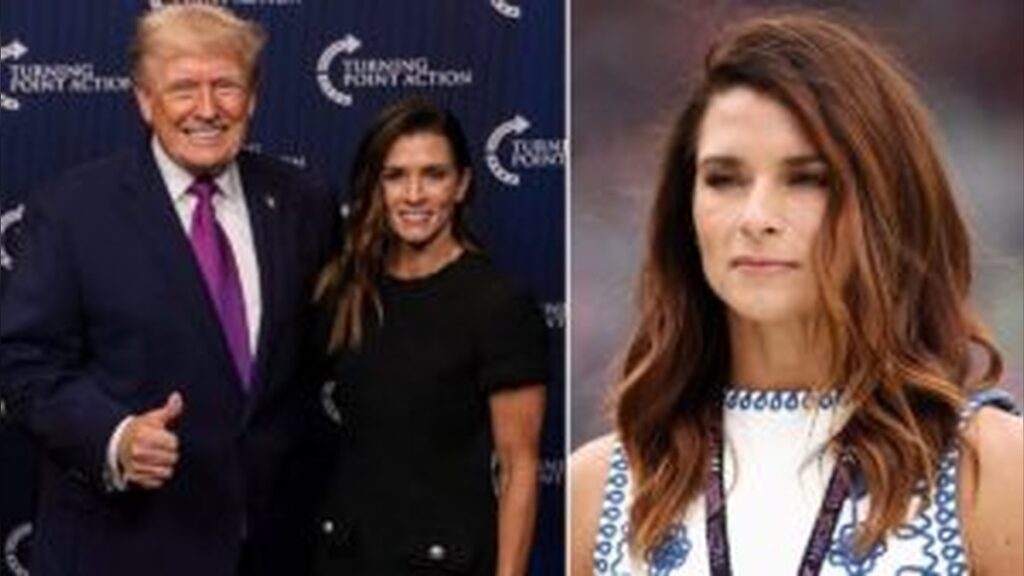
Danica Patrick’s return to the broadcast booth for the Freedom 250 Grand Prix in Washington, DC, has triggered another wave of criticism from motorsport fans, with her on-air comments becoming almost as controversial as the race itself.
The former IndyCar and NASCAR driver joined Fox Sports as an analyst for the high-profile street race, which was staged in the US capital as part of celebrations marking the 250th anniversary of the United States.
Patrick’s involvement immediately attracted attention, but much of the reaction from fans was negative, particularly after she used part of the broadcast to praise President Donald Trump and his role in helping bring the event to Washington.
Patrick Credits Trump for Helping Make the Race Possible
During the broadcast, Patrick highlighted the work of Fox CEO Eric Shanks and Penske Corporation President Bud Denker, while also crediting Transportation Secretary Sean Duffy and Trump for helping turn the proposed race into reality.
She argued that the speed with which the event moved from an idea to an actual race reflected the spirit of the United States.
Patrick also linked the event to the country’s 250th anniversary, describing the race as a celebration of America’s identity and the idea that ambitious projects can become reality.
Her comments quickly moved the discussion beyond racing, with viewers on social media debating whether political praise belonged in a motorsports broadcast.
Fans Question Fox’s Decision to Use Patrick
Patrick has faced criticism from sections of the motorsport audience before, particularly over her work as a television analyst covering NASCAR, IndyCar and Formula One.
Her latest appearance revived those complaints, with some viewers arguing that Fox could have selected other former drivers with greater broadcasting experience or more accomplished racing careers.
Several social media users described her commentary as distracting and questioned her understanding of racing and American history.
The backlash was not limited to her remarks about Trump.
Some viewers simply objected to Patrick being part of the broadcast team, suggesting that her presence made the coverage less enjoyable.
Political Commentary Became a Major Talking Point
The political element intensified the reaction because Patrick has previously been open about her support for Trump.
Rather than limiting her analysis to the action on the circuit, she used part of the broadcast to discuss the political and organizational forces behind the event.
For supporters of Trump, the comments were likely to be viewed as recognition of the administration’s involvement in making the race happen.
For critics, however, the remarks reinforced their belief that political messaging had been allowed to intrude on sports coverage.
That divide was reflected throughout the online reaction, with some posts focusing more heavily on Patrick’s political views than on the race itself.



Social Media Erupts Over the Broadcast
Critics on X were particularly vocal during the event, with some describing Patrick’s commentary in extremely harsh terms.
One user accused Patrick and the Fox broadcast team of being excessively complimentary toward Trump, while another mocked Fox for choosing Patrick and Chris Myers for the coverage.
Others questioned why a former driver with Patrick’s record had been selected when other experienced racers could have been given the opportunity.
One particularly hostile post called her one of the worst sports commentators on television, while another attacked her political views and her podcast discussions.
The criticism also included personal attacks, with one social media user making a crude reference to controversy involving White House staffer Natalie Harp.
Patrick’s Racing Career Remains a Complicated Part of Her Media Role
Patrick is one of the most recognizable American female drivers of the modern era.
She became a major figure in IndyCar before moving into NASCAR, building a profile that extended well beyond motorsport.
Her historic IndyCar victory at the 2008 Japan 300 made her the first woman to win an IndyCar Series race, a milestone that helped cement her place in racing history.
That profile has made her a natural television personality, but it has also meant that her every appearance attracts intense scrutiny from longtime racing fans.
Her transition from driver to broadcaster has therefore produced a complicated relationship with sections of the audience.
Freedom 250 Was Designed to Be More Than Just a Race
The Freedom 250 Grand Prix was presented as a major motorsport spectacle in the heart of Washington, DC, with the street circuit providing a highly visible backdrop for the event.
Its significance was also tied to the country’s 250th anniversary celebrations, giving the race a political and cultural dimension beyond the normal IndyCar calendar.
That combination of motorsport, national celebration and political involvement inevitably created a highly charged atmosphere.
Patrick’s comments brought those different elements together on live television, ensuring that the discussion surrounding the broadcast extended well beyond what happened on the track.
The Debate Highlights the Challenges of Sports Broadcasting
The reaction to Patrick’s appearance reflects a broader challenge facing modern sports broadcasters: viewers increasingly expect commentators to provide analysis without allowing personal politics to dominate the coverage.
At the same time, major sporting events are frequently connected to government officials, public policy and national celebrations, making political references difficult to avoid completely.
For Fox, Patrick’s appearance demonstrates both the value and the risk of using high-profile former athletes as analysts.
Her name guarantees attention, but her strong opinions can also generate controversy that overshadows the sporting product.
What’s Next for Patrick and Fox
The immediate controversy is unlikely to end Patrick’s broadcasting opportunities, particularly given her long-standing profile in American motorsport.
However, the response could fuel another debate within racing circles over who should receive major television assignments and how much personal opinion should be allowed during live sports coverage.
For Patrick, the Freedom 250 appearance adds another chapter to an increasingly polarizing media career.
For Fox, the reaction may serve as a reminder that its choice of analysts can significantly shape how audiences perceive an event.
Summary
Danica Patrick’s appearance on Fox Sports’ coverage of the Freedom 250 Grand Prix generated widespread criticism from IndyCar fans, particularly after she praised Donald Trump and other officials for helping bring the Washington, DC, race to life.
While Patrick presented the event as an example of American ambition and a fitting celebration of the nation’s 250th anniversary, critics argued that her political comments distracted from the racing.
The fierce response once again demonstrates the divided reaction Patrick receives as a broadcaster and highlights the growing tension between sports coverage, celebrity personalities and political commentary.

