
The Catholic Church is confronting a series of significant developments across Europe, Africa, Asia and the Middle East, ranging from criminal proceedings against a priest in Ireland to sweeping parish closures in Scotland and renewed appeals for peace in Ethiopia.
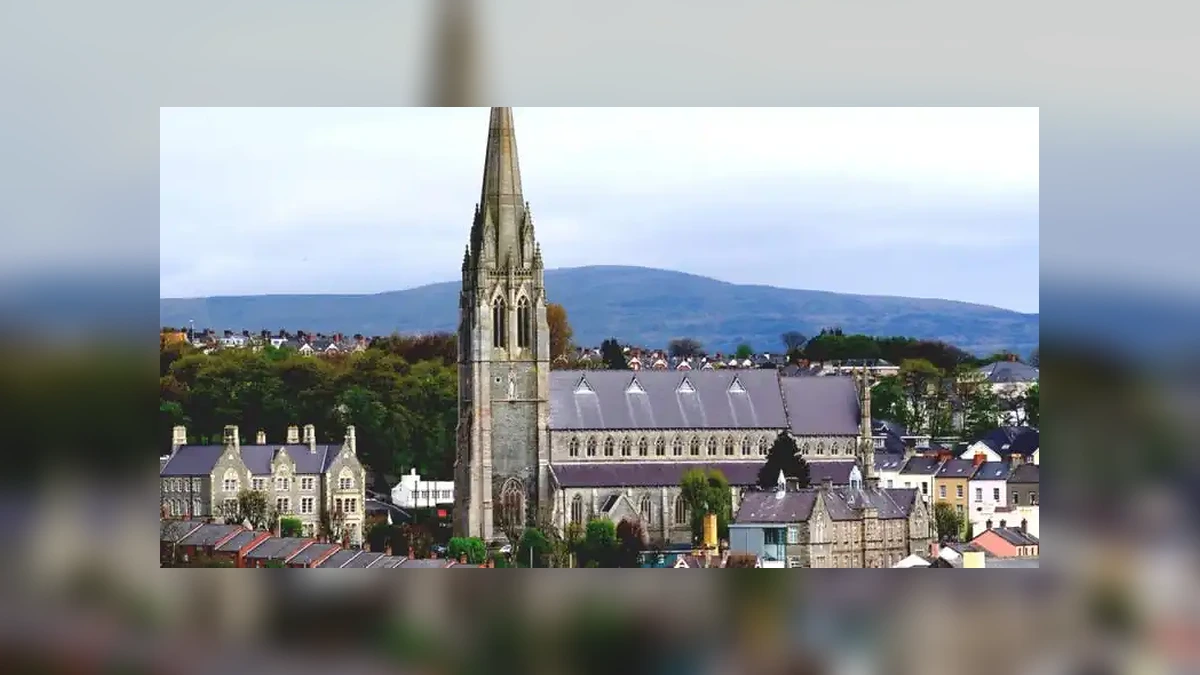
Among the most serious developments is the admission of 109 child sexual offence charges by a priest from the Diocese of Derry, prompting church authorities to begin preparations for his dismissal from the priesthood.
Elsewhere, Catholic leaders are responding to declining church attendance, diplomatic tensions, changing religious practices and growing calls for environmental responsibility.
The developments, reported between October 3 and October 8, 2026, illustrate the range of challenges facing Catholic communities while highlighting ongoing religious and humanitarian initiatives.
Irish Catholic Priest Admits 109 Child Sexual Offence Charges as Vatican Dismissal Process Begins
Father Edward Gallagher, a priest associated with the Diocese of Derry in Ireland, has admitted to 109 charges involving child sexual offences committed between June 22, 2023, and April 18, 2025.
The offences include possession of child sexual abuse material, attempted solicitation of sexual activity from a child and attempted sexual communication with a minor.
Gallagher is awaiting sentencing, which has been scheduled for December 9.
Following the admissions, Bishop Michael Router announced that the diocese would formally request Gallagher’s dismissal from the clerical state, a process requiring action by the Vatican.
In a statement issued on October 5, Router confirmed that he had instructed church officials to complete the necessary documentation and submit it to the Holy See without delay.
The bishop acknowledged the suffering caused by sexual abuse and stressed that disciplinary measures could not reverse the harm experienced by victims and survivors.
He nevertheless maintained that the Church had an obligation to respond with honesty, justice and decisive action.
The case represents another serious challenge for Catholic authorities as they continue to face scrutiny over the handling of sexual abuse allegations and accountability within the clergy.
Glasgow Archdiocese Announces Plan to Close 24 Churches and Cut Parishes by Half
The Archdiocese of Glasgow in Scotland is preparing for one of its most substantial structural reorganisations in recent years as church leaders confront declining attendance and a shortage of priests.
Archbishop William Nolan announced on October 7 that a restructuring proposal would reduce the number of parishes by approximately half and result in the closure of 24 churches.
According to Nolan, the existing parish network has become increasingly difficult to maintain because the number of active worshippers and available clergy has fallen.
He disclosed that the number of active priests in the archdiocese had declined by approximately one-third during his tenure of less than five years.
Only one priest is currently younger than 45, while most are over 60.
The archbishop also acknowledged the important contribution of priests and religious personnel from other countries, explaining that their assistance had prevented an even more serious shortage.
The planned closures reflect broader challenges affecting Catholic institutions in parts of Europe, where ageing clergy and changing patterns of religious participation have placed pressure on traditional parish structures.
Pope Leo XIV Appoints New Vatican Ambassador to United Arab Emirates Amid Regional Tensions
Pope Leo XIV has appointed Polish diplomat Monsignor Grzegorz Piotr Bielaszka as the Vatican’s new ambassador to the United Arab Emirates, elevating him to the rank of archbishop.
Bielaszka succeeds Archbishop Christophe Zakhia El-Kassis, who was appointed the Holy See’s permanent observer to the United Nations in July.
Born in Poland in 1974, Bielaszka was ordained to the priesthood in 1999 before entering the Vatican’s diplomatic service in 2006.
His previous assignments have included Iraq, Panama, Hungary, Peru and Gabon.
The appointment comes during a period of heightened tensions in the Gulf following military confrontations involving Iran, Israel and the United States.
The Vatican has repeatedly encouraged diplomatic dialogue and negotiated solutions to regional disputes.
Relations between the Holy See and the UAE have developed considerably in recent years, particularly following Pope Francis’ historic visit to Abu Dhabi in 2019.
That visit included the signing of the Document on Human Fraternity, which promoted interreligious understanding, peaceful coexistence and cooperation between different faith communities.
Bielaszka’s appointment continues the Vatican’s diplomatic engagement with the Gulf state at a time when regional stability remains a significant international concern.
Catholic Churches in South Korea Replace Domestic Mass Wine With Australian and Italian Brands
Catholic parishes across South Korea will begin using imported wines during Mass after church authorities decided to end a nearly five-decade arrangement involving domestically produced liturgical wine.
The Catholic Bishops’ Conference of Korea announced on October 7 that Australian Seven Hill wine and Italian Alagna Vini wine had been selected for religious celebrations.
The change will take effect during Advent, the four-week period preceding Christmas.
Since 1977, the Church in Korea has relied on locally produced Majuang wine for liturgical purposes.


However, declining agricultural land availability and the ageing population of grape farmers have created difficulties for the domestic production arrangement.
The decision marks the first major change in the country’s official liturgical wine supply in 49 years.
Wine plays an essential role in Catholic celebrations of the Eucharist, making the selection and continued availability of suitable products an important responsibility for church authorities.
The switch to imported suppliers reflects the practical challenges facing agricultural production and religious institutions in South Korea.
Ethiopian Catholic Bishop Condemns Hatred as Fighting Raises Fears of Wider Conflict
A senior Catholic bishop in Ethiopia has appealed for reconciliation and respect for human life amid renewed military tensions affecting parts of the country.
Bishop Lisane-Christos Matheos Semahun of the Eparchy of Bahir Dar-Dessie urged Christians to reject hatred and avoid celebrating the deaths or suffering of people they consider enemies.
In a reflection published on October 3, the bishop described every life lost during conflict as a tragedy.
He encouraged Catholics to pray for their enemies, support communities affected by violence and contribute to initiatives promoting dialogue, justice and reconciliation.
His appeal comes amid escalating accusations between Ethiopia and neighbouring Eritrea.
Ethiopia has accused Eritrea of carrying out an extensive invasion in northern Tigray, while Eritrea has accused Ethiopia of launching an unprovoked war of aggression.
The competing allegations highlight the continuing tensions surrounding a region that has already experienced devastating armed conflict.
The bishop’s message focused on the humanitarian consequences of violence and the responsibility of religious communities to promote peace rather than deepen divisions.
Irish Parish Priest Cancels Nathan Carter Concert Over Church Worship Rules
A planned concert by country music performer Nathan Carter at St. Joseph’s Catholic Church in Boyle, Ireland, has been cancelled following objections from the parish’s current priest.
Father John Gannon informed Carter that the performance could no longer take place inside the church, despite permission having previously been granted by the former parish priest.
The decision received support from Bishop Kevin Doran of Elphin, who explained that diocesan rules restrict the types of musical events permitted inside churches.
According to Doran, the policy is intended to preserve the sacred character of church buildings as places of worship.
He clarified that music performed inside a church does not necessarily have to be strictly liturgical.
However, he said it should possess a spiritual character, with lyrics consistent with Christian teachings.
The cancellation has brought renewed attention to the distinction between religious worship spaces and venues used for public entertainment.
It also highlights the authority of diocesan officials to determine which activities are appropriate within Catholic church buildings.
More Than 300 Young Catholics Gather in Baghdad to Promote Environmental Protection
More than 300 young Catholics participated in a religious gathering in Baghdad dedicated to environmental responsibility and care for creation.
The event formed part of the Season of Creation, an annual Christian observance encouraging prayer, reflection and action to protect the natural environment.
Participants engaged in Scripture readings, spiritual discussions and reflections inspired by Pope Francis’ environmental encyclical, Laudato Si’.
Father Amir Kammu explained that environmental challenges should not be viewed exclusively as scientific or economic issues.
He emphasised their moral and spiritual dimensions, particularly because environmental degradation often has the greatest impact on economically disadvantaged communities.
Organisers encouraged participants to consider practical ways of protecting nature in their daily lives.
At the conclusion of the gathering, each attendee received either a small plant or a fish to care for.
The gesture was intended to transform the event’s environmental message into an ongoing personal responsibility.
Egyptian Catholic Church Opens Investigation Into Possible Sainthood of Former Patriarch
Catholic authorities in Egypt have formally begun the process of examining the life and reputation of Cardinal Stephanos II Ghattas, the former Coptic Catholic patriarch of Alexandria.
Ghattas served as patriarch between 1986 and 2006 and died in Cairo in 2009.
The Council of Catholic Patriarchs and Bishops in Egypt, led by Coptic Catholic Patriarch Ibrahim Isaac, has invited members of the public to provide information relevant to the investigation.
Church authorities are seeking testimonies concerning Ghattas’ character, religious life and reputation for holiness.
They have also requested personal correspondence, written materials and other documents that could assist the examination.
Importantly, the invitation includes information that may either support or challenge claims about his holiness.
The opening of the cause represents an initial formal step in the Catholic Church’s process of investigating possible beatification and canonisation.
It does not mean that Ghattas has already been declared blessed or recognised as a saint.
Canadian Catholics Prepare More Than 1,550 Public Rosary Rallies Across the Country
A Catholic organisation in Canada is preparing to hold more than 1,550 public rosary rallies on October 10 as part of a nationwide religious campaign.
The initiative, organised by Canada Needs Our Lady, is intended to encourage public prayer for the country, families and local communities.
The campaign began in Saint-Hubert, Quebec, and has expanded from 1,083 gatherings to more than 1,550 planned events.
Joseph Gensens, a Fatima custodian associated with the organisation, said the response from Canadian Catholics had been encouraging.
He explained that many participants appreciated the opportunity to pray publicly alongside others who shared their religious beliefs.
Canada Needs Our Lady promotes Catholic devotion and advocates a return to Christian values within Canadian society.
The planned rallies are expected to bring participants together in communities across the country.
Catholic Church Confronts Institutional Challenges While Expanding Religious and Diplomatic Activities
The developments reported across several countries demonstrate the different pressures and responsibilities confronting the Catholic Church in 2026.
In Ireland, the admission of serious sexual offences by a priest has renewed attention on accountability and the Church’s responsibility towards victims and survivors.
In Scotland, declining attendance and shortages of clergy are forcing church authorities to reconsider the future of longstanding parish communities.
Meanwhile, diplomatic appointments in the Gulf, peace appeals in Ethiopia and environmental initiatives in Iraq reflect the Church’s continued involvement in international and humanitarian affairs.
Religious communities in South Korea, Egypt and Canada are also responding to changing circumstances through adjustments to worship practices, investigations into religious figures and public devotional activities.
Together, these developments highlight an institution dealing with difficult internal questions while continuing its religious, social and diplomatic work across different regions of the world.
