
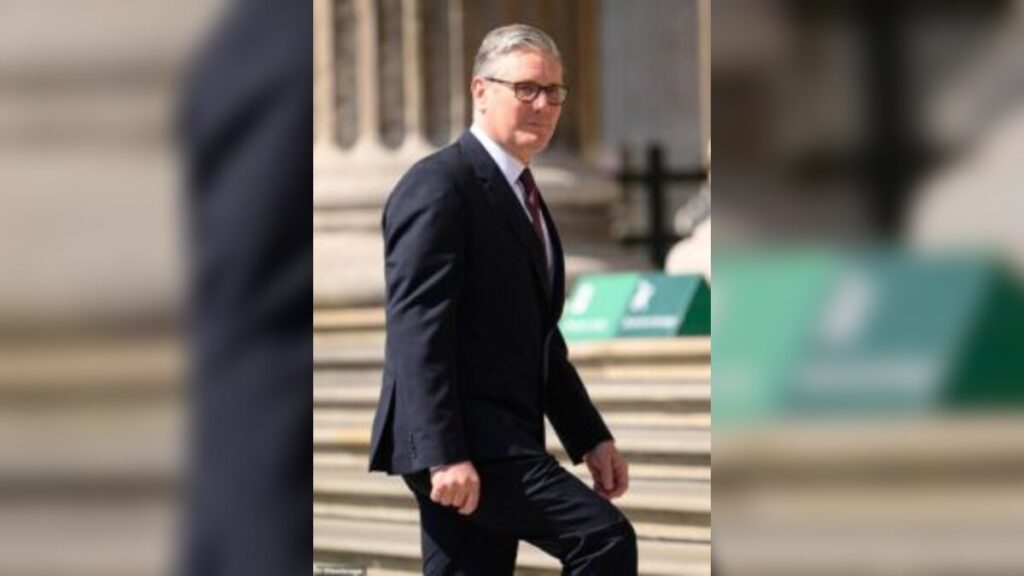
The pressure is mounting on Keir Starmer, and it’s no longer the quiet grumbling of backbenchers—it’s spilling into the open.
What started as controversy around the appointment of Peter Mandelson as ambassador to the United States has snowballed into a full-blown political headache.
Now, with Parliament watching closely, the Prime Minister is walking into another tense session of PMQs with his authority under serious scrutiny.
There’s a growing sense within Labour that this isn’t just a passing storm.
For some MPs, the question has shifted from if Starmer will face consequences to when.
The Sacking That Sparked It All
At the center of the drama is Olly Robbins, a senior Foreign Office figure whose dismissal has raised eyebrows across Westminster.
His testimony at a recent parliamentary hearing painted a troubling picture—one of pressure from Number 10 to push through Mandelson’s appointment despite internal concerns.
Robbins described an “atmosphere of pressure,” suggesting that standard vetting processes were sidelined.
Even more striking was his claim that key warnings were not escalated to Starmer, hinting at either a breakdown in communication or a deliberate bypassing of safeguards.
Cabinet Cracks Begin to Show
What’s making matters worse for Starmer is that dissent is no longer confined to whispers.
Senior figures are now speaking out—carefully, but unmistakably.
Pat McFadden, the Work and Pensions Secretary, notably dodged questions about whether Robbins’ removal was fair, repeatedly framing it as “the Prime Minister’s judgment.”
That phrasing, while loyal on the surface, subtly distances him from the decision itself.
Meanwhile, Ed Miliband didn’t hold back. He openly admitted he had reservations about Mandelson’s appointment from the start, warning it could “blow up”—a prediction that now seems eerily accurate.
His remarks suggest that concerns were circulating at the highest levels long before the scandal broke.




Diplomatic Appointments Under Fire
The controversy has expanded beyond Mandelson.
Fresh revelations indicate that Downing Street attempted to secure another high-profile diplomatic role for Matthew Doyle, a close ally of Starmer.
That move has triggered alarm about the politicisation of diplomatic postings.
Yvette Cooper, the Foreign Secretary, expressed clear unease, stressing that such appointments must follow proper channels.
Her comments underline a deeper institutional concern: that established norms within the civil service may be under strain.
A Party Growing Uneasy
Within Labour, the mood is shifting. While no major challenger has stepped forward yet, that restraint appears strategic rather than supportive.
With local elections looming, potential rivals may simply be waiting for the right moment.
Even Angela Rayner has taken a cautious line—avoiding direct criticism but acknowledging the distraction caused by the scandal.
Her stance reflects a party trying to balance unity with growing internal frustration.
Impact and Consequences
This crisis cuts deeper than a single appointment.
It raises fundamental questions about leadership, transparency, and decision-making at the top of government.
Politically, Starmer risks losing the confidence of both his Cabinet and backbench MPs.
Public trust could also take a hit, especially if the perception grows that rules were bent for political convenience.
Institutionally, the controversy may strain relations between ministers and the civil service—an essential partnership for effective governance.
Once that trust erodes, it’s difficult to rebuild.
What’s Next?
All eyes are now on the coming weeks. PMQs will offer a public test of Starmer’s resilience, while the upcoming local elections could serve as a referendum on his leadership.
If Labour performs poorly, pressure for change may intensify rapidly.
On the other hand, a decent showing might buy Starmer some time—but it’s unlikely to silence critics completely.
Behind the scenes, conversations about succession and strategy are almost certainly already underway.
Summary
What began as a questionable diplomatic appointment has evolved into a defining challenge for Keir Starmer’s leadership.
With Cabinet members voicing concerns and internal unity fraying, the Prime Minister faces a critical moment.
Whether he can regain control—or whether this marks the beginning of the end—remains to be seen.
Key Takeaways
- The Mandelson appointment controversy has triggered a wider political crisis.
- Olly Robbins’ dismissal and testimony have intensified scrutiny on Downing Street.
- Senior Cabinet figures are publicly expressing doubts, signaling weakening support.
- Concerns over politicised diplomatic roles are raising institutional alarms.
- Labour MPs are increasingly uneasy, with leadership questions quietly growing.
- Upcoming elections and parliamentary sessions could निर्णatively shape Starmer’s future.

