
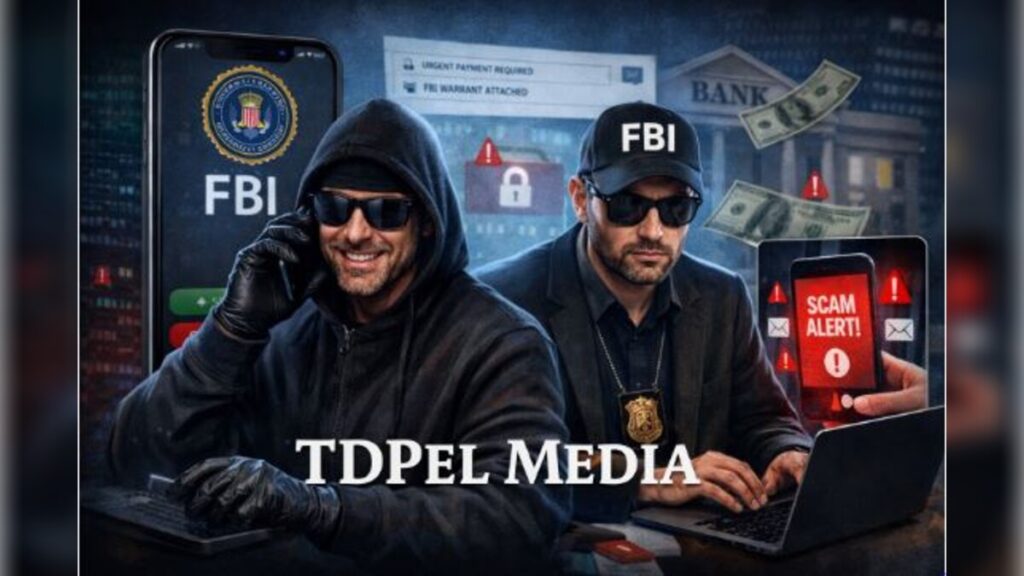
The Federal Bureau of Investigation has issued a fresh warning to residents in North Florida about a growing wave of scams involving criminals posing as law enforcement officers.
Officials from the FBI Jacksonville Field Office say scammers are increasingly impersonating FBI agents and other government officials in an effort to extort money or steal sensitive personal information.
Scammers Using Texts, Calls, and Emails to Target Victims
Authorities report that many recent cases begin with a simple text message, though fraudsters are also using phone calls and emails to reach potential victims.
According to data from the FBI’s Internet Crime Complaint Center, complaints related to government impersonation scams nearly doubled in 2025, with reported losses approaching $800 million.
The trend highlights how rapidly these schemes are spreading — and how costly they can be.
Fake Caller IDs and Official-Looking Messages Raise Concern
One of the key tactics used by scammers is spoofing phone numbers, making it appear as though calls are coming from legitimate agencies or even trusted institutions like banks.
Fraudulent emails and messages may also include official-looking images, such as agency seals, credentials, or even photos of senior officials, to make them appear authentic.
However, authorities warn that subtle signs — including poor grammar, spelling mistakes, and unusual phrasing — often reveal the deception.
High-Pressure Tactics Used to Force Quick Decisions
Officials say scammers frequently create a sense of urgency, pressuring victims to act quickly without thinking.
Common tactics include threats of arrest or demands for immediate payment to “resolve” a supposed issue. Law enforcement stresses that these claims are false.




The FBI has made it clear that it does not contact individuals to demand money or threaten arrest via phone, email, or text.
How to Protect Yourself From Impersonation Scams
Authorities are urging the public to remain cautious when dealing with unknown contacts.
People are advised not to answer calls from unfamiliar numbers, avoid sending money to unknown individuals, and never share personal information such as Social Security numbers over the phone or online with unverified sources.
The FBI also emphasized that it will never request payments through wire transfers, cryptocurrency, or gift cards.
Steps to Take If You’re Targeted or Victimized
Anyone who believes they have been targeted by such a scam is encouraged to immediately cut off communication with the suspected fraudster.
Victims should contact their financial institutions to secure accounts, report the incident to local law enforcement, and file a complaint through the FBI’s Internet Crime Complaint Center.
Keeping records of communications and transactions can also help authorities investigate the case.
Impact and Consequences
The rise in impersonation scams represents a growing threat to both individuals and financial systems, with millions of dollars lost each year.
Beyond financial damage, victims often face emotional stress and identity theft risks, which can take years to resolve.
The increasing sophistication of these scams also makes them harder to detect, raising concerns about wider public vulnerability.
What’s Next?
Law enforcement agencies are expected to continue public awareness campaigns and investigations into organized scam networks.
Authorities may also increase collaboration with telecom companies and financial institutions to detect and block fraudulent activity more effectively.
Public vigilance will remain a key factor in preventing further losses.
Summary
The FBI has warned of a surge in scams involving criminals impersonating government officials, particularly in North Florida.
Using texts, calls, and emails, fraudsters attempt to pressure victims into sending money or sharing sensitive information.
Authorities are urging the public to stay alert, recognize warning signs, and report suspicious activity immediately.
Bulleted Takeaways
- FBI warns of rising impersonation scams targeting North Florida residents
- Scammers pose as FBI agents and other officials via text, phone, and email
- Losses from such scams reached nearly $800 million in 2025
- Fraudsters use fake caller IDs and official-looking messages
- Victims are often pressured with threats and urgent demands
- FBI will never demand money or threaten arrest via communication
- Public urged to avoid sharing personal information or sending money
- Victims should report incidents to law enforcement and the FBI IC3
