
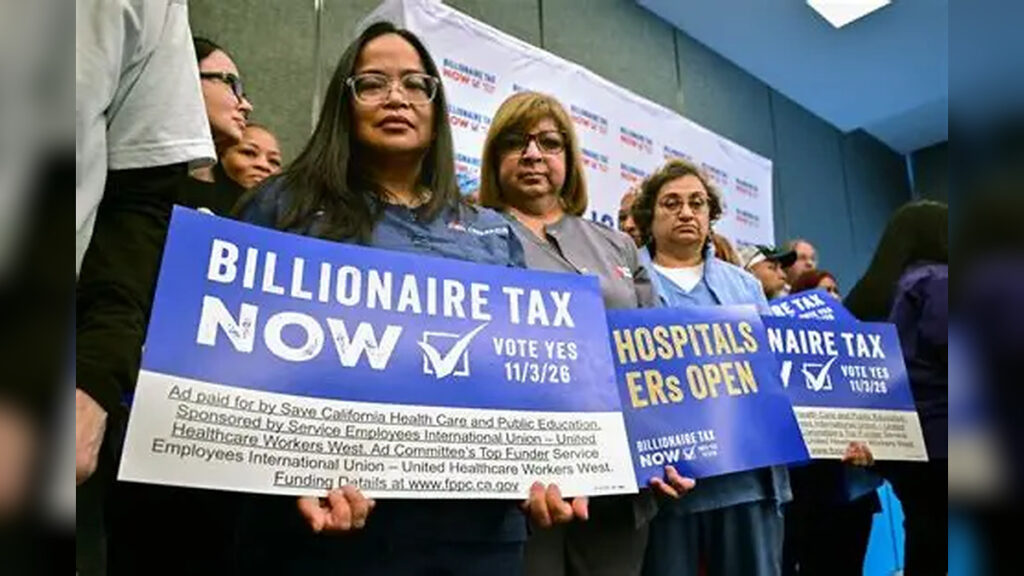
California’s wealthiest residents are mounting an increasingly expensive campaign to defeat a proposed one-time tax that would take 5% of the net worth of residents holding more than $1 billion in assets.
The measure, Proposition 40, is scheduled to go before voters in November and is designed to raise money for healthcare in the state.
But as the election approaches, a growing group of billionaires and multimillionaires is investing heavily in efforts to stop it.
At the center of that campaign is Building a Better California, a political action committee established earlier this year to oppose the proposal.
Fresh $18 Million Boost for Opposition Campaign
The PAC received a major injection of cash in recent days from two prominent billionaires.
Venture capitalist John Doerr contributed $7.5 million, while Chris Larsen, executive chair of blockchain company Ripple, added another $10 million, according to a campaign finance filing dated August 14 and reported by the Financial Times.
Doerr, whose fortune is estimated at about $22.6 billion by Forbes, and Larsen, estimated to be worth roughly $11.4 billion, are among the high-profile wealthy Californians attempting to block the measure.
The fundraising has also attracted substantial contributions from multimillionaires.
John Hering, co-founder of cybersecurity company Lookout, donated $946,000, while Neil Mehta, founder of investment firm Greenoaks Capital, gave $250,000.
Those contributions have helped Building a Better California build a war chest estimated at $110 million by late June.
Voters Remain Divided
Despite the enormous sums being deployed, the outcome remains uncertain.
A recent survey conducted by the University of California, Berkeley’s Institute of Governmental Studies found that 48% of likely voters support the billionaire tax, compared with 41% who oppose it.
The political divisions are particularly pronounced.
Democratic voters overwhelmingly favored the proposal, while only half of unaffiliated voters said they supported it. Among Republicans, 80% said they opposed the measure.
Eric Schickler, co-director of the Institute of Governmental Studies, said the findings point toward a potentially tight campaign, with the decisive battle likely to be over traditionally Democratic voters.
The survey also highlighted a major advantage for Proposition 40: 72% of voters said they had heard of the billionaire tax, while awareness of competing measures backed by its opponents was substantially lower.
Two Measures Designed to Undercut Proposition 40
Building a Better California is not relying solely on advertising to defeat the tax.
The organization has backed Propositions 41 and 42, two initiatives that could effectively neutralize Proposition 40 if either receives more votes than the billionaire tax.
Proposition 41 would require the state auditor to examine special tax proposals before they could be placed before voters.
Proposition 42 takes a different approach, seeking to prohibit new taxes based simply on ownership of assets such as property—assets that are generally taxed when they are sold rather than merely held.
The strategy creates an unusual three-way contest in which voters could approve Proposition 40 while simultaneously backing a competing measure that would prevent it from taking effect.




However, the countermeasures currently appear to have a significant awareness problem.
While nearly three-quarters of voters surveyed knew about the billionaire tax, fewer than one in three were familiar with Propositions 41 and 42.
$87 Million Advertising Blitz Planned
The opposition campaign has also demonstrated that it intends to dominate the airwaves before election day.
Building a Better California has reportedly reserved approximately $87 million in advertising time ahead of the November vote, giving opponents the financial resources to mount a sustained effort to shape how Californians view the proposal.
The spending reflects the potentially enormous financial consequences for those directly affected by the measure.
For billionaires, a one-time 5% levy on net worth could translate into hundreds of millions or even billions of dollars in tax liability, depending on the size and composition of their fortunes.
Political Establishment Split Over Proposal
The campaign has exposed an unusual divide within California’s Democratic establishment.
Gov. Gavin Newsom and Democratic gubernatorial candidate Xavier Becerra have both opposed the billionaire tax.
Yet the California Democratic Party endorsed Proposition 40 earlier this month, giving supporters an important political boost.
The disagreement has made the measure particularly contentious within a state where Democrats normally dominate statewide elections.
The party endorsement could help proponents persuade Democratic voters, but wealthy opponents are betting that concerns over investment, entrepreneurship and California’s business climate can weaken support.
Sergey Brin Emerges as a Major Opponent
Among the richest figures opposing the proposal, Google co-founder Sergey Brin has become one of its most aggressive critics.
Brin, who is estimated to be the world’s fourth-richest person, reportedly moved a substantial portion of his assets out of California late last year.
He has also committed approximately $102 million to efforts opposing the proposed wealth tax.
That total includes an additional $20 million contribution to Building a Better California made earlier this month.
Brin’s involvement underscores the scale of the stakes for the state’s richest residents and highlights concerns that the proposal could influence where wealthy individuals choose to live and keep their assets.
Mark Cuban Warns Entrepreneurs Could Leave
Other prominent business figures have voiced similar concerns.
Former Shark Tank star Mark Cuban recently criticized the proposal in an exchange on X with California Democratic Rep. Ro Khanna.
Cuban argued that imposing a wealth tax could damage entrepreneurship and innovation, warning that startup founders could reconsider remaining in California if the measure becomes law.
“IMO, if this passes, only idiot startup founders stay in Cali,” Cuban wrote.
His comments reflect a broader argument from opponents that taxing accumulated wealth could encourage entrepreneurs and investors to relocate, potentially reducing future investment and economic activity in the state.
Sanders Sees National Opportunity
Supporters of the proposal argue that the tax could become a model for addressing America’s widening wealth gap.
Sen. Bernie Sanders of Vermont has been one of its most prominent political advocates.
In February, Sanders said the measure could demonstrate that ordinary voters still have the ability to influence how the country’s wealthiest people are taxed.
Sanders and Khanna subsequently took the idea beyond California, introducing federal legislation in March that would establish a similar 5% wealth tax on America’s 938 billionaires.
Their proposed “Make Billionaires Pay Their Fair Share Act” would use the revenue to expand Medicare, restore Medicaid funding cut under President Donald Trump’s “Big Beautiful Bill” and provide a $3,000 direct payment to households earning $150,000 or less.
November Vote Could Set a Wider Precedent
California’s election is therefore shaping up as more than a dispute over a single tax.
For supporters, Proposition 40 represents an opportunity to make the wealthiest Americans contribute substantially more toward healthcare and social programs.
For opponents, it is a test of whether California can continue attracting billionaires, investors and entrepreneurs while imposing a potentially unprecedented levy on their accumulated fortunes.
With tens of millions of dollars already flowing into competing campaigns—and wealthy donors preparing an enormous advertising offensive—the November vote could become a closely watched test of how far voters are willing to go in taxing extreme wealth.
Whatever the outcome, California’s billionaire tax fight is likely to reverberate far beyond the state’s borders.

