
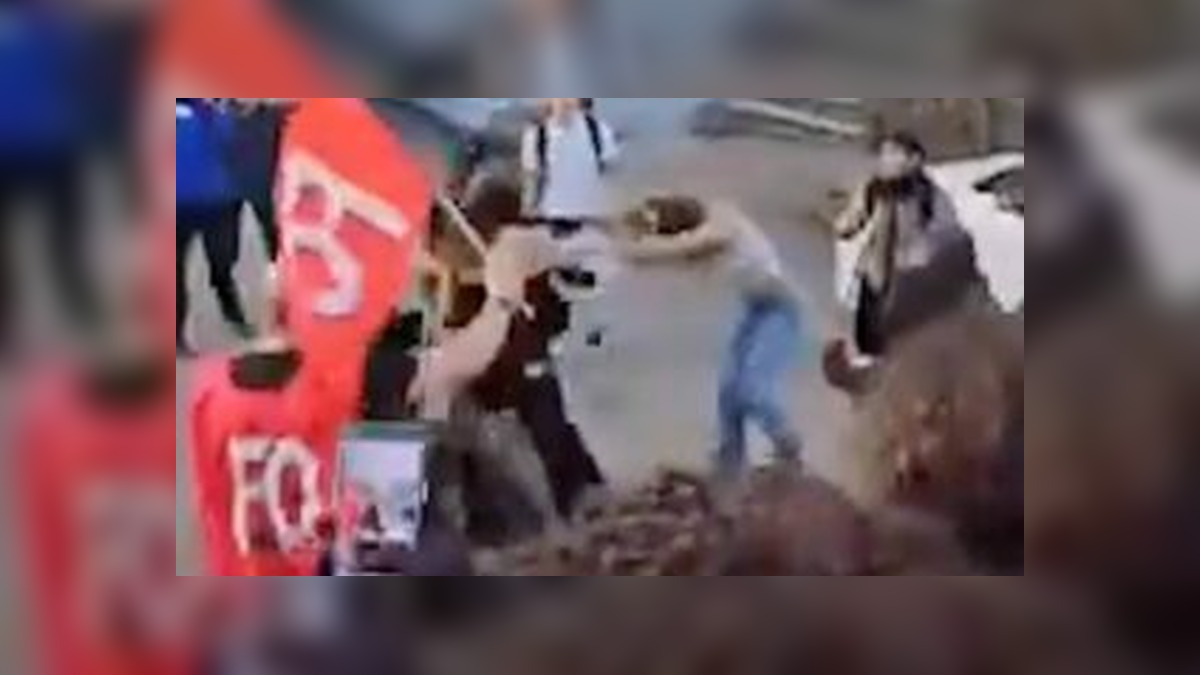
France is facing a deepening wave of student unrest, with demonstrations over education conditions escalating into clashes, school blockades, fires and arrests across the country.
Around 2,000 people had been arrested since the movement began by Friday, with Justice Minister Gérald Darmanin saying roughly two-thirds had been placed in police custody. He also said about 90% of those detained were minors.
The protests began with complaints about the state of France’s education system but have increasingly been accompanied by violence and property damage, prompting the deployment of riot police and the closure of hundreds of schools.
65 Education Staff Reported Injured
The scale of the disruption became clearer as Education Minister Édouard Geffray reported that 65 members of education staff had been injured, including 40 school principals.
The ministry has also reported 170 injured students, while more than 100 schools have suffered severe damage during the unrest.
The figures underline the growing impact of the protests on students, teachers and school administrators as authorities attempt to restore normal classes.
Nearly 400 Schools Closed
Around 400 schools were expected to remain closed on Friday because of the unrest, while some institutions have moved lessons online where blockades or damage have made in-person teaching difficult.
The education ministry has said more than 1,000 secondary schools have been affected by the mobilisations, although that figure includes institutions that were blocked or where demonstrations took place rather than schools that were necessarily closed.
Marseille has been among the cities where authorities have faced significant disruption, while riot police have also confronted protesters in several other urban areas.
Students Cite Teacher Shortages and Poor Conditions
The movement was initially driven by complaints about inadequate education resources and working conditions.
Students have raised concerns over teacher shortages, insufficient replacement staff, overcrowded or poorly maintained facilities and demanding school schedules. Complaints about uncomfortable classroom temperatures have also featured in the demonstrations.
The government has acknowledged that some of these concerns are legitimate. Education Minister Geffray has said issues involving school buildings, facilities, timetables and teacher replacements deserve to be addressed, while insisting that violence cannot be accepted.
Fires and Clashes Put Schools at the Centre of the Crisis
The demonstrations have moved beyond peaceful blockades in several locations.
Authorities reported fires at schools, clashes with police and damage to public infrastructure. Reuters reported that students started fires at two high schools, while teachers in Marseille were accidentally splashed with petrol during an incident involving a student attempting to throw gasoline into a bin.




Riot police have used tear gas in several locations, including areas around schools in Brest, Strasbourg and the Paris region, as officers attempted to break up confrontations and reopen blocked facilities.
Police and Protesters Trade Accusations
The use of riot-control measures has become another source of tension.
Students and supporters of the demonstrations have accused police of using excessive force, while government officials have condemned attacks on officers and other forms of violence during the protests.
Reuters reported that 305 police officers and gendarmes were injured during Thursday’s unrest, adding another dimension to the rapidly escalating confrontation.
The government has argued that officers are being confronted by increasingly violent groups, while some students and teachers say the police response has intensified their anger.
Government Questions Who Is Behind the Violence
French authorities have also raised questions about whether the most violent incidents are being driven by students themselves or by outside groups.
Darmanin said there was an “active and violent minority” involved and questioned whether all of those participating in the violence were actually high school students.
Intelligence assessments cited by Reuters said the movement had been initiated or influenced by members of the hard-left La France Insoumise party and its affiliates. LFI has rejected that characterization, saying it supports non-violent demonstrations and accusing the government of escalating tensions through its response.
Those competing accounts have turned the education protests into a broader political dispute.
Darmanin Calls for Parents to Pay for Damage
The French justice minister has also called for parents to face civil liability for damage caused by their children during the protests.
Darmanin said prosecutors should pursue compensation from parents where legally applicable so that repairs to damaged schools and other property can be paid for.
The proposal has already drawn criticism from LFI, which described the measure as disproportionate.
Political Figures Clash Over the Protests
The unrest has become increasingly entangled with France’s wider political divisions.
Jean-Luc Mélenchon, the prominent leader of La France Insoumise, has urged young protesters to remain calm and use non-violent methods. His party has rejected accusations that it organized the violence.
Meanwhile, opposition figures have used the attacks and disorder to demand a tougher response. Marine Le Pen condemned footage showing an attacked police officer, while other politicians have called for scrutiny of LFI’s involvement in the broader movement.
These competing claims remain politically contested and should be distinguished from the documented incidents of violence themselves.
Government Moves Toward Talks With Students and Parents
Despite the escalation, officials have also signalled a willingness to address the original education-related complaints.
Geffray has scheduled meetings with education unions, parent organisations and student associations as the government seeks to respond to concerns over school conditions and staffing.
The education minister has also urged parents to discourage their children from attending protests where their safety could be at risk.
France Faces a Difficult Test Over Education and Public Order
The protests now present the French government with two interconnected challenges: responding to genuine complaints about the education system while preventing violent incidents from overwhelming schools and public spaces.
With hundreds of schools closed, thousands of people detained and significant numbers of students, education staff and police injured, the movement has moved far beyond a dispute over classroom conditions.
The coming days will show whether negotiations over education grievances can reduce tensions or whether further clashes will continue to disrupt schools across France.

