
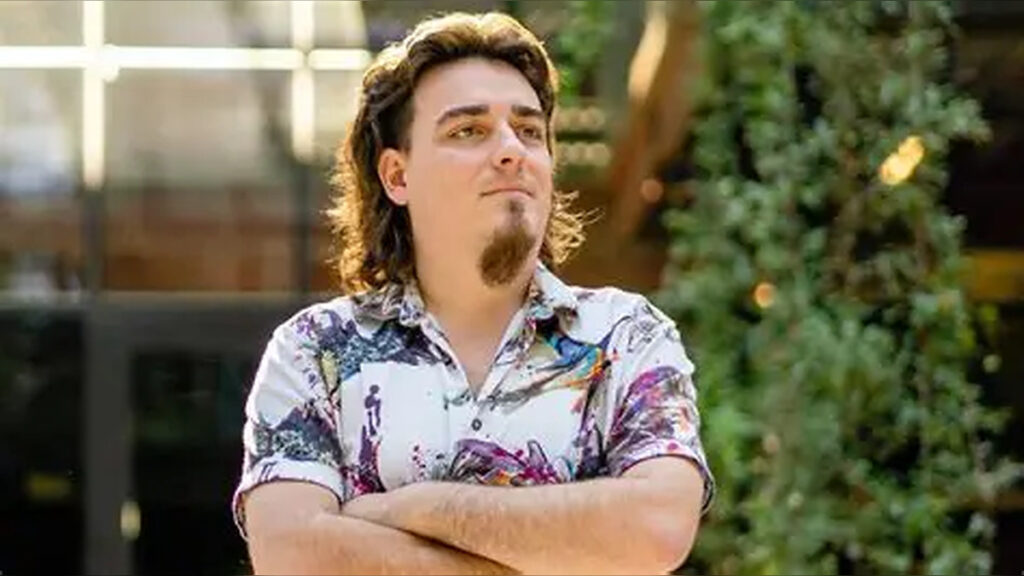
Palmer Luckey believes his unlikely rise from a teenage tinkerer living in a small trailer to a billionaire technology entrepreneur is evidence that the American Dream has not disappeared.
The Oculus and Anduril founder has argued that the United States still offers ambitious people opportunities that may be difficult to find elsewhere, even as younger Americans face a tougher labor market and rising economic pressures.
“I was a 19-year-old kid working a minimum wage job with no college degree, living in a 19-foot camper trailer,” Luckey told the Hoover Institution.
He credited billionaire investor Peter Thiel with taking a chance on him when few others would.
Thiel invested $1 million in Oculus, the virtual-reality company Luckey was building at the time.
Within a year, Facebook acquired the startup for $2 billion, making Luckey a multimillionaire at just 21.
Luckey Rejects the Idea That Opportunity Has Disappeared
At 33, Luckey says he frequently hears complaints that young Americans can no longer get the opportunities that previous generations enjoyed.
“There’s a million complaints” about the American economy and the supposed decline of upward mobility, he said, dismissing the idea that it is impossible for outsiders or young entrepreneurs to get a break.
Luckey contrasted his own experience with other countries, arguing that his unlikely path would have been much harder elsewhere.
“That’s not happening in China, I’ll tell you that,” he said of the investment that helped launch Oculus.
His argument comes at a difficult moment for younger workers.
Artificial intelligence is reshaping hiring and employment across the U.S., while many members of Generation Z are struggling to secure even entry-level or seasonal work.
For Luckey, however, those difficulties do not erase the opportunities that remain available to people willing to take risks.
A Teenager’s Garage Project Became Oculus
Luckey’s story began well before he became a major figure in technology and defense.
As a homeschooled teenager, he developed an obsession with virtual reality and began constructing his own headset in his family’s garage.
At 17, he started work on what would eventually become the Oculus Rift.
Two years later, the project gained widespread attention after raising $2.4 million through Kickstarter.
Luckey subsequently left California State University, assembled a small team and established Oculus as a commercial startup.
Although he had missed the application deadline for the prestigious Thiel Fellowship, his work eventually attracted the attention of Thiel, the PayPal cofounder and venture capitalist.
Through Founders Fund, Thiel invested in Oculus, providing the young entrepreneur with the financial backing needed to accelerate the company.
The payoff came remarkably quickly.
In 2014, Facebook agreed to acquire Oculus for $2 billion. Luckey was only 21.
From Virtual Reality to Defense Technology
The Facebook deal was only the beginning of Luckey’s entrepreneurial career.
In 2017, Thiel and Founders Fund backed him again, this time for a dramatically different venture.
Luckey launched Anduril, a defense technology company focused on autonomous systems, surveillance and military applications.




Founders Fund led early financing rounds as the company developed into one of the most prominent startups in the defense industry.
Anduril’s valuation has since soared to about $61 billion, placing Luckey at the center of a rapidly expanding technology sector that has attracted enormous investor interest.
His personal fortune has followed the growth of his businesses and is now estimated at more than $5 billion.
Erebor Adds Banking to Luckey’s Business Empire
Luckey has also moved into financial technology.
He is a cofounder of Erebor Bank alongside Joe Lonsdale, the Palantir cofounder.
The proposed technology-focused bank is designed to serve companies and entrepreneurs working in areas such as artificial intelligence, cryptocurrency, defense and advanced manufacturing.
Erebor is expected to offer services including crypto-collateralized lending and other products aimed at technology startups.
The venture has again attracted substantial backing from Thiel’s Founders Fund.
Erebor has reportedly reached a valuation of $9.5 billion while discussing plans to raise additional capital.
The extraordinary trajectory has reinforced Luckey’s belief that the United States remains capable of turning unconventional ideas into enormous businesses.
A Growing Number of Americans See the Country Differently
Luckey’s optimism contrasts sharply with growing concerns about America’s economic and political environment.
The U.S. experienced net negative migration in 2025, with estimates suggesting that between 10,000 and 295,000 more people left than entered the country.
It was reportedly the first such reversal in at least five decades.
As many as 405,000 people may have voluntarily departed, with political uncertainty and the high cost of living among the factors influencing decisions to leave.
Yet several successful entrepreneurs argue that abandoning the United States could mean walking away from some of the world’s strongest opportunities.
Immigrant Entrepreneurs Also Defend America’s Opportunity
Arvind Jain, a former Google engineer and cofounder of two billion-dollar companies including AI firm Glean, has similarly rejected the idea that America’s best days for entrepreneurs are behind it.
Jain arrived from a small town in northern India in 1986 with an engineering degree and went on to build a substantial career in American technology.
He has acknowledged that the country faces serious challenges but maintains that the U.S. remains a place where entrepreneurship is encouraged and rewarded.
His experience reflects a broader pattern among successful technology leaders who built their fortunes after moving to America.
Silicon Valley Still Pulls Ambitious People Toward It
Nvidia founder and CEO Jensen Huang is another prominent example.
Born in Taiwan and partly raised in Thailand, Huang moved to the United States as a child.
His early working life included a job washing dishes at Denny’s before he eventually co-founded Nvidia.
The company has since become the world’s most valuable corporation.
Lisa Su, AMD’s chair and CEO and Huang’s cousin, also immigrated to the United States from Taiwan as a child.
Under her leadership, AMD transformed from a struggling semiconductor manufacturer into an enormous force in artificial intelligence and computing.
Asana CEO Dan Rogers offers another perspective on why talented people continue to move to the United States.
Rogers left the United Kingdom to pursue opportunities in America, building experience at Dell, Microsoft, Amazon Web Services, Salesforce and ServiceNow before eventually becoming CEO of the San Francisco-based work-management company.
His reasoning was straightforward: the concentration of leading AI companies in the Bay Area creates an ecosystem that attracts entrepreneurs, employees and investors simultaneously.
The Opportunity Cycle Remains Powerful
Rogers argues that Silicon Valley’s strength is partly self-reinforcing.
When ambitious workers identify where the most promising companies are concentrated, they move there.
Investors follow the talent, while startups benefit from access to experienced employees, capital and new ideas.
That creates an ecosystem capable of attracting even more ambitious people.
For Rogers, the combination of talent, funding, technological innovation and intense competition makes Silicon Valley unusually difficult for other regions to replicate.
Luckey’s American Dream Argument Comes With a Complicated Reality
Luckey’s story is undoubtedly extraordinary, but it also illustrates how unusual combinations of talent, timing, access to capital and influential backers can shape an entrepreneur’s trajectory.
His experience does not erase the challenges facing millions of Americans struggling with housing costs, employment uncertainty or technological disruption.
Still, Luckey sees those obstacles differently.
To him, the fact that a teenager without a college degree could build a technology prototype, attract a major investor and sell his company for billions remains powerful evidence that the American Dream is not dead.
As debates over AI, migration, employment and the cost of living intensify, Luckey and other entrepreneurs are betting that America’s ability to attract ambitious people—and turn unconventional ideas into global businesses—will remain one of its greatest economic advantages.

